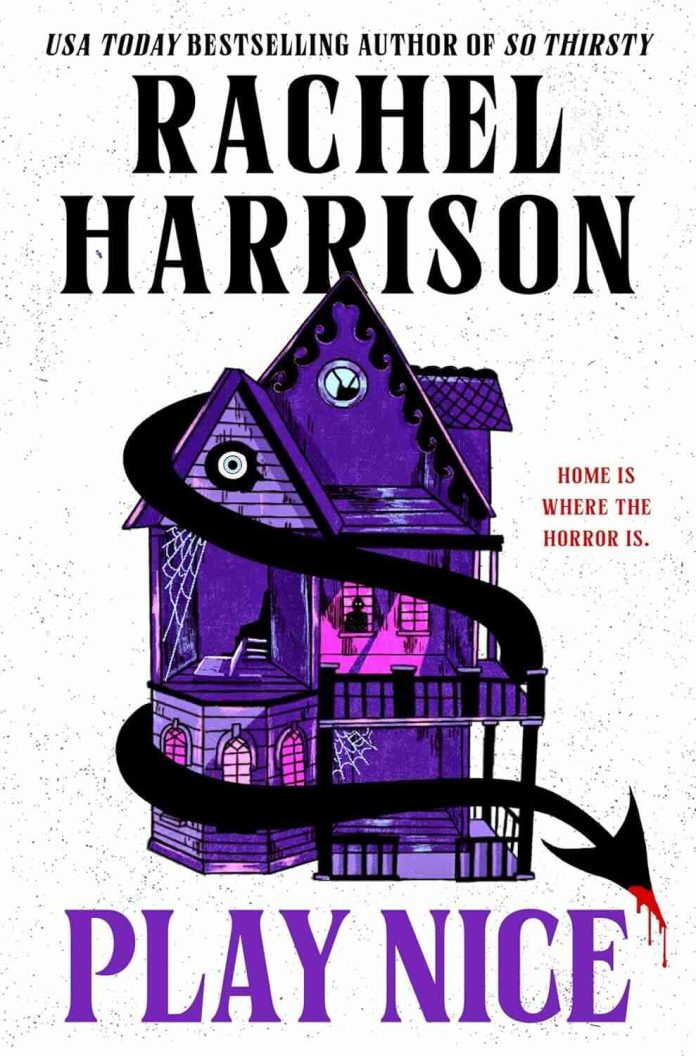
Rachel Harrison’s latest horror offering, Play Nice, stands as her most psychologically complex work to date, weaving together family dysfunction, generational trauma, and supernatural horror into a narrative that questions the very nature of truth itself. This isn’t merely another haunted house story—it’s a devastating exploration of how trauma shapes memory, how family loyalty can become toxic, and how sometimes the real monsters are the ones who claim to love us most.
The novel follows Clio Louise Barnes, a thirty-something fashion stylist and social media influencer whose carefully curated life begins to unravel after her estranged mother’s sudden death. When Clio inherits the childhood home she was forbidden to remember—a house her mother claimed was possessed by a demon—she sees an opportunity for content creation rather than confrontation with the past. But as renovations begin, Clio discovers that some truths refuse to stay buried, and the line between reality and delusion becomes increasingly blurred.
A Masterclass in Atmospheric Dread
Harrison demonstrates remarkable skill in building atmospheric tension throughout the novel. The house at 6 Edgewood Drive becomes almost a character itself, breathing with malevolent life that seeps into every interaction. Unlike the author’s previous works such as Such Sharp Teeth and Black Sheep, which often relied on more overt supernatural elements, Play Nice achieves its horror through psychological subtlety and mounting dread.
The demon’s presence manifests not through dramatic poltergeist activity, but through intimate violations: mysterious drawings appearing in sketchpads, whispered conversations, and the gradual erosion of Clio’s sense of reality. Harrison’s restraint in revealing the supernatural elements makes their eventual appearance all the more unsettling. The horror here is personal, invasive, and uncomfortably familiar—like finding someone has been living in your walls.
The prose itself mirrors the protagonist’s fractured mental state, shifting between Clio’s sharp, social media-trained observations and raw, vulnerable moments of confusion and fear. Harrison captures the millennial voice perfectly, balancing cynicism with genuine emotion, creating a narrator who feels authentically flawed and deeply human.
Complex Character Development and Family Dynamics
Where Play Nice by Rachel Harrison truly excels is in its unflinching portrayal of family dysfunction. Clio’s relationships with her sisters Daphne and Leda, and her father James, are rendered with painful authenticity. Harrison refuses to paint any character as purely villainous or entirely sympathetic, instead presenting a family where everyone believes they’re protecting the others while simultaneously causing harm.
The character of Clio herself is Harrison’s greatest achievement in this novel. She’s simultaneously sympathetic and frustrating—a woman desperate for attention and validation, yet intelligent enough to recognize her own patterns of self-destruction. Her profession as an influencer isn’t just background detail; it’s integral to understanding how she processes trauma, constantly performing emotions for an audience while struggling to access genuine feeling.
The mother-daughter relationship, explored primarily through flashbacks and the discovery of Alexandra’s book “Demon of Edgewood Drive,” provides the emotional core of the novel. Harrison skillfully reveals how mental illness, addiction, and supernatural forces can become indistinguishable from each other, particularly when filtered through a child’s perspective and warped by years of family mythology.
Themes That Resonate Beyond Horror
Play Nice by Rachel Harrison operates on multiple thematic levels that elevate it beyond genre fiction. The novel serves as a sharp critique of how society treats women who dare to speak uncomfortable truths. Alexandra’s claims about the demon are dismissed as mental illness, while her husband’s infidelity and emotional abuse are minimized or ignored entirely. The story examines how gaslighting operates not just in individual relationships, but within entire family systems and broader social structures.
The exploration of memory and truth forms another crucial thematic element. Harrison questions whether objective truth matters when subjective experience feels equally real. Clio’s recovered memories—some supernatural, some traumatic—challenge readers to consider how we construct our understanding of the past and whether healing requires perfect recall or simply acknowledgment of pain.
The novel also addresses the commodification of trauma in the social media age. Clio’s instinct to turn even her mother’s death into content reflects our culture’s tendency to perform grief rather than process it, to seek validation for our pain rather than understanding.
Technical Mastery and Narrative Structure
Rachel Harrison’s technical skill shines throughout Play Nice. The dual timeline structure—moving between Clio’s present-day experiences and excerpts from her mother’s book—creates mounting tension while gradually revealing the truth about the family’s past. The incorporation of Alexandra’s memoir within the larger narrative provides multiple perspectives on the same events, highlighting how subjective memory can be.
The pacing is expertly controlled, with quiet moments of character development punctuated by bursts of supernatural terror. Harrison knows when to pull back and when to thrust readers into the heart of darkness. The climactic scenes in the house achieve genuine terror not through gore or shock, but through the violation of intimate spaces and the complete breakdown of reality.
The dialogue feels natural and lived-in, particularly between the sisters. Their conversations capture the complex dynamics of adult siblings processing childhood trauma—the inside jokes that mask deep wounds, the careful avoidance of certain topics, the way old patterns reassert themselves under stress.
Areas for Critical Consideration
While Play Nice by Rachel Harrison succeeds admirably in most aspects, certain elements may leave some readers wanting more resolution. The ambiguity surrounding the demon’s true nature—while thematically appropriate—occasionally feels like evasion rather than complexity. Some may find Clio’s voice too cynical or self-aware, though this seems intentional given her profession and generation.
The supernatural elements, while effectively atmospheric, sometimes feel secondary to the family drama. Readers seeking pure horror may find themselves more engaged by the human monsters than the literal demon. However, this integration of psychological and supernatural horror represents a sophisticated approach that mirrors real-life trauma, where internal and external threats often become indistinguishable.
The ending, while emotionally satisfying, leaves certain plot threads unresolved. The fate of Roy and the ultimate disposition of the house feel somewhat rushed compared to the careful buildup throughout the novel.
Harrison’s Evolution as a Horror Writer
Play Nice represents a significant evolution in Rachel Harrison’s work. While her previous novels like The Return and Cackle established her as a skilled horror writer with a gift for dark humor, this latest effort demonstrates a new level of psychological sophistication. The humor is still present, but it serves character development rather than providing relief from tension.
Harrison has moved beyond the transformation narratives that characterized her earlier work to explore how people change—or fail to change—within toxic family systems. The horror here isn’t becoming something else; it’s discovering that you’ve always been exactly what others claimed you were.
Comparison to Contemporary Horror
Play Nice by Rachel Harrison stands alongside recent works like Paul Tremblay’s A Head Full of Ghosts and Silvia Moreno-Garcia’s Mexican Gothic in its examination of family trauma through a supernatural lens. However, Harrison’s focus on millennial anxiety and social media culture gives the novel a contemporary edge that sets it apart from other haunted house narratives.
The book shares DNA with Gillian Flynn’s domestic suspense while maintaining its own distinct horror identity. Like Flynn, Harrison excels at creating female protagonists who are simultaneously victim and perpetrator, sympathetic and frustrating.
Final Verdict
Play Nice by Rachel Harrison succeeds as both a horror novel and a family drama, offering genuine scares alongside meaningful character development. Harrison has crafted a story that lingers long after the final page, not because of supernatural terror, but because of its unflinching examination of how families create their own ghosts.
The novel’s greatest strength lies in its refusal to provide easy answers or comfortable resolutions. Like the best horror fiction, it forces readers to confront uncomfortable truths about human nature and the ways we hurt the people we claim to love. While it may not satisfy readers seeking straightforward supernatural thrills, those looking for psychologically complex horror with real emotional stakes will find much to appreciate.
Play Nice confirms Rachel Harrison’s place among the most promising voices in contemporary horror fiction, demonstrating her ability to evolve and deepen her craft while maintaining the dark humor and sharp observations that made her previous work so compelling.
Recommended Reading
For readers who enjoyed Play Nice, consider these similar works:
- The Silent Companions by Laura Purcell – Victorian gothic with family secrets
- Mexican Gothic by Silvia Moreno-Garcia – Atmospheric horror with family trauma
- A Head Full of Ghosts by Paul Tremblay – Ambiguous supernatural horror
- The Haunting of Hill House by Shirley Jackson – Classic psychological horror
- Sharp Objects by Gillian Flynn – Family dysfunction with dark secrets
- The Little Stranger by Sarah Waters – Subtle supernatural horror
- So Thirsty by Rachel Harrison – Harrison’s previous work for comparison
- The Turn of the Key by Ruth Ware – Modern gothic with unreliable narrator
Play Nice earns its place as a standout entry in contemporary horror literature, proving that the most effective demons are often the ones that live within our own families.







