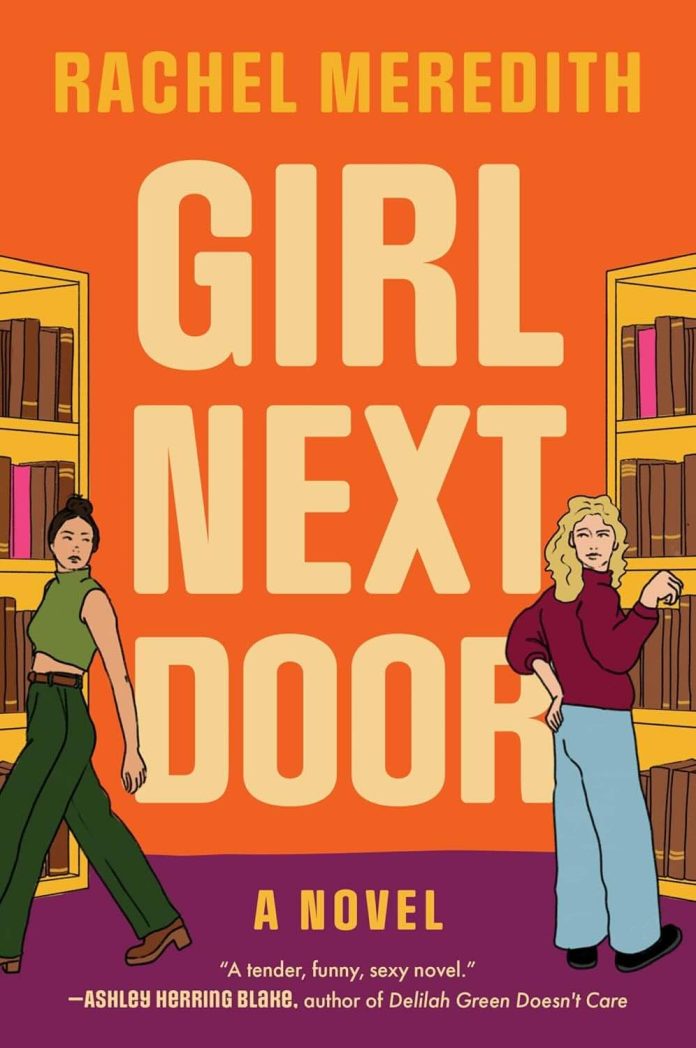
Rachel Meredith’s “Girl Next Door” arrives as a breath of fresh air in the contemporary romance landscape, weaving together the complexities of memory, identity, and the stories we tell ourselves about our past. This debut novel presents a meta-fictional puzzle wrapped in the warm embrace of a second-chance romance, creating something both intellectually engaging and emotionally satisfying.
The Art of Literary Inception
At its core, “Girl Next Door” by Rachel Meredith operates on multiple levels of storytelling that would make Christopher Nolan proud. MC Calloway discovers that her childhood neighbor Nora Pike has written a bestselling romance novel that appears to chronicle their senior year of high school—except in this fictional version, they were madly in love rather than distant acquaintances. This book-within-a-book structure creates a fascinating exploration of how we reconstruct our memories and the stories that shape our understanding of ourselves.
Meredith demonstrates remarkable skill in balancing these narrative layers without losing the reader. The fictional romance between “Nicole Penny” and “Michaela Carson” serves as both a mirror and a distortion of MC and Nora’s actual relationship, creating tension that drives the plot while offering commentary on the nature of fiction itself. The author manages to critique the romance genre while celebrating it, questioning the sanitized versions of queer love often presented in mainstream media while delivering genuine romantic satisfaction.
Characters Who Refuse to Stay in Their Boxes
MC Calloway emerges as a protagonist who defies easy categorization. Neither the confident heroine nor the bumbling fool of typical rom-com conventions, she exists in the messy middle ground of real human experience. Her struggles with career direction, family relationships, and romantic confusion feel authentic rather than contrived. Meredith avoids the trap of making MC too perfect or too pathetic, instead crafting a character whose flaws and strengths intertwine naturally.
Nora Pike proves equally compelling as the love interest who refuses to be merely an object of desire. Her transformation from the “prickly” teenager remembered by others to a successful author hiding behind a pseudonym speaks to themes of reinvention and the masks we wear. The gradual revelation of her inner life through both her fictional work and present-day interactions creates a character study that feels both surprising and inevitable.
The supporting cast deserves particular praise for avoiding romance novel stereotypes. Conrad and Gabby’s marriage provides a realistic backdrop of long-term relationship challenges, while Joe serves as more than just the gay best friend trope—his role as a gossip website editor adds ethical complexity to the narrative. Even secondary characters like Lois the librarian feel fully realized rather than merely functional.
Small Town Settings and Big City Dreams
Meredith’s portrayal of Green Hills captures the suffocating familiarity of small-town life without resorting to either nostalgic idealization or harsh condemnation. The town exists as a place of both comfort and constraint, where everyone knows your story but may not know the truth. The contrast between MC’s New York City freelance existence and her return home creates tension that extends beyond simple urban-versus-rural dynamics.
The library setting deserves special mention as more than mere backdrop. It becomes a character itself, representing both preservation and transformation, the weight of recorded stories and the possibility of new narratives. Meredith’s obvious affection for libraries and librarians adds authenticity to scenes that could have felt contrived in less capable hands.
Love in the Time of Social Media
While “Girl Next Door” doesn’t rely heavily on contemporary technology, Rachel Meredith weaves in social media and online fan culture in ways that feel organic rather than forced. The existence of fan fiction based on Nora’s book, the online speculation about the author’s identity, and the way information spreads in the digital age all contribute to the story’s tension without overwhelming it.
The ethical questions raised by MC’s investigative mission—essentially catfishing her childhood neighbor for a story—add moral complexity that elevates the romance beyond simple wish fulfillment. The book grapples with questions of privacy, exploitation, and the responsibility that comes with telling someone else’s story.
The Poetry of Everyday Moments
Meredith’s prose shines brightest in quiet moments between characters. Her ability to capture the electricity of almost-touches, the weight of meaningful glances, and the way past and present blur together demonstrates sophisticated emotional intelligence. The recurring motif of “On the Look You Give (Before Turning Away)”—both as a poem within the story and as a description of the characters’ relationship—provides structural elegance that rewards careful readers.
The author’s background as a copy editor shows in her precise language choices and careful attention to rhythm and flow. Dialogue feels natural without being mundane, and descriptive passages enhance rather than interrupt the story’s momentum.
Areas for Growth
While “Girl Next Door” by Rachel Meredith succeeds admirably as a debut, it occasionally struggles under the weight of its own ambitions. The meta-fictional elements, while clever, sometimes threaten to overshadow the central romance. Readers seeking straightforward romantic satisfaction might find themselves distracted by the novel’s more cerebral concerns.
The pacing occasionally falters in the middle third, particularly during MC’s investigation phase. Some scenes feel slightly repetitive as the author works to maintain tension while keeping both characters in the dark about each other’s true feelings. The resolution, while emotionally satisfying, comes together perhaps a bit too neatly given the complexity of the ethical issues raised.
A Romance Novel That Thinks
What sets “Girl Next Door” by Rachel Meredith apart from other contemporary romances is its willingness to interrogate its own genre conventions while still delivering on reader expectations. Meredith has crafted a story that works on multiple levels—as a romance, as a meditation on memory and storytelling, and as a commentary on queer representation in popular fiction.
The book succeeds in creating believable chemistry between its leads while avoiding the instant-attraction trap that plagues many romance novels. The slow burn feels earned rather than artificially prolonged, and the emotional payoff justifies the wait.
Final Verdict: A Promising Beginning
Rachel Meredith has announced herself as a voice worth watching in the contemporary romance space. “Girl Next Door” demonstrates remarkable ambition for a debut novel, tackling complex themes while maintaining the warmth and humor that make romance novels so beloved.
While the book occasionally stumbles under the weight of its own cleverness, it more often soars, creating moments of genuine emotional resonance that linger long after the final page. This is a novel that respects both its characters and its readers, offering depth without sacrificing entertainment value.
For readers seeking romance with substance, LGBTQ+ stories that avoid tokenism, or simply a well-crafted story about second chances and the stories we tell ourselves, “Girl Next Door” delivers on all fronts.
For Readers Who Loved
If “Girl Next Door” by Rachel Meredith captured your heart, consider these similar titles that blend romance with literary ambition:
- “Delilah Green Doesn’t Care” by Ashley Herring Blake – Another small-town queer romance with complex family dynamics
- “Book Lovers” by Emily Henry – For the meta-fictional romance elements and publishing industry backdrop
- “The Seven Husbands of Evelyn Hugo” by Taylor Jenkins Reid – Explores themes of hidden identity and the stories we construct about our lives
- “Beach Read” by Emily Henry – Writers falling in love while confronting their past assumptions
- “Red: A Love Story” by Sophie Gonzales – Contemporary LGBTQ+ romance that tackles serious themes with humor
- “Cemetery Boys” by Aiden Thomas – For authentic queer representation and small-town settings
Rachel Meredith has given us a romance novel that thinks as much as it feels, and the result is a debut that promises great things to come from this emerging voice in contemporary fiction.







