Klune Gets Quieter
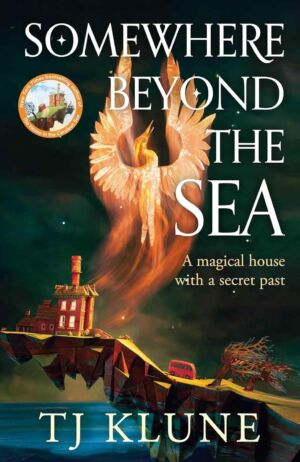
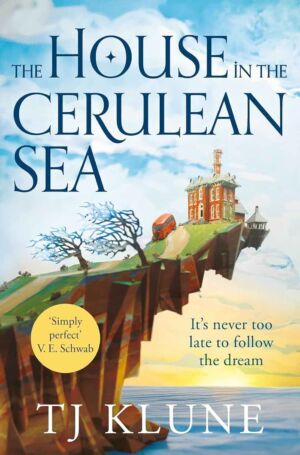
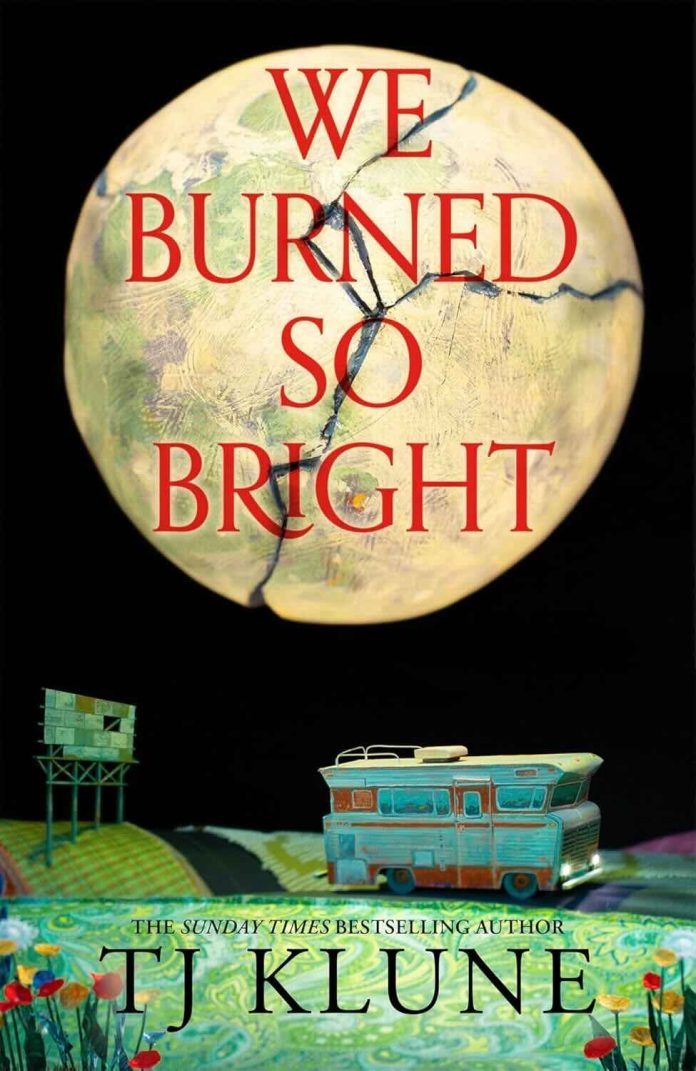
If your picture of TJ Klune comes from The House in the Cerulean Sea or Somewhere Beyond the Sea, with their fizzy whimsy and chosen-family warmth, this book will land differently. We Burned So Bright by T.J. Klune is a smaller, sadder, more grounded animal. There are no magical orphanages here. No godlings. No enchanted woods. There is a tired camper. There are aching backs and high blood pressure. And there is a road and a moon that, by the final pages, looks like a cracked plate trailing dust into space.
What Klune carries over from his earlier books is the dialogue. Don and Rodney bicker the way only two people who have been arguing about the same things for four decades can bicker. Rodney grunts. Don sasses. They have a private shorthand, a half-smile that means everything, and a habit of saying the hard thing once and then circling around it for hours. Klune writes that decades-deep love better than almost anyone working today, and the novel is at its very best when these two are alone in the cab of the RV, Clair de Lune on the radio, the silence between them doing most of the talking.
The Strangers on the Way
The road trip structure gives the novel an episodic shape. Don and Rodney pass through the lives of strangers, one chapter at a time, and each encounter is a small story about how people are choosing to meet the end:
- A panicked young family heading north, the parents lying to their children about where they are really going.
- A field of hippies in Ohio holding a wedding by firelight, with names like Pantomime and Juniper.
- A young woman on a Wyoming ranch whose mind has shattered in a way that cannot be put back together.
- Two queer twentysomethings, Becca and Amy, who escaped a Texas church and want to hear stories from their elders.
- Jerri, a woman living off-grid with a dog named Naks, watching the wild animals gather in her fields at dusk.
Some of these chapters land like a punch. The Wyoming chapter in particular is one of the most disturbing pieces of writing Klune has ever put to paper, and readers should approach it knowing exactly that. Other chapters glow. The campfire conversation in which Rodney tells two young women the queer history they were never taught, naming Matthew Shepard, Richard Heakin, and the friends he lost in the AIDS years, may be the most necessary scene in the book.
The Box
This review will not say what is in the box. Klune is patient about revealing it, and the slow opening of that secret is part of the experience. What can be said is that the box gives the novel its spine. Without it, the road trip is just sightseeing. With it, every motel parking lot, every diner meal, every flat tire is freighted. We Burned So Bright by T.J. Klune is, underneath the apocalypse plot, a story about parenting a child the world was unkind to, about the cold calculus of having tried your best, and about whether your best counts for anything when the worst happens anyway. That second story is where the novel earns its tears.
What Works Beautifully
A few things We Burned So Bright by T.J. Klune does that deserve flagging:
- The dying sky. Klune treats the end of the world as a slow visual unraveling rather than one big bang. A streak peeling off the moon. Trees lifting their branches as gravity loosens. Ball lightning rolling out of cracks in the earth. It is genuinely strange and beautiful.
- The humor. Even at its bleakest, the book is funny. Rodney muttering that a caravan leads to a commune which leads to Communism is the kind of grumpy-husband line Klune writes in his sleep.
- The queer remembrance. Klune does not lecture so much as insist that the reader sit with names. It is a lovely act inside a novel that is itself about remembering.
What Does Not Quite Land
The book is not perfect, and the broadly four-star reception feels honest. A few flags worth raising:
- The episodic structure rides bumpy. A few encounters earn their pages, while the middle stretch between Wyoming and Montana sags.
- Some political asides, sincere as they are, slip from Rodney’s voice into the author’s. The temperature shifts when that happens.
- The apocalyptic mechanics are deliberately fuzzy. Klune nods to this in his author’s note, but hard sci-fi readers should adjust expectations.
- The ending is engineered to make you cry, and it will. Whether it earns those tears or simply commands them is a question different readers will answer differently.
On the Prose
The writing is plainer here than in Klune’s fantasy work. Sentences are shorter. Images are quieter. Klune trusts his silences more than he used to, and that trust pays off. It reads like a writer who has found a story small enough to hold in two hands and an editor (Ali Fisher, credited warmly in the acknowledgments) he is willing to listen to.
If You Liked This, Try
For readers wanting more in this register, a few good neighbors:
- Station Eleven by Emily St. John Mandel, for the same patient, character-first apocalypse.
- The Last Policeman by Ben H. Winters, for the slow-countdown structure.
- Less by Andrew Sean Greer, for an older queer protagonist on a long road.
- Memorial by Bryan Washington, for tender, complicated queer relationships.
- The Midnight Library by Matt Haig, for the meditation on a life and what it added up to.
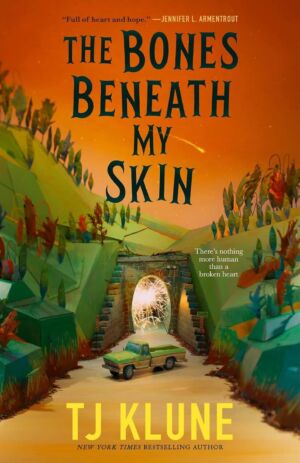
And from Klune’s own backlist: Under the Whispering Door is the closest cousin to We Burned So Bright by T.J. Klune, also concerned with mortality and grief; The Bones Beneath My Skin shares the road-trip-with-secret-cargo bones; and the Cerulean duology and the Green Creek series remain the gateway for new readers.
A Final Thought
We Burned So Bright by T.J. Klune is not the author’s funniest book or his most magical. It is, almost certainly, his most personal, and it asks a question that should rattle anyone who has loved someone they could not save: was your best good enough? The novel does not pretend to have an answer. It simply sits with the question, in an old RV, on a long road, under a cracked moon and a kaleidoscope sky.
That sitting-with, in its quiet way, is the most generous thing fiction can do.