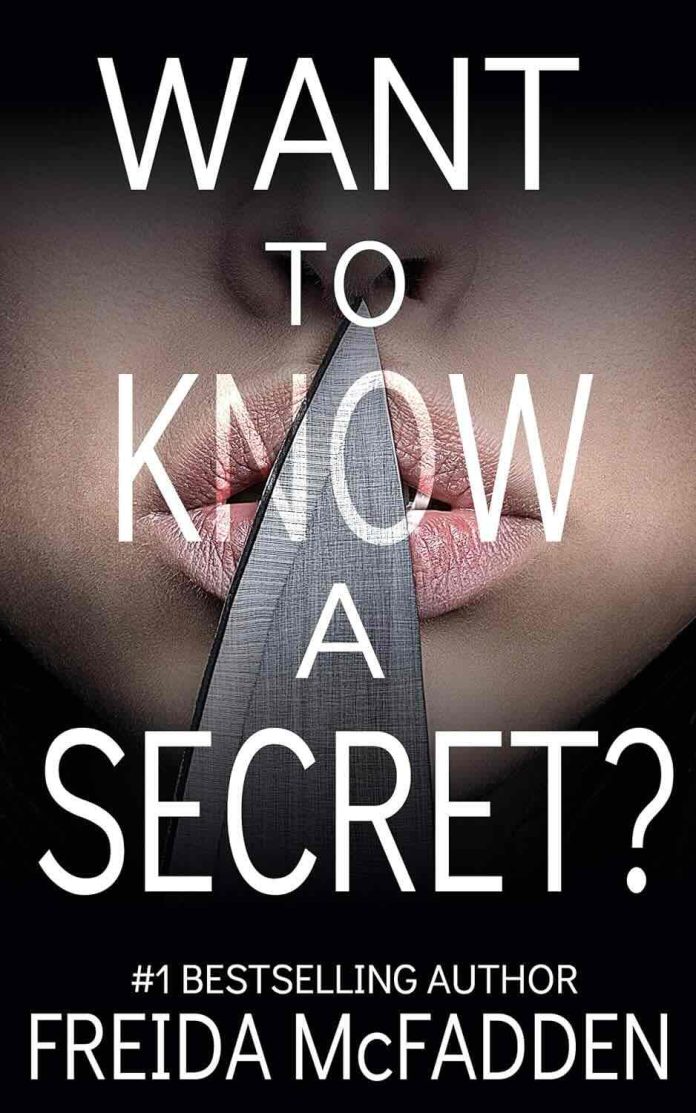
There is a peculiar kind of dread that only suburbia can produce. It lives in the gap between what your neighbor shows you over the fence and what they do once the curtains are drawn. Freida McFadden understands this dread intimately, and in Want to Know a Secret? by Freida McFadden, she stirs it into a compulsively readable thriller that tastes sweet on the surface but leaves a bitter, unsettling aftertaste you did not see coming.
Published in 2021, this standalone psychological thriller introduces us to April Masterson, a YouTube baking sensation whose show, April’s Sweet Secrets, has made her a modest internet celebrity. April films herself making brownies and key lime squares, signs off every episode with a tender “Good night, Mom,” and projects the image of a devoted wife, loving mother, and generous neighbor. But from the very first chapter, when an anonymous text from a blocked number tells her that her son is not where she thinks he is, the varnish on April’s perfect life begins to crack. And what leaks through those cracks is far more disturbing than burned cookies.
Peeling Back the Suburban Wallpaper
McFadden constructs her narrative around a deceptively simple premise: someone in April’s neighborhood knows things about her that could destroy everything she has built. The anonymous messages arrive with surgical precision, each one targeting a different vulnerability. Her son Bobby’s behavioral issues at school. Her relationship with the local soccer coach. Financial discrepancies in the PTA accounts. And something buried deep in her past that connects to a woman named Courtney Burns, whose death was ruled a suicide years earlier but never quite stopped whispering through the neighborhood gossip.
What makes Want to Know a Secret? by Freida McFadden work so well as a thriller is that McFadden refuses to give readers a comfortable vantage point. The story unfolds primarily through April’s first-person narration, but interspersed throughout are anonymous comments on April’s YouTube videos, menacing text messages, and chapters from other perspectives that steadily complicate everything April tells us. McFadden drops breadcrumbs that lead in multiple directions simultaneously, and the pleasure of reading this book lies in constantly recalibrating your assumptions about who is telling the truth and who is performing.
The suburban setting is not merely a backdrop here; it functions as a pressure cooker. PTA meetings become battlegrounds. Soccer practice doubles as a stage for territorial maneuvering among parents. A plate of homemade cookies is both a peace offering and a weapon of social manipulation. McFadden captures the competitive undercurrents of neighborhood life with a wry, observational humor that keeps the darker elements from becoming oppressive.
Characters Who Smile While Sharpening Knives
The character work in this novel is one of its strongest assets. April Masterson is a fascinating creation because McFadden writes her as someone who is simultaneously sympathetic and suspicious. April genuinely worries about her son. She is hurt by her husband Elliot’s emotional distance. She tries, in her own way, to be a good neighbor. Yet there are moments when her narration reveals a calculating quality beneath the warmth, a tendency to assess people by their usefulness and to present herself in the most flattering possible light. Whether this makes her an unreliable narrator or simply a realistic one is a question McFadden lets the reader wrestle with for most of the book.
The supporting cast is equally well drawn:
- Julie Bressler is April’s self-proclaimed best friend and a former prosecutor who runs the PTA with the precision of a district attorney managing a caseload. She is rigid, organized, and intimidating, but McFadden layers her with vulnerabilities that make her more than a caricature of suburban control.
- Maria Cooper, the new neighbor, arrives with a warm smile and dimples and a quiet watchfulness that April initially reads as friendliness but gradually begins to interpret as something more threatening. Maria’s role in the story is expertly calibrated to keep readers guessing.
- Elliot Masterson, April’s husband and a lawyer whose career has stalled under the shadow of past scandals, operates as a largely absent presence whose few appearances nonetheless carry enormous narrative weight.
- Bobby, April’s seven-year-old son, is portrayed with uncomfortable honesty. He is not the angelic child April describes on camera, and the gap between April’s public narrative about her son and his actual behavior becomes one of the novel’s most quietly devastating threads.
The Recipe for Suspense
McFadden’s writing style in Want to Know a Secret? by Freida McFadden is conversational and brisk, perfectly suited to the voice of a woman who makes baking tutorials for a living. Chapters are short, often ending on cliffhangers that make it genuinely difficult to stop reading. The pacing is relentless in the second half, but McFadden earns that acceleration by investing the first half in character relationships and suburban world-building that makes the eventual revelations land with real force.
The anonymous messaging device is cleverly deployed. Each text message functions as a miniature twist, reframing what readers think they know about April’s life. And the interplay between the public-facing April who performs sweetness for her YouTube audience and the private April who is slowly unraveling under the pressure of these messages creates a tension that McFadden sustains impressively across the novel’s fifty-six chapters and epilogue.
The thriller elements are complemented by a genuine mystery structure. A murder investigation enters the picture, and a detective whose folksy demeanor conceals sharp instincts adds another layer of pressure. McFadden handles the procedural elements lightly, using them to tighten the screws rather than slow the narrative momentum.
Where the Frosting Gets a Little Thick
That said, Want to Know a Secret? by Freida McFadden is not without its shortcomings, and a fair assessment requires acknowledging where the recipe could have been refined.
The novel occasionally leans too heavily on coincidence to advance its plot. Characters arrive and depart at precisely the right moments, phones buzz with threatening messages at suspiciously convenient intervals, and certain discoveries happen with a tidiness that strains credibility. In a genre that depends on the reader’s willingness to suspend disbelief, these moments do not necessarily break the experience, but they prevent the book from achieving the airtight plotting of McFadden’s later, more polished work.
April’s narration, while engaging, can become repetitive in the middle section. Her internal monologues about Maria Cooper’s possible motives cycle through the same suspicions without sufficient new information to justify the revisiting. A tighter editorial hand might have trimmed twenty or thirty pages from the book’s midsection without losing any of the suspense.
Additionally, some of the secondary characters feel underwritten. Kathy Tanner, for instance, exists primarily to deliver passive-aggressive comments and then disappear. Sean Cooper is sympathetic but thinly sketched. These are minor quibbles in a book that clearly prioritizes its central trio, but readers who appreciate deep ensemble casts may find the peripheral characters lacking.
The Final Twist and the Aftertaste It Leaves
Without revealing specifics, the ending of Want to Know a Secret? by Freida McFadden delivers the kind of perspective-shifting revelation that McFadden has since become famous for. The final chapters recontextualize earlier events in a way that rewards attentive readers while punishing those who took anyone at face value. It is not a perfect twist; some readers may find certain elements telegraphed, while others may feel the resolution raises as many questions as it answers. But it is an effective one, landing with the kind of gut-punch clarity that makes you want to immediately flip back to the beginning and read the whole thing again with fresh eyes.
McFadden’s thematic concerns here are sharp and worth noting. The novel interrogates the performance of suburban motherhood, the weaponization of social capital in small communities, and the terrifying ease with which a curated public image can conceal genuine darkness. These are themes she would continue to explore in her later, more commercially successful novels, and seeing them in their earlier form here is both interesting and illuminating.
Freida McFadden: The Architect of Suburban Nightmares
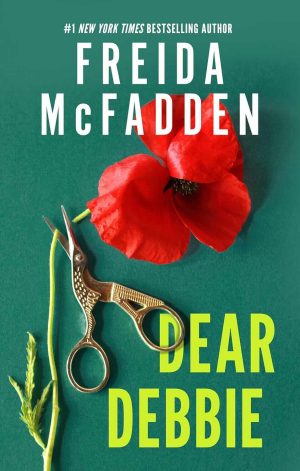
For readers unfamiliar with her work, Freida McFadden is a practicing physician specializing in brain injury who has built an extraordinary career as a thriller writer. Her breakout novel, The Housemaid (2022), became an international bestseller and was adapted into a major motion picture. She has since published a prolific catalogue of psychological thrillers including Never Lie, The Coworker, The Teacher, Ward D, The Inmate, The Boyfriend, and the continuation of her Housemaid series with The Housemaid’s Secret and The Housemaid Is Watching. Her most recent release, Dear Debbie (2026), continues her exploration of women navigating dangerous domestic landscapes. Want to Know a Secret? arrived before the Housemaid phenomenon, and while it is not as structurally refined as her later novels, it contains the DNA of everything that would make her one of the most popular thriller writers working today.
If You Liked This, You Will Devour These
Readers who enjoyed Want to Know a Secret? by Freida McFadden should consider the following recommendations, each of which explores similar themes of suburban deception, dangerous friendships, and buried secrets:
- The Woman in the Window by A.J. Finn — an agoraphobic woman spying on her seemingly perfect neighbors stumbles into a mystery that makes her question her own perception of reality
- Big Little Lies by Liane Moriarty — a masterful blend of suburban satire and murder mystery set against the backdrop of a school trivia night gone horribly wrong
- The Perfect Marriage by Jeneva Rose — a defense attorney must represent her husband when he is accused of murdering his mistress, forcing her to confront the secrets in her own marriage
- Behind Closed Doors by B.A. Paris — a couple who appears flawless to the outside world conceals a nightmarish reality that grows more suffocating with every chapter
- The Last Mrs. Parrish by Liv Constantine — a woman befriends a wealthy socialite with the intention of stealing her life, but nothing in this friendship is what it appears to be
- Local Woman Missing by Mary Kubica — a suburban community is shattered by disappearances that remain unexplained for years, until a shocking return forces buried truths to the surface
The Verdict, Without the Sugar Coating
Want to Know a Secret? by Freida McFadden is a sharp, compulsively readable suburban thriller that demonstrates why McFadden has become a dominant force in the genre. It is not flawless. The pacing sags slightly in the middle, some secondary characters could use more depth, and a handful of plot mechanics rely on convenient timing. But the central mystery is genuinely engaging, the character work in the main trio is excellent, the twist is satisfying, and McFadden’s ability to transform the mundane rituals of suburban life into sources of genuine menace is a skill that very few thriller writers possess in equal measure.
If you have ever sat at a PTA meeting and wondered what the smiling woman across the table is really thinking, this book will confirm your worst suspicions. And it will make you think twice before accepting that plate of homemade brownies from next door.