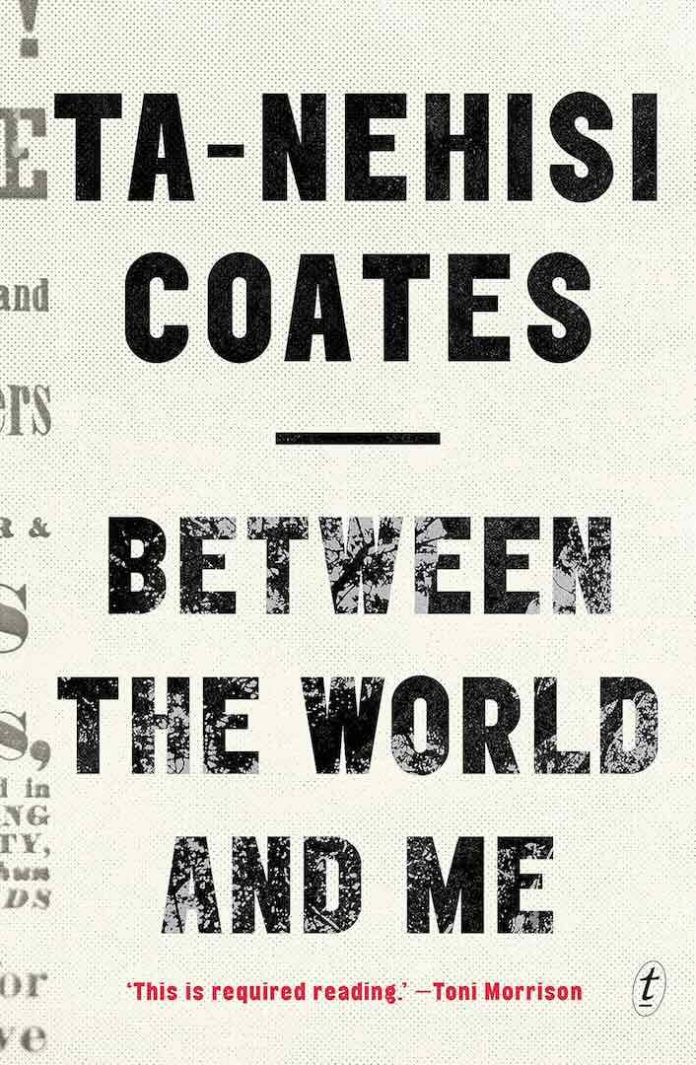
Ta-Nehisi Coates delivers a searing and deeply personal examination of Black life in America through Between the World and Me, a book structured as an extended letter to his teenage son. This National Book Award winner transcends traditional memoir boundaries, weaving together personal narrative, historical analysis, and urgent social commentary into a work that demands confrontation with uncomfortable truths about American society.
The Power of Epistolary Intimacy
Coates constructs his argument through the intimate framework of paternal guidance, addressing his son Samori directly throughout the text. This epistolary approach transforms what could have been another academic treatise on race into something far more visceral and immediate. The father-son dynamic infuses every observation with stakes that feel life-and-death urgent, because for Black bodies in America, they often are.
The author’s voice carries the weight of someone who has survived the “streets” of Baltimore, navigated the intellectual awakening of Howard University, and emerged as a clear-eyed observer of American racial dynamics. His prose style borrows from the urgency of journalism—his primary profession—while maintaining the lyrical quality necessary for memoir. Coates writes with controlled fury, each sentence carefully constructed to build an overwhelming case about the precarious nature of Black existence in America.
The Body as Central Metaphor
Throughout the work, Coates returns obsessively to the concept of “the body”—specifically, the Black body as a site of violence, control, and destruction. This isn’t abstract theorizing; it’s grounded in concrete experiences from his Baltimore childhood, where physical safety required constant vigilance and the navigation of unwritten codes that could mean the difference between life and death.
The author’s discussion of his educational experiences reveals how both “the streets” and “the schools” served as mechanisms of control over Black bodies. His analysis of how traditional education failed to address the fundamental questions about Black existence in America resonates with particular power. Coates describes his intellectual awakening at Howard University—which he calls “The Mecca”—as a revelation of Black intellectual and cultural diversity that had been systematically hidden from him.
The Howard University sections represent some of the book’s most compelling writing. Coates captures the intoxicating discovery of Black intellectual tradition, the diversity of Black experience across the diaspora, and the formation of his own analytical framework. His description of the campus as a space where he could see “everything I knew of my black self multiplied out into seemingly endless variations” demonstrates his ability to render personal transformation in vivid, accessible terms.
Historical Reckoning and Contemporary Violence
Coates skillfully weaves historical analysis throughout his personal narrative, refusing to treat slavery and its aftermath as distant history. His examination of how wealth extraction from Black bodies built American prosperity reads as both economic analysis and moral indictment. The connection he draws between historical plantation violence and contemporary police brutality isn’t metaphorical—it’s direct lineage.
The book’s emotional center emerges in Coates’s discussion of Prince Jones, a Howard University friend killed by police. This section transforms from personal grief into broader analysis of how American society systematically devalues Black life. Coates’s interview with Prince’s mother, Dr. Mable Jones, provides one of the book’s most devastating passages, revealing how even middle-class success cannot protect Black families from state violence.
The author’s treatment of contemporary events—Eric Garner, Michael Brown, Trayvon Martin—avoids both sensationalism and false comfort. Instead, he places these deaths within the broader historical pattern of American violence against Black bodies, arguing that such killings represent features, not bugs, of the American system.
Challenges and Limitations
While Between the World and Me succeeds brilliantly as both memoir and historical analysis, it faces certain limitations that some readers may find frustrating. Coates’s rejection of hope and redemptive narratives, while intellectually honest, can feel overwhelming in its relentlessness. His explicit rejection of religious faith and traditional civil rights optimism may alienate readers seeking more uplifting perspectives on racial progress.
The book’s focus on Black male experience, while understandable given its father-son framework, occasionally marginalizes Black women’s perspectives. Though Coates acknowledges that Black women face additional vulnerabilities, the analysis remains primarily centered on masculine experiences of racial violence.
Additionally, Coates’s sometimes abstract language around concepts like “the Dream” (his term for white American mythology) can feel unnecessarily opaque. While this abstracting serves rhetorical purposes, it occasionally distances readers from the concrete realities he’s describing.
Literary Achievement and Cultural Impact
Between the World and Me demonstrates Coates’s evolution from his earlier memoir The Beautiful Struggle, showing greater narrative sophistication and analytical depth. Where his first book focused primarily on his relationship with his father and coming-of-age in Baltimore, this work expands to encompass broader questions of American identity and global perspective.
The book’s international scope—particularly the Paris sections where Coates examines American racial dynamics from outside the country—provides crucial perspective. His observations about feeling “alien” in France, yet paradoxically more free, illuminate how American racial categories shape Black experience in profound ways.
Coates’s journalism background serves him well here, particularly in sections dealing with housing discrimination and police violence. His ability to synthesize complex policy analysis with personal narrative creates a reading experience that feels both intellectually rigorous and emotionally immediate.
Contemporary Relevance and Legacy
Written in the immediate aftermath of Ferguson and published during ongoing national conversations about police violence, Between the World and Me arrived at a crucial cultural moment. The book’s refusal to offer easy solutions or false comfort challenged readers across racial lines to confront uncomfortable truths about American society.
The work’s influence extends beyond literary circles into academic, political, and activist spaces. Its unflinching analysis of how white supremacy operates through institutions rather than individual prejudice has shaped contemporary discussions about systemic racism.
Essential Reading Recommendations
Readers drawn to Coates’s analysis should explore:
- The Fire Next Time by James Baldwin—the clear literary predecessor to Coates’s epistolary approach
- Stamped from the Beginning by Ibram X. Kendi—for deeper historical analysis of racist ideas
- The Warmth of Other Suns by Isabel Wilkerson—for understanding the Great Migration’s impact
- Just Mercy by Bryan Stevenson—for contemporary perspectives on criminal justice
- How Long ‘Til Black Future Month? by N.K. Jemisin—for speculative fiction engaging similar themes
Final Assessment
Between the World and Me succeeds as both intimate family document and sweeping social analysis. Coates’s achievement lies in making the personal political without sacrificing the specificity that gives memoir its power. His refusal to provide false comfort or easy answers may frustrate some readers, but it also represents the book’s greatest strength—its commitment to truth-telling over consolation.
The work demands active engagement from readers, particularly white readers who may find their assumptions challenged at every turn. This discomfort is intentional and necessary, part of Coates’s project of forcing America to confront the reality of how it has been built and maintained.
While the book offers no easy path forward, it provides something potentially more valuable: clarity about where we actually stand. In a cultural moment often characterized by wishful thinking about racial progress, Between the World and Me insists on the importance of seeing clearly before attempting to move forward. For readers willing to engage with its unflinching analysis, the book offers both devastating critique and profound insight into the American experience.







