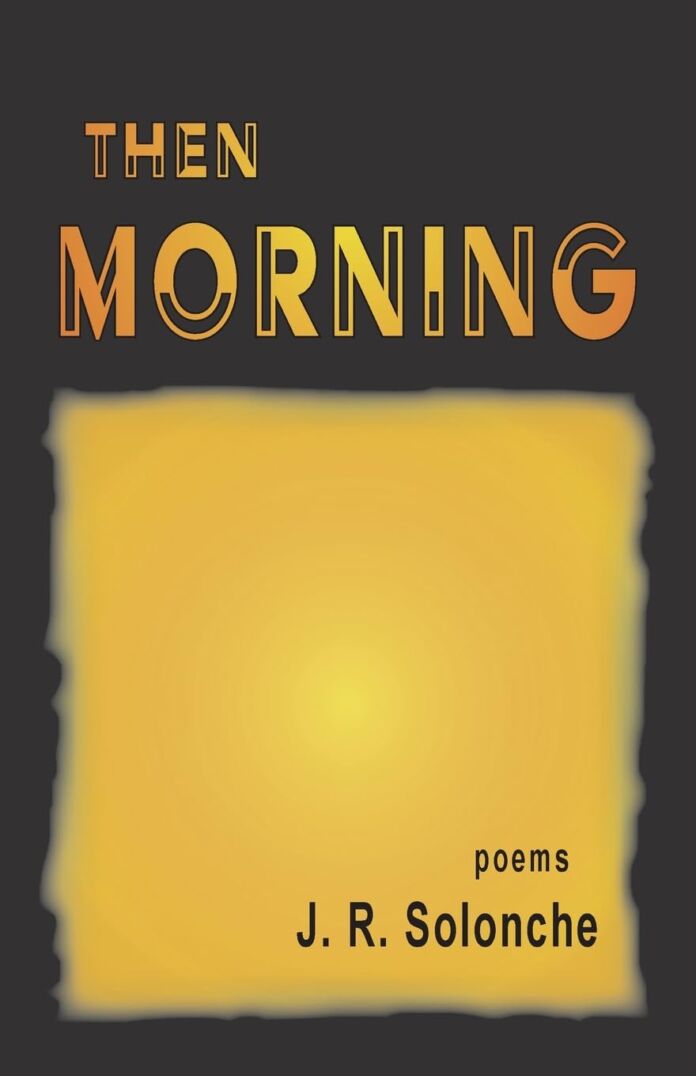
In the quiet hours before sunrise, when the world hovers between darkness and light, poetry finds its most authentic voice. J R Solonche’s Then Morning captures these liminal moments with extraordinary precision, weaving together observations both mundane and profound into a tapestry of human experience.
The Art of Morning Meditation
Having previously immersed myself in J R Solonche’s Reading Takuboku Ishikawa, I approached Then Morning with eager anticipation. This new collection does not disappoint, offering a profound exploration of daybreak as both a literal phenomenon and a metaphor for awakening consciousness. Divided into three distinct parts, the collection presents a masterful progression from pastoral observations to deeply personal reflections on mortality, memory, and the nature of existence itself.
Structure and Thematic Journey
The collection’s tripartite structure reveals Solonche’s careful architectural sensibility:
Part I: The Pastoral Symphony
The opening section establishes the collection’s grounding in natural observation, beginning with “September Pastoral” and moving through the seasonal cycle. These poems demonstrate Solonche’s gift for precise observation, as in the lines from “October Pastoral”:
Five geese have lost their vee.
Or they have not practiced enough.The deer have eaten two chrysanthemum plants.
They were the two farthest from the house.
The pastoral poems serve as more than mere nature observation; they function as windows into deeper philosophical contemplations. The poet’s eye moves seamlessly between the physical world and metaphysical speculation, creating a rich interplay between exterior and interior landscapes.
Part II: The Morning Sequence
The heart of the collection lies in its second section, comprising a remarkable sequence of “This Morning” poems. Each piece begins with the same phrase but ventures into wildly different territory, creating a kaleidoscopic view of dawn’s possibilities. Consider “This Morning Was the Angel of Death”:
This morning was the Angel of Death.
It was not mine.
It was a red-tailed hawk.
It was the angel of the field mouse’s death.
This sequence showcases Solonche’s ability to transform a simple repeated phrase into a launching pad for exploring themes ranging from mortality to identity, from divine presence to human absence.
Part III: The Synthesis
The final section brings together the collection’s threads in a series of more formally diverse poems, including several ghazals that demonstrate Solonche’s mastery of traditional forms while maintaining his contemporary voice.
Technical Mastery and Stylistic Innovation
Solonche’s technical prowess shines throughout the collection. His command of various forms—from free verse to ghazals—demonstrates not just versatility but a deep understanding of how form can serve content. The ghazal sequence near the end of the collection is particularly impressive, with each piece exploring a single word’s etymology and cultural significance while maintaining the form’s traditional requirements.
Language and Imagery
The poet’s use of language is simultaneously accessible and profound. Consider these lines from “The Chair”:
Has anyone ever told you how sharp your elbows are?
No? Let me be the first.
Just look at my arms, or what’s left of them.
This personification achieves both humor and poignancy, characteristic of Solonche’s ability to find the extraordinary in the ordinary.
Themes and Preoccupations
Several major themes emerge throughout the collection:
- Time and Mortality
- The progression of days and seasons
- The relationship between memory and present moment
- The inevitability of change and decay
- Natural World as Mirror
- The use of landscape as metaphor for human experience
- The interconnectedness of natural and human worlds
- The cycle of seasons as life metaphor
- Identity and Consciousness
- The shifting nature of self
- The relationship between observer and observed
- The role of memory in shaping identity
Personal and Universal
What makes Then Morning particularly compelling is J R Solonche’s ability to move between deeply personal experience and universal truth. The collection includes intimate poems about aging and loss, such as “Younger,” which touches on caring for a spouse with Alzheimer’s, alongside broader philosophical meditations on existence and meaning.
Craftsmanship and Innovation
Solonche’s craftsmanship is evident in his careful attention to:
- Line breaks that create multiple meanings
- Sound patterns that enhance meaning
- Strategic use of repetition
- Careful pacing within and between poems
- Balanced mixture of forms and styles
Comparative Context
While Then Morning stands firmly on its own merits, it calls to mind the work of other contemporary masters of the short form like Kay Ryan and Billy Collins, though J R Solonche’s voice remains distinctly his own. His previous collection, Reading Takuboku Ishikawa, showed his ability to engage with other poetic traditions, but here we see him fully in his element, creating a uniquely American poetry that nonetheless speaks to universal human experience.
Critical Assessment
The strength of Then Morning lies in its ability to:
- Transform ordinary observations into extraordinary insights
- Maintain thematic coherence while exploring diverse forms
- Balance intellectual depth with emotional resonance
- Create memorable images that linger in the reader’s mind
- Achieve accessibility without sacrificing complexity
Conclusion
Then Morning represents a significant achievement in contemporary American poetry. Solonche has created a collection that manages to be both intellectually stimulating and emotionally resonant, technically accomplished and genuinely moving. The book demonstrates how poetry can illuminate the ordinary moments of life while simultaneously exploring the deepest questions of existence.
The collection’s investigation of morning as both literal and metaphorical phenomenon creates a rich tapestry of meaning that rewards multiple readings. Each return to these poems reveals new layers of significance, new connections, and new insights into the human experience of time, consciousness, and being.
For readers familiar with J R Solonche’s previous work, Then Morning will feel like a natural evolution of his poetic concerns while breaking new ground in form and content. For those new to his work, it serves as an excellent introduction to a poet working at the height of his powers, demonstrating why he has been nominated for both the National Book Award and the Pulitzer Prize.
This is a collection that reminds us of poetry’s ability to transform our perception of the ordinary world, to make us see anew what we thought we knew, and to find profound meaning in the simple act of witnessing another dawn.