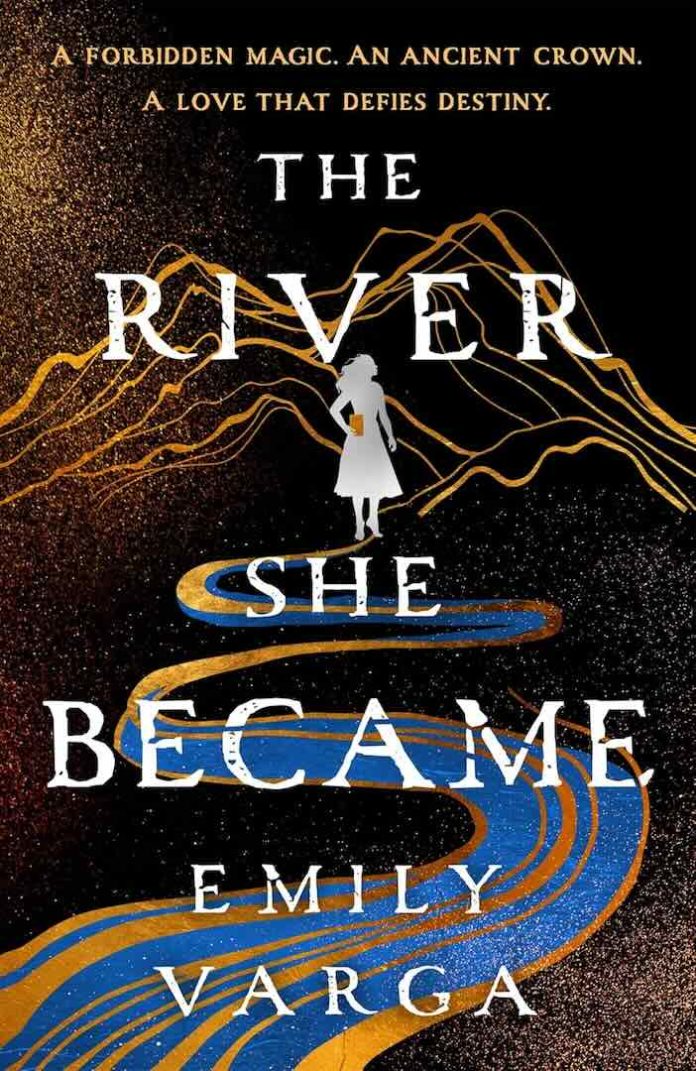
Some fantasy heroines are handed a sword. Yaseema Nazir gets a pair of spectacles, her dead mother’s gold bangles, and a homeland quietly starving under an empire’s boot. That single choice tells you what sort of story you are holding. The River She Became is about a scholar who steals back what was taken, and it wears its Indiana Jones heart on its embroidered sleeve.
The River She Became by Emily Varga opens book one of the River & Salt duology, and it arrives from an author who already knows how to make readers ache. Varga’s debut, For She Is Wrath, was a Pakistani-inspired reimagining of The Count of Monte Cristo built on revenge and djinn magic. It earned an indie bestseller run, a Goodreads Choice nomination, and a Waterstones Children’s Book Prize shortlisting. Her follow-up trades the prison break for a treasure hunt, and the results are grand, angry, and often lovely, even when the seams occasionally show.
A conquered land and a River that remembers
Yaseema lives in Astola, a South Asian-coded country crushed under the Angrezian Empire, a colonial power whose name is a wink to any reader who knows the word for the English. The Empire has done something crueler than tax and conscript. It has been digging up the fae relics buried in Astolan soil, the crowns and cups and rings that hold the land’s life magic, and shipping them off to a distant Empress. Every stolen object means another dead harvest, another funeral the Citadel forbids. Magic here is not sparkle. It is the difference between a full grain store and a child’s ribs showing through skin.
By day Yaseema catalogs those relics as a loyal Citadel scholar. By night she steals them back. When she finds a key that can carry her across the River, the magical wall dividing the human world from the fae one, she crosses into Peristan to hunt the crown of an ancient fae Queen, the one relic that might bring the wall down for good.
Varga’s setting is the strongest thing she has built here. The Urdu threaded through the prose, the dupattas and kahwah and buried bangles, the outlawed burial rites, the propaganda passages “quoted” from a colonizer’s history book at the head of certain chapters, all of it gives the extraction plot a moral spine. You feel the theft as theft.
Two thieves and one crown
On the far bank waits Kiyan, the cold-eyed captain who hunts rebels for the tyrant Viceroy of the Court of Salt. He is also, secretly, the thing he pretends to destroy. Watching these two circle the same crown, each planning to snatch it for a different dying people, is where the book finds its engine.
What keeps it from feeling like a hundred other quests is how much it costs Kiyan to wear his mask. Varga does not hand him a clean conscience. He has tortured. He has killed his own. The book makes him carry that, and it refuses the easy trick of pretending a charming smirk cancels a body count. That weight gives the romance real stakes.
Here is the ledger, kept honest.
Where the book shines
- The worldbuilding earns its complexity, and the colonial allegory never feels bolted on. The starving land and the looted museum-empire will sit with you.
- Kiyan is a genuinely thorny love interest, closer to Holly Black’s Cardan than to a soft book boyfriend, and better for it.
- The relic-hunting sequences, all vaults and traps and riddles left in a mother’s journal, are pure adventure fun.
- The dual first-person structure, split across three parts named for the Citadel, the River, and the Mountain, keeps the momentum turning.
- The epigraphs, especially the mother’s letters and the colonizer’s smug “history,” do quiet, clever work between chapters.
Where it wavers
- The romance runs on familiar rails. The captain who sees through her lies, the interrupted near-kiss, the who are you really standoff. Seasoned romantasy readers will spot every switch on the track.
- The magic system is explained more than it is felt. Several key rules arrive through long tent-side conversations rather than through action, and the roster of Courts, curses, and two rival crowns asks a lot of a newcomer.
- Yaseema’s inner monologue loops. Her guilt and her resolve to try circle back so often that the middle stretch loses a little air.
- A dream-prophecy from a passing witch does some heavy lifting to push the plot where it needs to go.
- A recurring gold motif telegraphs a late reveal, so sharp readers may arrive early.
The scholar and the hunting dog
Yaseema is a refreshing lead precisely because she is not a warrior. She is a climber, a lockpick, a reader of old songs, a woman whose courage is stubborn rather than swaggering. Her power, when it appears, is strange even to her, and Varga is smart to keep it a mystery the heroine cannot simply wield her way out of trouble with.
Kiyan gets the more familiar arc, the ruthless enforcer with a buried heart, but his banter with his rebel brother Talal gives him warmth, and his letters home, none of them ever sent, are among the most affecting pages in the book. The chemistry between the two leads is slow and charged, more restraint than heat, which suits the danger they are both standing in.
The prose, and the pull
Varga writes in a close, sensory first person that moves fast when it needs to and lingers on grief when it wants to. The action is clean and easy to follow, the emotional beats land hard, and the South Asian texture of food, faith, and family is never decoration. The style occasionally slips into very modern snark that jars against the older-world setting, and a few metaphors reach farther than they hold. Still, the voice carries you. When the River finally burns, you feel it.
Who should read The River She Became by Emily Varga
This one is built for readers who want their romantasy with a conscience and a whip. If you loved the fae-court knife-work of The Cruel Prince, the doomed-empire ache of An Ember in the Ashes, or the “steal the artifact, save the world” thrill the author borrows from The Mummy and Lara Croft, you are the target. Come for the enemies-to-allies tension, stay for the anticolonial rage humming underneath. Just know going in that this is half of a story. The River She Became by Emily Varga ends on a cliff, and the romance does not resolve.
Similar reads to line up next
- For She Is Wrath by Emily Varga, her djinn-magic revenge debut and the natural starting point.
- We Hunt the Flame by Hafsah Faizal, another lost-relic quest to restore a broken world.
- The Jasmine Throne by Tasha Suri, for the colonial resistance and the South Asian-rooted magic.
- An Ember in the Ashes by Sabaa Tahir, for the occupied people and the dual-POV tension.
- The Gilded Wolves by Roshani Chokshi, for the treasure-hunting brains and heist energy.
- A Court of Thorns and Roses by Sarah J. Maas, for readers here mainly for the fae and the romance.
The last word
The River She Became by Emily Varga is an ambitious, big-hearted series opener that occasionally leans on genre furniture but never loses its center: a girl carrying her mother’s memory across a border built to keep her out. It stumbles in its middle and asks patience of anyone new to its crowded world, yet the anger is real, the adventure is a pleasure, and the final pages promise a sequel worth waiting for. Steal it back, Yaseema. We will be here for round two.







