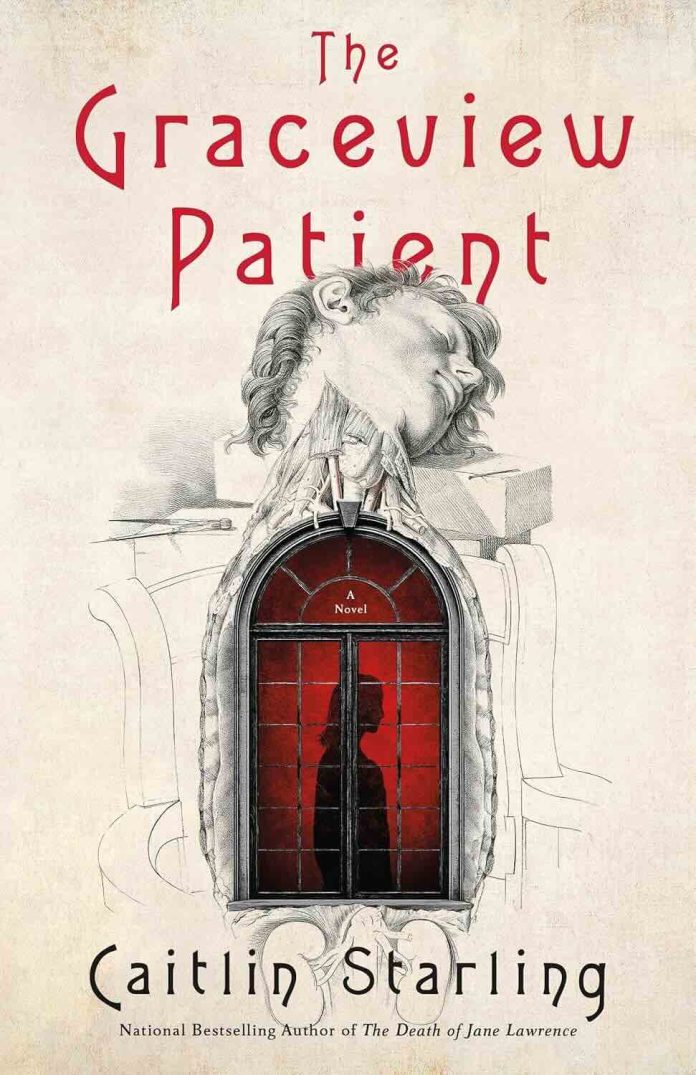
Caitlin Starling has crafted something truly unsettling in The Graceview Patient, a novel that transforms the sterile corridors of a hospital into a labyrinthine nightmare where trust dissolves like flesh under infection. This isn’t simply another medical thriller; it’s a visceral exploration of vulnerability, agency, and the terrifying gray areas between healing and harm.
Margaret Culpepper arrives at Graceview Memorial carrying more than just her devastating autoimmune condition, Fayette-Gehret syndrome. She brings desperation—the kind that makes questionable medical trials seem like salvation rather than potential damnation. What begins as hope for a cure through the experimental SWAIL protocol quickly morphs into a claustrophobic descent where Margaret’s reality becomes as compromised as her immune system.
The Architecture of Terror
Starling demonstrates masterful control over atmosphere, building dread through the mundane details of hospital life. The beeping monitors, sterile rooms, and endless parade of masked figures create an environment where paranoia feels rational. Margaret’s increasing isolation—both physical and psychological—mirrors the reader’s growing unease. We’re trapped alongside her in this medical maze, uncertain what’s real and what’s medication-induced hallucination.
The author’s background shines through in her authentic portrayal of hospital culture. The nursing reports that punctuate Margaret’s decline, the clinical language that reduces her to symptoms and numbers, the casual dehumanization inherent in medical care—all feel lived-in and genuine. This authenticity makes the supernatural elements more disturbing; when the familiar becomes contaminated with horror, nowhere feels safe.
Character Study in Deterioration
Margaret emerges as a compelling protagonist precisely because of her flaws. She’s prickly, isolated, and suspicious—traits that become both survival mechanisms and potential sources of self-destruction. Her relationship with nurse Isobel forms the emotional core of the novel, a connection that becomes increasingly complex as the infection spreads not just through bodies but through the very concept of care itself.
Isobel’s character serves multiple narrative functions. Initially a source of comfort and competence, she gradually transforms into something more ambiguous—part ally, part victim, part monster. This evolution reflects the novel’s central theme: how suffering can corrupt even the most benevolent intentions.
Adam Marsh, the pharmaceutical representative, embodies corporate manipulation with unsettling charm. His presence raises uncomfortable questions about medical ethics and patient exploitation that resonate beyond the horror elements. Starling avoids making him a simple villain, instead presenting him as a man who genuinely believes in his mission while remaining willfully blind to its costs.
Body Horror with Purpose
The physical deterioration described in The Graceview Patient is genuinely disturbing, but Starling wields this horror purposefully rather than gratuitously. Margaret’s declining condition—the bleeding gums, the gray fingertips, the mysterious growths—becomes a metaphor for loss of agency. As her body fails, so too does her ability to trust her own perceptions or make autonomous decisions.
The biofilm that spreads throughout the hospital represents contamination on multiple levels: physical, institutional, and moral. It transforms healing spaces into sites of infection, caregivers into vectors of disease, and medical procedures into instruments of torture. This ecological horror feels particularly relevant in our post-pandemic world, where hospitals became both sanctuaries and sites of terror.
The novel’s most disturbing moments arise not from supernatural gore but from medical violations presented as necessary care. The insertion of ports, the forced medications, the gradual erosion of consent—these horrors feel more real and threatening than any monster.
Narrative Techniques and Structure
Starling employs an unreliable narrator to brilliant effect, forcing readers to navigate Margaret’s deteriorating mental state alongside her. The hospital charts interspersed throughout the text create an objective counterpoint to Margaret’s subjective experience, highlighting the gap between medical documentation and lived reality.
The pacing builds relentlessly, with each chapter tightening the screws of paranoia and physical degradation. The author balances Margaret’s internal monologue with external action, creating a claustrophobic reading experience that mirrors the protagonist’s situation. Brief moments of respite—conversations with Isobel, visits from Adam—provide false comfort before plunging readers back into uncertainty.
The novel’s structure mirrors the hospital’s rhythm: the twice-daily reports, the medication schedules, the endless cycle of monitoring and intervention. This repetitive quality could feel tedious in lesser hands, but Starling uses it to demonstrate how institutional life can break down individual identity.
Themes of Agency and Consent
Beneath its horror elements, The Graceview Patient offers a sophisticated examination of medical autonomy. Margaret’s gradual loss of agency—financial, physical, and psychological—reflects real concerns about how desperation can compromise genuine consent. The novel doesn’t offer easy answers about when medical intervention becomes medical imprisonment.
The relationship between individual suffering and institutional knowledge forms another crucial theme. Margaret’s rare condition makes her valuable to researchers, but this value doesn’t necessarily align with her wellbeing. The tension between advancing medical knowledge and protecting individual patients drives much of the novel’s ethical complexity.
Gothic Sensibilities in Modern Setting
Starling successfully transplants Gothic horror conventions into a contemporary medical setting. The isolated protagonist, the mysterious benefactor with unclear motives, the crumbling institution hiding dark secrets—all feel fresh when filtered through modern hospital bureaucracy. The novel demonstrates how traditional Gothic themes of confinement, corruption, and bodily violation remain disturbingly relevant.
The hospital itself becomes a Gothic castle, complete with forbidden areas, secret passages, and rooms where terrible things happen. But unlike traditional Gothic settings, this one promises healing rather than harm—a promise that becomes increasingly hollow as the story progresses.
Minor Flaws in an Otherwise Strong Work
While The Graceview Patient succeeds admirably in most respects, a few elements feel slightly underdeveloped. The supernatural infection’s origin and exact mechanics remain deliberately vague, which works for atmosphere but occasionally frustrates from a plot perspective. Some secondary characters, particularly among the nursing staff, could benefit from more distinct characterization.
The novel’s ending, while emotionally satisfying, leaves certain practical questions unanswered. However, this ambiguity feels intentional—a recognition that some forms of trauma resist neat resolution.
A Worthy Addition to Contemporary Horror
The Graceview Patient stands alongside the best contemporary medical horror fiction. It shares DNA with Stephen King’s Misery in its claustrophobic patient-caregiver dynamic, while its institutional horror recalls the paranoid atmosphere of Invasion of the Body Snatchers. Yet Starling’s voice remains distinctly her own, balancing visceral horror with psychological complexity.
Readers familiar with Starling’s previous works, particularly The Death of Jane Lawrence, The Starving Saints, and The Luminous Dead, will recognize her talent for creating atmospherically rich horror that prioritizes character development over shock value. The Graceview Patient represents a mature work from an author who understands how to make horror meaningful.
Similar Reads and Recommendations
Fans of The Graceview Patient should seek out Mexican Gothic by Silvia Moreno-Garcia for its atmospheric medical horror, Sharp Objects by Gillian Flynn for its unreliable narrator and themes of bodily violation, and The Silent Companions by Laura Purcell for its Gothic sensibilities. Paul Tremblay’s The Cabin at the End of the World offers similar explorations of isolation and reality distortion.
The Graceview Patient confirms Caitlin Starling’s position as a significant voice in contemporary horror fiction. This is horror with teeth—the kind that lingers long after the final page, making every medical appointment feel slightly more sinister. It’s a novel that respects both its genre traditions and its readers’ intelligence, delivering genuine scares alongside meaningful themes. For anyone seeking sophisticated horror that doesn’t sacrifice emotional depth for shock value, The Graceview Patient proves that sometimes the most frightening monsters wear scrubs.







