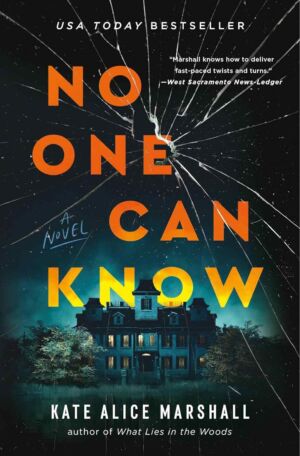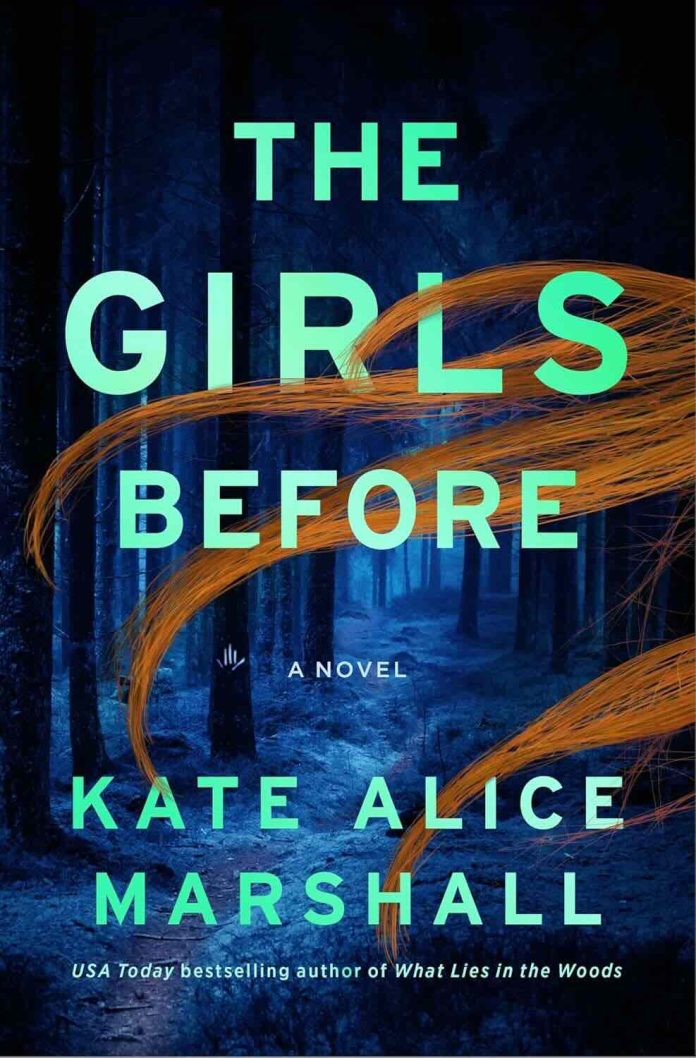
Kate Alice Marshall has crafted something genuinely unsettling in The Girls Before by Kate Alice Marshall—a psychological thriller that refuses the comfort of simple answers or clean resolutions. This is not a book that holds your hand through its darkness; it drags you down into the depths and asks you to feel every scrape, every gasp, every moment of suffocating uncertainty alongside its characters. Following her previous successes with What Lies in the Woods, No One Can Know, and A Killing Cold, Marshall continues to establish herself as a master of atmospheric dread and psychological complexity.
The novel operates on multiple timelines and perspectives, weaving together the story of Audrey, a search and rescue expert haunted by her missing best friend Janie, and a nameless woman known only as Stranger, trapped in a basement bunker where darkness has become both enemy and companion. This structural choice isn’t mere stylistic flourish—it’s integral to how Marshall explores the fragmentation of identity under trauma and the ways our past selves become strangers even to ourselves.
The Architecture of Dread
Marshall’s prose in The Girls Before by Kate Alice Marshall operates with surgical precision. There’s no excess fat here, no wasted words. Each sentence does double duty, advancing plot while simultaneously deepening our understanding of character psychology. The chapters alternate between “Above” and “Below,” “Before” and “After,” creating a rhythmic structure that mirrors the psychological oscillation between hope and despair, memory and present moment, survival and surrender.
The bunker sequences are masterclasses in claustrophobic tension. Marshall doesn’t rely on jump scares or gore; instead, she builds dread through sensory deprivation and the slow erosion of sanity. Stranger’s hallucinations—the “gossamer girls” she conjures from messages carved into bed slats by previous victims—blur the line between psychological breakdown and supernatural visitation in ways that echo Shirley Jackson’s psychological horror. We’re never quite sure what’s real, and that uncertainty becomes its own kind of terror.
What works brilliantly:
- The dual narrative structure creates genuine suspense as readers race to connect the dots between storylines
- Marshall’s handling of trauma feels researched and respectful, never exploitative
- The folklore element (Jenny Red-Hands) serves as more than window dressing—it becomes a meditation on how stories give power to the powerless
- Character voices are distinct and authentic, particularly in how they reflect psychological states
The Weight of Sisterhood and Secrets
At its core, this novel examines the complicated bonds between women—friendships that wound, sisters who protect and betray, the invisible networks of solidarity that form between strangers who share similar scars. The relationship between Audrey and the missing Janie is rendered with particular nuance. Marshall doesn’t romanticize toxic friendship; she shows us how manipulation can wear the mask of intimacy, how someone can be both your closest confidant and your cruelest tormentor.
The small-town setting of Franklin provides the perfect pressure cooker for Marshall’s exploration of complicity and silence. This is a place where everyone knows everyone’s business, yet certain truths remain deliberately unspoken. The author captures the particular horror of communities that choose willful blindness over uncomfortable truth. The Hill family—wealthy, influential, seemingly untouchable—represents the way power insulates itself from accountability.
When Ambition Exceeds Execution
Despite its considerable strengths, The Girls Before by Kate Alice Marshall stumbles in places where its ambition slightly exceeds its execution. The middle section occasionally loses momentum as Marshall juggles multiple plot threads and character perspectives. Some revelations that should land with devastating force instead arrive with a muted impact because the groundwork hasn’t been sufficiently laid. The pacing issue is most noticeable in the “After” chapters, where exposition sometimes overwhelms momentum.
Areas requiring sharper execution:
- Certain plot conveniences strain credulity, particularly around how information is discovered
- The Jenny Red-Hands folklore, while thematically rich, sometimes feels underdeveloped—we get tantalizing glimpses but never the full mythology
- A few supporting characters function more as plot devices than fully realized people
- The resolution, while emotionally satisfying, requires readers to accept some logical leaps
The book also occasionally telegraphs its twists too clearly. Readers accustomed to the thriller genre will likely piece together certain revelations well before the characters do, which can create frustration rather than the intended dramatic irony. Marshall’s skill at atmospheric writing sometimes works against the mystery mechanics—when you’re this deep in a character’s head, it becomes harder to withhold information organically.
The Poetry of Pain
What elevates The Girls Before by Kate Alice Marshall beyond standard thriller fare is its literary ambition. Marshall writes about trauma with the kind of poetic precision usually reserved for literary fiction. Her descriptions of psychological dissociation—the way Stranger sometimes refers to her body in the third person, the gaps in Audrey’s memory, the ways both women have become strangers to themselves—demonstrate deep understanding of how extreme stress rewires consciousness.
The motif of names and naming runs throughout the novel with particular power. What does it mean to lose your name? To take someone else’s? To be known only by what you’ve become rather than who you were? These questions haunt the text, creating resonances that extend far beyond the immediate plot.
Marshall’s Pacific Northwest setting is rendered with vivid specificity. The woods around Franklin aren’t just backdrop—they’re character, mythology, and metaphor rolled into one. The forest that both conceals and reveals, that offers both refuge and danger, mirrors the psychological landscape of the novel itself.
The Verdict: Flawed but Compelling
The Girls Before by Kate Alice Marshall offers enough psychological complexity, atmospheric dread, and thematic richness to satisfy readers seeking more than superficial thrills. It’s a book that trusts its audience to sit with discomfort, to grapple with moral ambiguity, and to find meaning in the spaces between words.
Marshall has crafted characters who feel genuinely damaged rather than generically troubled. The trauma here has texture and specificity; it shapes behavior in believable ways. This isn’t a book where therapy cures everything or love conquers all. Some wounds don’t heal. Some questions don’t have answers. And some ghosts—real or imagined—never stop following you.
For Readers Who Appreciate
Similar atmospheric thrillers:
- The Silent Patient by Alex Michaelides
- The Need by Helen Phillips
- Sharp Objects by Gillian Flynn
- Mexican Gothic by Silvia Moreno-Garcia
- The Ruin of Kings by Jenn Lyons (for the dual timeline structure)
Readers who loved Marshall’s previous work will find familiar territory here—the same meticulous attention to psychological detail, the same refusal to offer easy comfort. Those new to her work will discover a writer unafraid to examine the darkest corners of human experience with unflinching honesty.
The Girls Before by Kate Alice Marshall succeeds most powerfully as a meditation on survival—not just the physical act of staying alive, but the psychological work of remaining human when circumstances conspire to strip away everything that made you yourself. It’s about the stories we tell to make sense of senselessness, the names we carry and those we shed, and the price we pay for the truths we choose to speak or suppress. In an era of increasingly formulaic thrillers, Marshall offers something genuinely literary, genuinely unsettling, and genuinely worth your time.