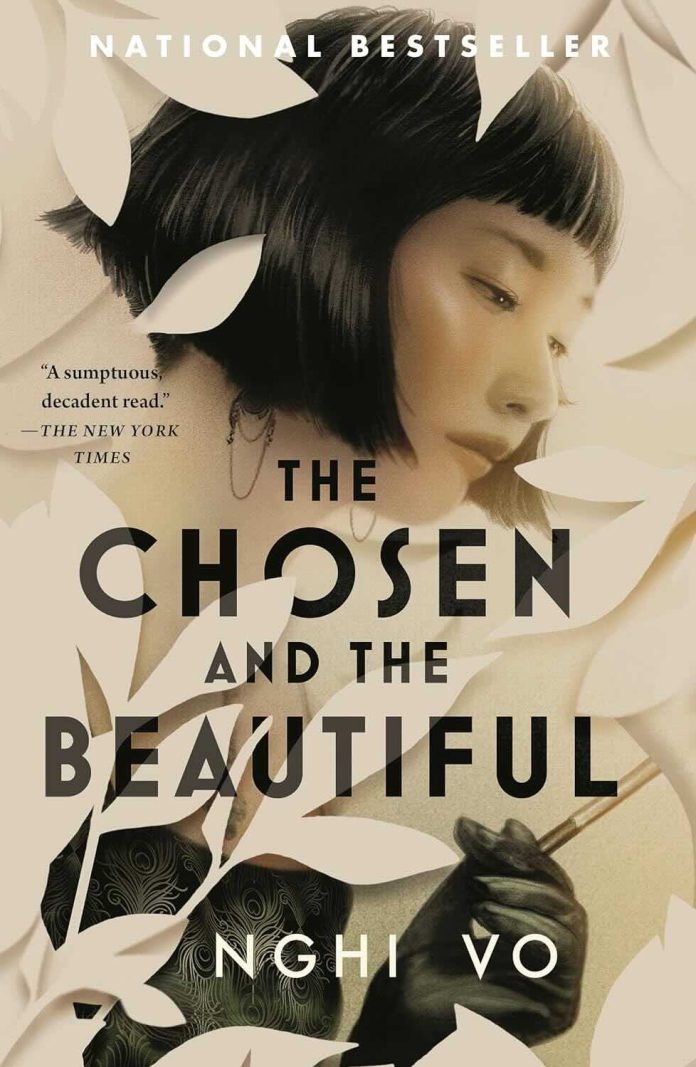
In Nghi Vo’s debut novel, The Chosen and the Beautiful, F. Scott Fitzgerald’s classic The Great Gatsby is turned inside out and reborn through the eyes of Jordan Baker—transformed from Fitzgerald’s peripheral golf champion into a complex queer Vietnamese adoptee navigating the glittering, treacherous world of 1920s American high society. This reimagining is ambitious, often brilliant, and occasionally frustrating—much like its protagonist.
Vo, previously acclaimed for novellas like The City in Glass, The Empress of Salt and Fortune and When the Tiger Came Down the Mountain, brings her talent for rich, atmospheric fantasy to this Jazz Age setting. The result is a novel that burns with magical possibility while exposing the limitations of the American Dream for those who don’t fit the mold.
Paper Magic and Infernal Bargains
The most striking innovation in Vo’s reimagining is her introduction of magic to Fitzgerald’s materialistic world. Jordan possesses the ability to create and manipulate paper constructs—cutting living creatures from paper that temporarily animate before dissolving back into their original form. This ability serves as both cultural connection to her Vietnamese heritage and metaphor for her existence in American society: impressive but viewed as disposable.
Vo’s magical system is gorgeously rendered, particularly in the scenes where Jordan visits Chinatown and encounters others with similar talents. One sequence with a troupe of paper-cutting performers provides some of the novel’s most vivid imagery:
“The petals, the same cream as the paper, opened to reveal a slender girl no taller than a mailbox, and I turned away.
A while ago, I would have been as charmed as anyone, but after what Khai said, I could see it for what it was: cheap, showy, silly.”
The supernatural elements extend beyond paper magic to include demonic pacts, with Jay Gatsby reimagined as having sold his soul for power and wealth. “Demoniac” (demon blood) flows freely at parties as an illegal intoxicant alongside alcohol during Prohibition. These fantastical flourishes add vibrant dimensions to the familiar narrative while functioning as clever metaphors for capitalism, cultural appropriation, and the costs of assimilation.
Strengths: Voice, Atmosphere and Social Commentary
Vo’s greatest triumph is Jordan Baker’s narrative voice—sharp, observant, and often bitterly funny. Jordan views the excesses of the Jazz Age with both participation and detachment, her insider-outsider perspective creating a compelling tension. Her queerness and heritage give her unique insights into the performance of identity required by high society.
The prose is often exquisite, balancing lyrical description with incisive observation:
“However, it was a crowded summer, and it was not until later, when I could thread the steps to disaster together like glass beads on a string, that those times stood out at all.”
The novel excels at atmospheric detail. From Gatsby’s supernaturally enhanced mansion to the visceral descriptions of Willets Point (the “valley of ashes” in the original), Vo crafts a sensory-rich experience that makes the familiar setting feel simultaneously recognizable and strange.
The social commentary is sharp and multi-layered. The introduction of the fictional “Manchester Act”—legislation targeting those deemed undesirable, including immigrants and the “damned”—provides a powerful parallel to the anti-Asian legislation of the era like the Chinese Exclusion Act. Through this device, Vo exposes the xenophobia and racism underpinning the pristine white world of Fitzgerald’s novel.
Weaknesses: Pacing and Plot Structure
Despite its considerable strengths, The Chosen and the Beautiful suffers from uneven pacing and occasional narrative meandering. The first half establishes Jordan’s character and the magical elements but lacks the driving momentum that makes the original Gatsby so tightly constructed. Several sequences, like Jordan’s excursion to Chinatown, feel disconnected from the main plot despite their thematic relevance.
The novel’s adherence to Fitzgerald’s basic plot structure sometimes feels constraining. Jordan, despite being the protagonist, remains on the periphery of the central Gatsby-Daisy-Tom triangle, creating a paradoxical sense that she’s a supporting character in her own story. When the narrative follows the original too closely, Jordan’s agency diminishes; when it deviates to explore her personal journey, the pacing suffers.
The final act introduces several compelling elements—particularly Jordan’s discovery of Nick Carraway’s paper heart and true nature—that feel rushed and underdeveloped. These revelations, which radically transform our understanding of the world and characters, deserve more exploration than they receive.
Character Development: Complexity and Contradictions
Jordan Baker emerges as a fascinating, flawed protagonist whose cynicism serves as both shield and limitation. Her relationship with her identity is complex:
“In truth, the calling card that Khai had slid me was burning a hole in my purse. I didn’t recognize the address precisely, but I thought the neighborhood was rather close to the intersection of Elizabeth and Canal, and that meant Chinatown. Unless the nightly fun wanted to roll over to Alexander’s on White Street, I usually steered clear of Chinatown.”
This ambivalence about her heritage creates internal tension that gives depth to her character arc. Similarly, her relationships with Nick, Daisy, and Gatsby reveal different facets of her personality—her tenderness, cruelty, vulnerability, and strength.
However, secondary characters sometimes lack the same dimensionality. Daisy’s characterization, while an interesting twist on the original, occasionally slips into caricature. Nick’s transformation into a paper construct created to replace the real Nick (who died) is a fascinating twist that feels somewhat rushed in execution.
Comparison to Other Works
The Chosen and the Beautiful joins a growing category of works that reimagine classic literature through marginalized perspectives, similar to Silvia Moreno-Garcia’s Mexican Gothic or Talia Hibbert’s more contemporary romances. It also connects to other Jazz Age reimaginings like Libba Bray’s The Diviners series, though with a more adult orientation.
Vo’s previous novellas demonstrated her skill with fantasy elements grounded in Asian cultural traditions, and this novel continues that thread while expanding her canvas considerably. Fans of her earlier work will recognize her gift for evocative detail and sharp social observation, though this novel embraces a more indulgent, luxurious tone befitting its setting.
The Series Context: Anticipating “Don’t Sleep with the Dead“
As the first book in a planned series with the second installment titled Don’t Sleep with the Dead, The Chosen and the Beautiful leaves several threads open for continuation. Jordan’s journey to Shanghai and Vietnam, mentioned in the final chapter, suggests the sequel will explore her cultural roots more deeply. The introduction of paper magic and the implications of Nick’s constructed nature hint at a mythology that extends beyond American shores.
While The Chosen and the Beautiful works as a standalone reimagining of The Great Gatsby, it also lays groundwork for what could be a more expansive exploration of magic, identity, and belonging in the sequel. The promise of Don’t Sleep with the Dead offers hope that some of the rushed elements of the first book’s conclusion might receive the development they deserve.
Final Assessment: Flawed Brilliance
The Chosen and the Beautiful is a novel of magnificent ambition that doesn’t quite achieve everything it attempts. Its brilliance lies in its atmospheric richness, its provocative reimagining of a literary classic, and its compelling protagonist. Its flaws emerge in structure and pacing, with certain promising elements underdeveloped and others overindulged.
Highlights:
- Exquisite prose that captures both the glamour and the decay of the Jazz Age
- A compelling magical system that enhances rather than diminishes the source material
- Nuanced exploration of identity, belonging, and the costs of assimilation
- Creative reimagining of familiar characters that adds layers of complexity
Drawbacks:
- Uneven pacing, particularly in the middle sections
- Plot threads that feel underdeveloped despite their potential
- Occasional sacrifices of narrative momentum for atmosphere and description
- Some secondary character development feels rushed
At three stars out of five, The Chosen and the Beautiful represents a flawed but ambitious and often mesmerizing debut novel that will appeal particularly to readers who enjoy:
- Literary fantasy with historical settings
- Queer and diverse reimaginings of classic literature
- Rich, descriptive prose and atmospheric storytelling
- Complex, morally ambiguous protagonists
While not perfect, Vo’s novel creates an enchanting, challenging vision of 1920s America where paper can come alive and the boundaries between magic and reality blur like gin in a cocktail—leaving readers curious about what further secrets await in the promised sequel.







