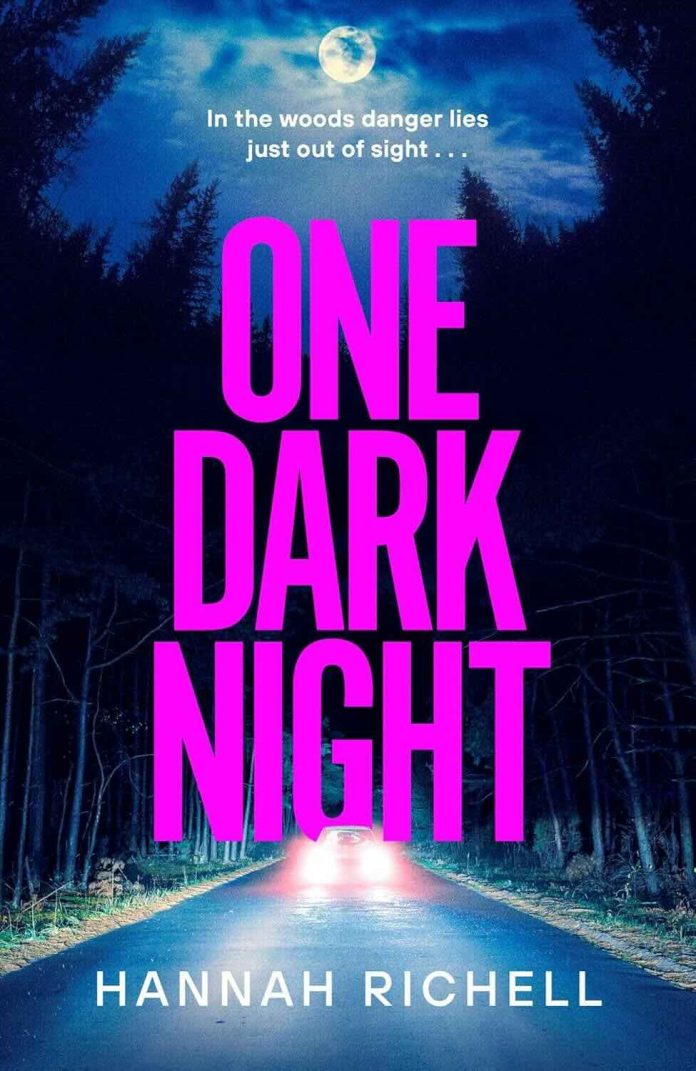
Hannah Richell has carved out a distinctive niche in contemporary psychological thrillers, and her latest offering, One Dark Night, stands as a testament to her evolving mastery of the genre. Set against the brooding backdrop of rural England, this atmospheric murder mystery weaves together the threads of family dysfunction, small-town secrets, and the devastating consequences of privileged youth gone wrong.
A Gothic Tale Rooted in Modern Anxieties
The novel opens on Halloween night at the prestigious Folly View College, where privileged teenagers gather in the woods for a clandestine party near an ominous Gothic folly. When eighteen-year-old Sarah Lawson’s body is discovered the following morning, arranged in a ritualistic pose beneath the tower, the investigation that follows exposes the fault lines running through this seemingly perfect community.
Richell demonstrates remarkable skill in her atmospheric world-building. The woods surrounding Sally in the Wood—named for a local ghost story about a murdered bride—become almost a character in their own right. The folly, with its spiral staircase and gaping windows, looms over the narrative like a malevolent presence. This Gothic sensibility permeates every page, creating an unsettling tension that keeps readers perpetually on edge.
Character Study: When Privilege Meets Vulnerability
The strength of One Dark Night by Hannah Richell lies in its multi-layered character development. Rachel Dean, the school’s guidance counselor, emerges as the novel’s moral center—a woman struggling to balance her professional responsibilities with her concerns for her increasingly distant daughter, Ellie. Richell crafts Rachel with authentic complexity, showing how her expertise in helping others doesn’t necessarily translate to understanding her own child.
Detective Sergeant Ben Chase, Rachel’s ex-husband, provides the investigative backbone of the story. His personal connection to the case—through both Ellie and his own tragic family history—creates compelling conflicts of interest that Richell exploits masterfully. The revelation that his sister Gemma died on the same road years earlier adds layers of psychological depth that resonate throughout the investigation.
However, it’s in her portrayal of the teenage characters that Richell truly excels. Ellie Dean emerges as a fascinatingly unreliable narrator, harboring secrets that make her both sympathetic and suspicious. The author captures the authentic voice of contemporary youth—their casual cruelty, their fierce loyalties, and their tendency toward self-destructive behavior.
Narrative Structure: A Web of Perspectives
Richell employs multiple point-of-view narration to excellent effect, though this technique occasionally dilutes the narrative focus. The shifting perspectives between Rachel, Ben, Ellie, and various other characters create a kaleidoscopic view of events that mirrors the complexity of truth itself. Each character’s version of events feels authentic to their worldview, creating an intricate puzzle for readers to solve.
The author’s decision to structure the novel around the investigation allows for a steady drip-feed of revelations that maintain momentum. However, some chapters feel more essential than others, and certain character perspectives could have been trimmed without losing narrative impact.
The Art of Misdirection
Where One Dark Night by Hannah Richell truly shines is in its masterful use of red herrings. Richell plants suspicion on multiple characters with such skill that readers will find themselves constantly revising their theories. The initial focus on Jamie McIvor—a disturbed ex-convict with connections to Ben’s family tragedy—provides an obvious suspect that allows the real killer to hide in plain sight.
The revelation that Edward Morgan, the charming art teacher, is the true perpetrator comes as a genuine shock, yet feels entirely earned when viewed in retrospect. Richell seeds clues throughout the narrative without telegraphing the solution, creating that perfect balance between surprise and inevitability that defines excellent mystery writing.
Themes: Privilege, Power, and Protection
Beneath its thriller surface, One Dark Night by Hannah Richell offers a sharp critique of privilege and its corrupting influence. The students at Folly View College exist in a bubble of wealth and entitlement that shields them from consequences—until it doesn’t. Sarah Lawson’s death becomes a catalyst for examining how power dynamics play out in educational institutions and families.
The theme of protection—who deserves it, who provides it, and who exploits it—runs throughout the novel. Rachel’s professional dedication to protecting vulnerable students contrasts sharply with her inability to protect her own daughter from the investigation’s scrutiny. Similarly, the school’s immediate concern for its reputation reveals how institutional protection often prioritizes image over individual welfare.
Technical Craft and Atmospheric Mastery
Richell’s prose strikes an effective balance between accessibility and literary sophistication. Her descriptions of the English countryside in autumn create a palpable sense of place, while her dialogue captures the distinct voices of different generations and social classes. The author’s background in both book publishing and film is evident in her cinematic approach to scene-setting and pacing.
The novel’s exploration of trauma—both individual and familial—demonstrates psychological insight without becoming heavy-handed. Ben’s unresolved grief over his sister’s death and its impact on his relationships feels authentic and earned rather than manipulative.
Areas for Critical Consideration
While One Dark Night by Hannah Richell succeeds on many levels, it’s not without its flaws. The novel’s length occasionally works against it, with some subplot threads feeling underdeveloped rather than mysterious. The romance subplot between Rachel and Edward, while necessary for the plot’s mechanics, feels somewhat contrived in its early stages.
Additionally, some readers may find the resolution—while shocking—somewhat rushed. The final revelations about Edward’s manipulation and the circumstances of Sarah’s death could have benefited from more detailed exploration of his psychological motivations.
Richell’s Growing Literary Authority
One Dark Night represents a significant step forward in Hannah Richell’s development as a thriller writer. Her previous works, including The Search Party (2024) and The River Home (2020), established her as a reliable voice in domestic suspense, but this latest novel demonstrates greater confidence in handling darker material and more complex plotting.
The author’s willingness to tackle contemporary issues—from social media’s impact on teenage relationships to the #MeToo movement’s reverberations in educational settings—gives the novel a relevance that elevates it above simple escapist entertainment.
Comparative Analysis and Market Position
One Dark Night by Hannah Richell will appeal to readers who enjoyed Liane Moriarty’s Big Little Lies or Lucy Foley’s The Hunting Party. Like these authors, Richell excels at using genre conventions to explore serious social issues. The novel’s boarding school setting and focus on privileged youth will also resonate with fans of Tana French’s atmospheric mysteries.
However, Richell’s voice remains distinctly her own. Her background as a dual citizen of Britain and Australia brings a unique perspective to English settings, and her exploration of family dynamics feels both universal and culturally specific.
Final Verdict
One Dark Night by Hannah Richell succeeds as both an engaging page-turner and a thoughtful examination of contemporary anxieties. While it may not break significant new ground in the psychological thriller genre, it represents a confident and accomplished entry that should satisfy both casual readers and those seeking more substantial literary merit.
Richell has created a novel that works on multiple levels—as a mystery to be solved, as a character study of people under pressure, and as a social commentary on privilege and power. The atmospheric setting, complex characters, and genuinely surprising resolution combine to create a reading experience that lingers well beyond the final page.
For readers seeking intelligently crafted suspense with Gothic sensibilities and contemporary relevance, One Dark Night delivers on its promises while establishing Hannah Richell as a voice worth following in the crowded field of psychological thrillers.
Similar Reads to Explore
If One Dark Night by Hannah Richell captivated you, consider these atmospheric psychological thrillers:
- The Secret History by Donna Tartt – For dark academia atmospherics and morally ambiguous characters
- In the Woods by Tana French – For lyrical prose and complex investigations with personal stakes
- The Silent Companions by Laura Purcell – For Gothic atmosphere and unreliable narrators
- The Hunting Party by Lucy Foley – For isolated settings and ensemble cast mysteries
- Big Little Lies by Liane Moriarty – For community secrets and family dynamics
- The Thursday Murder Club by Richard Osman – For British settings and clever plotting
- The Turn of the Key by Ruth Ware – For Gothic mansion settings and psychological suspense







