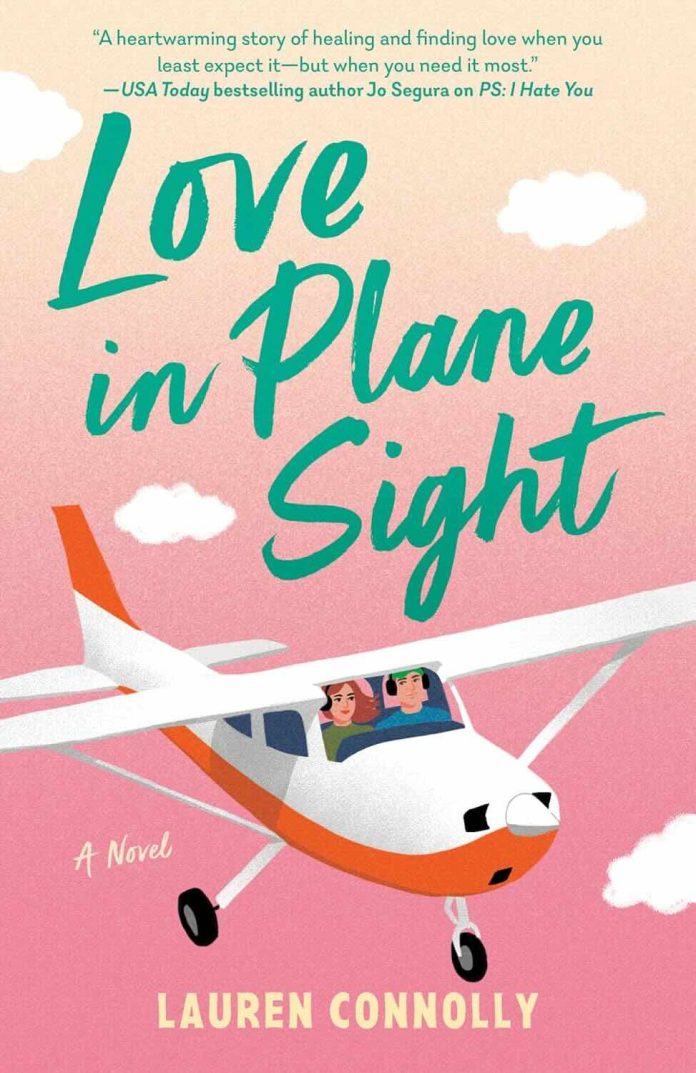
There’s something inherently romantic about aviation—the freedom of the sky, the courage required to leave solid ground behind, the trust placed in both machine and pilot. Lauren Connolly understands this intimately, weaving the exhilaration of flight into a contemporary romance that explores what it means to pursue dreams when life keeps clipping your wings. Love in Plane Sight delivers an enemies-to-lovers romance with genuine emotional depth, though it occasionally struggles to maintain altitude during its more predictable moments.
The Turbulent Beginning
Beth Lundberg’s first experience in a single-engine aircraft doesn’t go as planned. When the propeller stops mid-flight and her brother’s grumpy best friend—George Bunsen—executes a harrowing emergency landing on a highway, Beth discovers two things: she’s absolutely terrified of dying, and she’s inexplicably attracted to the stoic pilot who just saved her life. It’s hardly the meet-cute either of them expected, but it ignites something neither can ignore.
The premise hooks immediately. Connolly doesn’t waste time on slow-burn preliminaries; she throws readers directly into the crisis, establishing both the physical danger and the crackling tension between characters who have spent years avoiding each other. Beth, a waitress at Cornfield’s Diner juggling multiple jobs to cover her mother’s medical bills and a crushing mortgage, has relegated her pilot dreams to someday-maybe territory. George, the seemingly cold and dismissive son of a transportation empire mogul, appears to exist in an entirely different stratosphere—one Beth assumes she’ll never access.
What follows is a romance built on misunderstandings, class divides, and the gradual dismantling of assumptions. When George offers Beth discounted flight lessons, possibly out of guilt for nearly killing her, she’s torn between her desperate desire to fly and her suspicion of his motives. After all, George has spent years making it clear he wants nothing to do with her.
Navigating Complex Airspace
Connolly’s greatest strength lies in her character development. Beth emerges as a protagonist who feels refreshingly real—she’s hardworking without being martyred, ambitious without being ruthless, and vulnerable without losing her spine. Her financial struggles don’t define her, but they shape every decision she makes. The weight of caring for a mother recovering from breast cancer, maintaining a crumbling fixer-upper house, and owing her wealthy half-brother money she can’t repay creates authentic tension that extends beyond the romance.
George proves more layered than initial impressions suggest. His supposed disdain for Beth masks a more complicated truth rooted in family loyalty and protective instincts gone awry. Connolly peels back his reserved exterior gradually, revealing a man grappling with his own grief, parental disappointment, and the courage required to choose his own path rather than follow legacy expectations. His fear of heights—despite being a pilot—provides both humor and poignancy, a physical manifestation of facing fears for the things we love.
The supporting cast enriches the narrative considerably. Beth’s found family at Cornfield’s Diner brings warmth and humor, from her fierce friend Darla to the matchmaking owner Sally. Her relationship with her two mothers—Charlotte and Marge—adds emotional complexity, particularly in scenes addressing Charlotte’s past struggles with depression and the frank discussions about reproductive choices. Brother Shawn radiates golden retriever energy, his unconditional love for Beth serving as both comfort and source of guilt as she hides the truth about her nonexistent trust fund.
Where the Flight Plan Wobbles
Despite its considerable strengths, Love in Plane Sight doesn’t entirely escape the gravitational pull of romance conventions. The central conflict—Beth’s fear that their relationship will be dismissed as her sleeping with her instructor for free lessons—feels somewhat manufactured, particularly given how quickly it’s resolved once properly communicated. While the concern has legitimate roots in the sexism Beth faces within aviation circles, the prolonged misunderstanding tests patience when a simple conversation would clear the air.
The pacing occasionally sputters, particularly in the middle section where the will-they-won’t-they dynamic cycles through similar beats. Some readers may find the extended separation frustrating, though Connolly uses this time to develop Beth’s independence and growth as a pilot. The book club scenes, while entertaining and showcasing the siblings’ playful dynamic, sometimes feel like detours from the main narrative thrust.
Additionally, certain secondary conflicts resolve almost too neatly. The revelation about Beth’s parentage and its fallout, while emotionally resonant, wraps up with remarkable speed and surprisingly little lasting damage to key relationships. The wealthy half-brother’s unquestioning generosity, though heartwarming, occasionally strains credibility. Real-world financial constraints don’t evaporate quite so conveniently, even with support from loving family members.
Technical Precision Meets Emotional Authenticity
Where Connolly truly excels is in balancing technical aviation detail with accessible storytelling. She clearly did her homework, incorporating realistic flight instruction sequences, proper terminology, and the genuine challenges facing aspiring pilots—particularly women in a male-dominated field. The emergency landing sequence crackles with tension, written with enough specificity to satisfy aviation enthusiasts without alienating general romance readers.
The romance itself unfolds with satisfying chemistry. Connolly writes sexual tension with restraint and impact, allowing anticipation to build through charged glances, accidental touches in the cramped cockpit, and the forced proximity of flight instruction. When Beth and George finally cross the friendship line, the payoff feels earned rather than rushed. Their intimate scenes balance heat with emotional vulnerability, revealing character as much as desire.
Connolly’s prose generally hits the right notes—straightforward yet evocative, with flashes of sharp observation and genuine wit. Beth’s first-person narration captures her voice authentically, mixing cynicism with hope, determination with self-doubt. The writing occasionally veers toward telling rather than showing, particularly when conveying George’s emotions through Beth’s interpretation, but these moments don’t significantly detract from the overall reading experience.
Themes That Elevate
Beyond the romance, Love in Plane Sight grapples with meaningful themes that add substance to the love story. The exploration of dreams deferred by economic reality resonates painfully—Beth’s constant calculations of whether she can afford even small pleasures, her guilt over wanting something for herself when family needs loom large, her exhaustion from working multiple jobs. Connolly doesn’t romanticize poverty or suggest love conquers all financial obstacles; instead, she shows how support systems and pursuing passion can coexist with practical solutions.
The treatment of class differences avoids easy villains or saviors. While George’s wealth grants him opportunities Beth lacks, he’s not immune to family pressure or emotional struggle. Beth’s pride and independence prevent the dynamic from sliding into rescue fantasy territory. Their eventual partnership in establishing a nonprofit aviation organization represents collaboration rather than charity, shared purpose rather than one-sided assistance.
The book’s handling of family—both biological and chosen—strikes genuine emotional chords. Beth’s relationship with her mothers, particularly the conversations about Charlotte’s past suicidal ideation and her journey through breast cancer, brings necessary weight to the story. The frank discussion about reproductive choice and Charlotte’s initial consideration of abortion feels refreshingly honest rather than preachy.
The Landing
Love in Plane Sight doesn’t reinvent contemporary romance, but it executes the enemies-to-lovers formula with heart, humor, and enough distinctive elements to make the journey worthwhile. Connolly’s evident passion for aviation infuses the narrative with authenticity, while her understanding of economic anxiety grounds the fairy-tale elements in relatable struggle. Beth and George’s romance earns its happy ending through genuine growth and communication, even if the path there occasionally circles familiar territory.
For readers seeking a romance that balances escapism with substance, that features a heroine chasing professional dreams alongside romantic ones, and that celebrates both chosen and biological family, this delivers. It’s a book about having the courage to reach for what seems impossible, about trusting others to hold you aloft when you’re terrified of falling, and about discovering that sometimes the person who annoys you most might be exactly who you need.
Just be prepared for the occasional bumpy patch of turbulence along the way.
Recommended for readers who enjoyed: The Unhoneymooners by Christina Lauren, The Love Hypothesis by Ali Hazelwood, The Roommate by Rosie Danan, and Lauren Connolly’s previous work PS: I Hate You.







