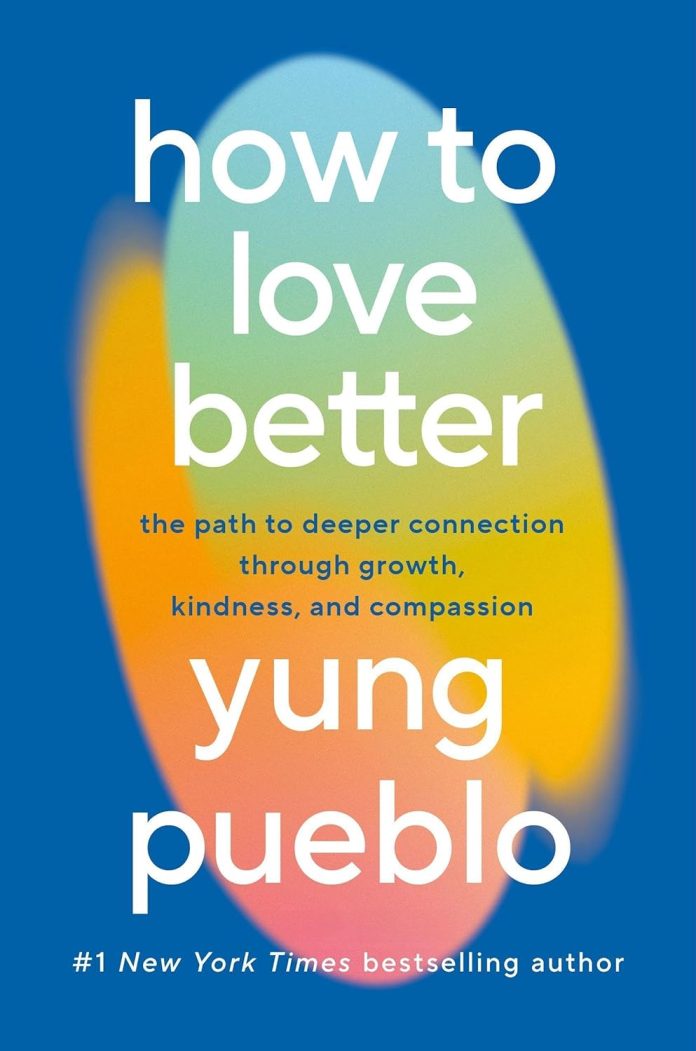
Diego Perez, writing under the pen name Yung Pueblo, has established himself as one of the most influential voices in contemporary self-development literature. Following the success of his Inward Trilogy—Inward, Clarity & Connection, and Lighter—Perez ventures into perhaps his most intimate territory yet with How to Love Better. This latest offering demonstrates a natural evolution from his previous works on personal healing, now applying those hard-won insights to the complex dynamics of romantic relationships.
Where his earlier books focused primarily on individual transformation through meditation and self-awareness, How to Love Better bridges the gap between personal growth and relational harmony. The timing feels particularly relevant as we witness what Perez calls “the healing generation”—millions of people worldwide actively working to break cycles of trauma and dysfunction in their personal lives and relationships.
Beyond Connection: The Architecture of Lasting Love
The book’s central thesis challenges a fundamental misconception about romantic relationships: that strong chemistry and emotional connection are sufficient foundations for lasting love. Perez argues convincingly that while these elements may bring two people together, they cannot sustain a relationship through the inevitable challenges that arise when two imperfect humans attempt to build a life together.
Through thirteen thoughtfully structured chapters, Perez dismantles romantic mythology piece by piece. He reveals how the “happily ever after” narrative has left many of us unprepared for the real work that love requires. His approach is refreshingly honest about the difficulties inherent in partnership while maintaining an optimistic vision of what becomes possible when both individuals commit to growth.
The author’s personal story with his wife Sara provides the book’s emotional backbone. Their relationship serves as a case study in transformation—from two young people who “fought often and fought bitterly” to partners who have learned to navigate conflict with compassion and skill. This vulnerability lends authenticity to Perez’s teachings and demonstrates that the principles he advocates have been tested in the crucible of real-life experience.
The Inner Work as Foundation
Perhaps the most valuable aspect of How to Love Better is its emphasis on individual healing as the prerequisite for healthy relationships. Perez dedicates significant attention to what he terms “the relationship between you and yourself,” arguing that our capacity to love others is directly proportional to our ability to love ourselves well.
The author’s background in Vipassana meditation deeply influences his approach to emotional regulation and self-awareness. He describes how meditation transformed both his inner landscape and his relationship dynamic, providing practical tools for managing reactivity and developing what he calls “non-reactiveness”—the ability to observe difficult emotions without being controlled by them.
This emphasis on inner work distinguishes the book from relationship advice that focuses solely on communication techniques or behavioral modifications. Perez understands that lasting change must occur at the level of perception and emotional patterning, not merely in surface-level interactions.
Practical Wisdom for Modern Challenges
The book excels in addressing contemporary relationship challenges that many self-help books ignore or treat superficially. Perez’s discussion of social media’s impact on romantic expectations is particularly insightful, warning against the trap of comparing our daily reality to others’ carefully curated highlight reels.
His treatment of “preventive communication”—regularly checking in about emotional states to prevent misunderstandings—offers a practical tool that many couples could implement immediately. The concept of building relationships around “voluntary commitments” rather than expectations or demands provides a framework for navigating the balance between individual autonomy and partnership responsibilities.
The chapter on arguing as an art form reframes conflict as an opportunity for deeper understanding rather than a battle to be won. This perspective shift alone could transform how many couples approach disagreements, moving from defensive positions to collaborative problem-solving.
Areas Where the Book Falls Short
While How to Love Better offers valuable insights, it isn’t without limitations. The heavy emphasis on meditation as the primary path to healing may not resonate with all readers, particularly those who find their growth through therapy, religious practice, or other modalities. Perez acknowledges that different approaches work for different people, but his personal bias toward meditation sometimes overshadows this message.
The book also tends toward idealism in places, presenting relationship transformation as more linear and achievable than many readers’ experience suggests. While the author acknowledges that growth takes time and involves setbacks, the overall narrative arc can feel somewhat simplified compared to the messy reality of long-term relationships.
Additionally, some readers may find the spiritual language and concepts less accessible than the more concrete psychological frameworks found in other relationship books. The frequent references to ego dissolution and attachment theory, while philosophically sound, may require additional context for those unfamiliar with Eastern philosophical traditions.
The Healing Generation and Cultural Context
One of the book’s most compelling themes is Perez’s observation about our historical moment. He argues that we’re witnessing an unprecedented cultural shift toward healing and self-awareness, describing our era as one where “millions of people in the world are learning how to love themselves and one another better.”
This contextual framework helps readers understand their relationship struggles not as personal failures but as part of a larger cultural evolution. The idea that we’re collectively learning to break generational patterns of dysfunction provides both hope and motivation for individual change.
The author’s background as a first-generation college student who overcame addiction and found healing through meditation adds credibility to his message about transformation being possible for anyone willing to do the work.
Writing Style and Accessibility
Perez writes with the clarity and directness that characterized his previous works, avoiding academic jargon while maintaining philosophical depth. His prose style is contemplative yet accessible, often reading like extended meditations on the nature of love and human connection.
The book is well-structured, with each chapter building logically on the previous one while standing alone as a complete exploration of its topic. The inclusion of reflection questions at the end of each chapter encourages active engagement with the material rather than passive consumption.
However, some sections feel repetitive, particularly around the themes of attachment and ego. While repetition can aid understanding, it occasionally slows the book’s momentum and may test readers’ patience.
Comparative Context and Recommendations
How to Love Better joins a growing library of relationship books that emphasize personal growth as the foundation for partnership success. It shares common ground with works like Attached by Amir Levine and Rachel Heller, which explores attachment theory, and Getting the Love You Want by Harville Hendrix, which focuses on conscious partnership.
However, Perez’s integration of meditation and mindfulness practices sets his work apart from more traditional relationship advice. Readers who appreciate this approach might also benefit from The Mindful Couple by Matthew McKay or Buddha’s Brain by Rick Hanson for deeper exploration of contemplative practices in relationships.
For those seeking complementary perspectives on relationship dynamics, Hold Me Tight by Sue Johnson offers an excellent exploration of emotional bonding, while The Seven Principles for Making Marriage Work by John Gottman provides research-based practical strategies.
Final Reflections
How to Love Better succeeds in its primary mission of helping readers understand that healthy relationships require more than good intentions and strong feelings. By emphasizing the connection between personal healing and relational capacity, Perez offers a roadmap for sustainable love that goes beyond surface-level compatibility.
The book’s greatest strength lies in its integration of ancient wisdom with contemporary relationship challenges, providing timeless principles in accessible language. While not every reader will resonate with the meditation-heavy approach to personal development, the core insights about the necessity of inner work for outer harmony remain universally applicable.
For couples struggling with recurring patterns of conflict, individuals recovering from heartbreak, or anyone seeking to understand the deeper mechanics of human connection, How to Love Better offers valuable guidance. It serves as both a practical manual and a philosophical exploration of what it means to love consciously in an unconscious world.
The book ultimately delivers on its promise to help readers “love better” by providing both the theoretical framework and practical tools necessary for that transformation. In an era of increasing isolation and relational dysfunction, Perez’s message of hope through healing offers a much-needed antidote to cynicism about love’s possibilities.







