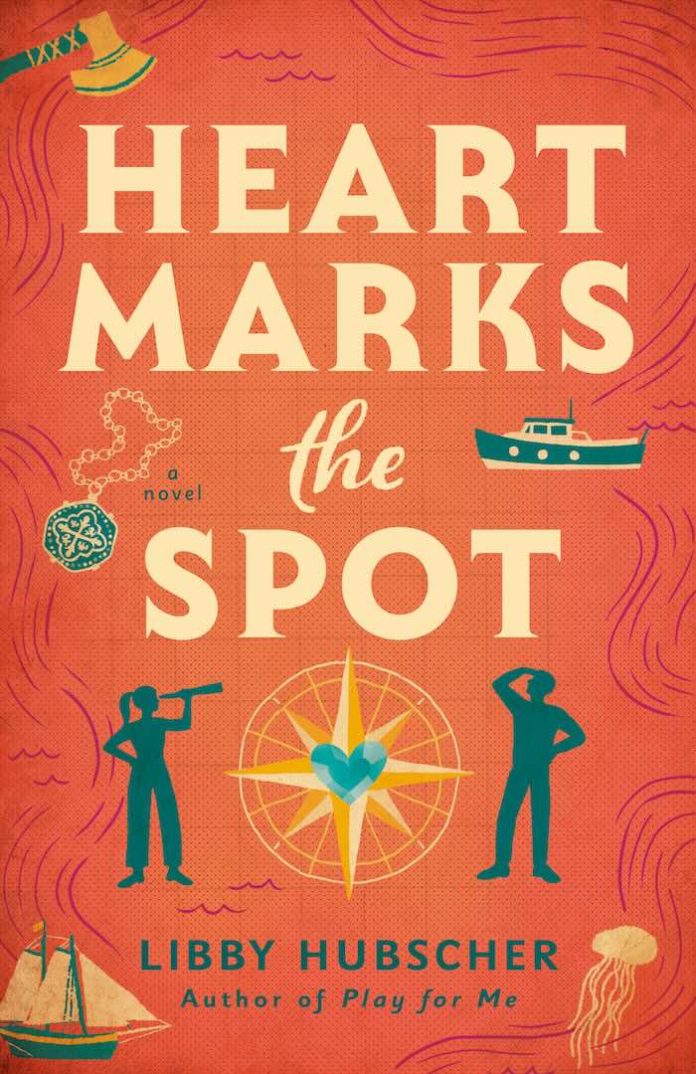
Libby Hubscher’s latest offering, Heart Marks the Spot, delivers a romance that’s as richly layered as the ancient treasures her characters seek. This fourth novel from the author of Meet Me in Paradise, If You Ask Me, and Play for Me combines the thrill of treasure hunting with the vulnerability of second-chance romance, creating a story that manages to be both escapist adventure and emotionally grounded contemporary fiction.
The Hunt Begins: Plot and Structure
The novel follows Stella Moore, a professional treasure hunter whose summer expeditions with her tight-knit crew have become as much about friendship as finding lost riches. When bestselling adventure novelist Huck Sullivan joins their Icelandic expedition seeking inspiration for his next book, what starts as a chance encounter evolves into an unforgettable connection on a black sand beach. However, when Huck disappears without explanation, Stella’s heart becomes as buried as the treasures she seeks.
A year later, as Stella prepares for another hunt—this time for the legendary San Miguel shipwreck off Key West—Huck reappears, seeking material for a sequel and a second chance. The dual timeline structure allows Hubscher to expertly weave the past and present, revealing how love can be both discovered and lost, then found again when we’re finally ready to claim it.
Characters That Feel Like Found Family
Stella Moore: A Heroine Worth Rooting For
Stella emerges as a remarkably complex protagonist whose expertise in treasure hunting contrasts beautifully with her uncertainty in matters of the heart. Her backstory of parental abandonment—first her mother’s death, then her father’s disappearance—provides the emotional foundation that makes her reluctance to trust completely understandable. Hubscher avoids the trap of making Stella’s past a mere plot device; instead, it informs every relationship and decision, particularly her friendship with Teddy and her complicated feelings for Huck.
Stella’s professional competence never wavers, even when her personal life feels chaotic. She can decipher ancient Viking poems and navigate underwater treasure sites with expertise, yet struggles to interpret the map of her own heart. This juxtaposition creates a heroine who feels authentically human—strong in some areas, vulnerable in others.
Huck Sullivan: More Than a Pretty Face
Huck could have easily fallen into the “mysterious tortured artist” trope, but Hubscher gives him genuine depth. His writer’s block stems not just from critical failure but from a crisis of purpose and self-worth that many creative professionals will recognize. His attraction to Stella feels organic, rooted in their intellectual compatibility and shared sense of adventure rather than mere physical chemistry.
The revelation of his family dynamics and the pressure he’s faced as a public figure adds layers to his character that justify his past mistakes. When he writes a fictionalized version of their relationship in his comeback novel, it serves as both plot device and character development—showing his inability to let go while also demonstrating how thoroughly Stella has captured his imagination.
The Supporting Cast: Friends as Family
Perhaps the strongest element of Heart Marks the Spot is its portrayal of chosen family. Teddy, Zoe, and Gus aren’t just supporting characters; they’re integral to both the plot and Stella’s emotional journey. Each brings distinct personality traits and relationship dynamics that feel genuine rather than functional.
Teddy’s character arc deserves particular mention. His descent into alcoholism and unrequited love for Stella could have been handled heavy-handedly, but Hubscher treats his struggles with compassion and complexity. The underwater accident that serves as the novel’s climax isn’t just a plot device—it’s the culmination of Teddy’s internal struggles and serves as a catalyst for everyone’s growth.
Zoe and Gus’s relationship provides a lovely counterpoint to Stella and Huck’s complicated dynamic. Their secret romance, revealed gradually throughout the story, demonstrates how love can flourish quietly alongside friendship, offering hope for Stella’s own romantic future.
Writing Style: Accessible Yet Evocative
Hubscher’s prose strikes an appealing balance between accessibility and literary merit. Her descriptions of both Iceland’s stark beauty and Key West’s tropical abundance are vivid without becoming overwrought. The technical aspects of treasure hunting are woven seamlessly into the narrative, educating readers without feeling like exposition dumps.
The dialogue sparkles with authentic banter, particularly in group scenes where the four friends’ long history shines through their teasing and inside jokes. Hubscher has a particular gift for capturing the rhythm of close friendships—the way people who’ve known each other for years can communicate volumes with a look or a throwaway comment.
The romantic scenes between Stella and Huck are charged with genuine chemistry. Their initial meeting in the Icelandic bar crackles with the kind of intellectual attraction that forms the best foundation for lasting love. Their physical scenes are tastefully written, focusing more on emotional connection than explicit detail, which fits the overall tone of the novel.
Strengths That Shine Like Hidden Gold
Emotional Authenticity
The emotional core of the novel rings true throughout. Stella’s fear of abandonment, Huck’s creative struggles, and Teddy’s self-destructive spiral all feel grounded in realistic human psychology rather than romance novel convenience.
Adventure Elements
The treasure hunting backdrop provides genuine excitement without overwhelming the character development. Hubscher clearly did her research, and the technical details of metal detecting, diving, and archaeological recovery feel authentic.
Friendship Dynamics
The portrayal of long-term friendship groups is particularly strong. The way the four main characters relate to each other feels lived-in and genuine, with each relationship having its own distinct flavor.
Second-Chance Romance Done Right
The novel avoids the common pitfall of second-chance romances where the original conflict feels manufactured. Huck’s reasons for leaving are complicated and understandable, even if misguided, making their reunion feel earned rather than inevitable.
Areas Where the Treasure Map Could Use Fine-Tuning
Pacing in the Middle Act
The middle section of the novel occasionally feels slower than necessary, particularly during some of the diving sequences that don’t directly advance either the plot or character development. While these scenes establish atmosphere and technical credibility, they sometimes interrupt the romantic momentum.
Teddy’s Arc Resolution
While Teddy’s struggle with alcoholism is handled sensitively, his recovery and acceptance of Stella and Huck’s relationship feels somewhat rushed in the final act. A bit more space for this emotional journey would have strengthened the overall narrative arc.
Villain Absence
Unlike some romance novels that benefit from external antagonists, Heart Marks the Spot focuses primarily on internal conflicts. While this generally works well, the lack of any significant external threat (beyond natural diving hazards) occasionally makes the stakes feel lower than they could be.
The Historical and Adventure Elements
Hubscher’s incorporation of real historical elements—from Viking saga poetry to the 1715 Spanish Treasure Fleet—adds depth and authenticity to the adventure elements. The fictional Gunnarsson’s treasure and the Elephant’s Heart diamond feel plausible within the established historical context, and the clues leading to their discovery are clever without being impossibly obscure.
The diving scenes are particularly well-rendered, conveying both the beauty and danger of underwater treasure hunting. The crisis sequence involving Teddy’s accident effectively raises the stakes while serving the character development, showing how quickly adventure can turn to tragedy.
Romance Tropes and Innovations
While Heart Marks the Spot employs several familiar romance tropes—second chances, forced proximity, grumpy/sunshine dynamics—Hubscher brings fresh approaches to each. The “muse” element, where Huck writes a fictionalized version of their relationship, adds a meta-textual layer that feels organic rather than gimmicky.
The friends-to-lovers subplot with Zoe and Gus provides nice contrast to the more turbulent main romance, while Teddy’s unrequited feelings add complexity without becoming melodramatic. The resolution, where both couples find happiness while maintaining their group friendship, feels satisfying and realistic.
Comparison to Hubscher’s Previous Works
Readers familiar with Hubscher’s earlier novels will recognize her signature blend of emotional depth and situational humor. Like Meet Me in Paradise, this novel features a heroine discovering what she truly wants from life, but Stella’s journey feels more focused and less scattered than some of Hubscher’s previous protagonists.
The adventure elements in Heart Marks the Spot are more prominent than in her previous contemporary romances, suggesting an author continuing to expand her range while maintaining her core strengths in character development and emotional authenticity.
Final Verdict: A Romance Worth the Hunt
Heart Marks the Spot succeeds as both adventure story and romance novel, offering readers the best of both genres without shortchanging either. Hubscher has crafted characters who feel like people you’d want to befriend and a romance that develops naturally from genuine compatibility and attraction.
While not without minor flaws in pacing and some rushed character resolutions, the novel delivers on its central promises: an exciting treasure hunt, a satisfying romance, and genuine emotional payoffs. The ending, which sees both couples finding happiness while the friend group remains intact, strikes the perfect balance between wish fulfillment and realistic relationship dynamics.
Hubscher continues to establish herself as a reliable voice in contemporary romance, capable of balancing humor with genuine emotion and familiar tropes with fresh perspectives. For readers seeking an escape that doesn’t require checking their intelligence at the door, Heart Marks the Spot marks exactly the right spot.
Who Should Read This Book
Perfect for readers who enjoy:
- Second-chance romance with genuine emotional stakes
- Adventure elements integrated into contemporary romance
- Strong friendship dynamics and chosen family themes
- Competent heroines in non-traditional careers
- Authors like Christina Lauren, Emily Henry, or Sarah Adams
Recommended for fans of:
- Treasure hunting adventures
- Iceland and Florida Keys settings
- Writer heroes and strong female protagonists
- Group dynamics and ensemble casts
- Books that balance humor with emotional depth







