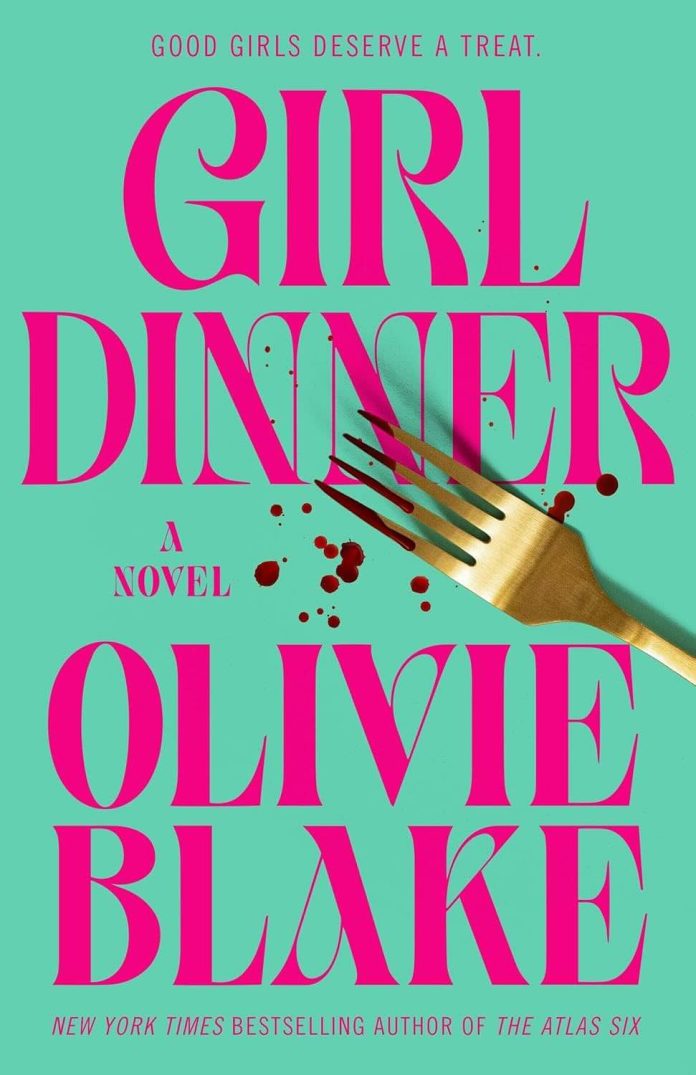
In a literary landscape increasingly populated by thrillers that mistake gore for depth, Olivie Blake’s Girl Dinner emerges as something genuinely unsettling—a horror novel that understands the difference between shock and actual terror. This isn’t your typical dark academia romp through ivy-covered halls; it’s a scathing examination of how women consume and are consumed by systems of power, wrapped in the velvet glove of sorority life and academic prestige.
The Anatomy of Appetite
Blake constructs her narrative around two women who couldn’t be more different yet share an identical hunger. Nina Kaur, a sophomore desperate to shed the skin of her disappointing freshman year, sees The House—the most exclusive sorority on campus—as her golden ticket to belonging. Meanwhile, Dr. Sloane Hartley, an adjunct professor struggling with the suffocating reality of academia and motherhood, discovers her role as the sorority’s academic liaison offers something she’s been starving for: the illusion of having it all.
The genius of Blake’s approach lies in how she mirrors the trajectories of these two women. Both are products of systems that promise fulfillment while demanding sacrifice, and both find themselves drawn to The House’s peculiar brand of sisterhood. Nina seeks validation after a year of social exile, while Sloane craves the confidence and success she witnesses in the alumnae who seem to float through life untouched by the mundane struggles that define her existence.
Sisterhood and Savagery
What separates Girl Dinner from other entries in the dark academia genre is Blake’s sophisticated understanding of feminine power dynamics. The House isn’t just an exclusive club—it’s a carefully constructed ecosystem where beauty, achievement, and belonging intertwine in ways that feel both aspirational and deeply unnatural. The Monday night dinners, described with Blake’s characteristic sensual prose, become rituals of excess that hint at something far more sinister beneath the surface.
Blake’s exploration of cannibalism as metaphor works precisely because she grounds it in recognizable patterns of female competition and consumption. The literal act of eating human flesh becomes an extension of how women are already expected to devour each other—professionally, socially, personally—in service of systems that ultimately benefit no one. The horror isn’t just in what The House members do, but in how logically it follows from the pressures they face.
The Politics of Perfection
The novel’s most brilliant insight concerns the impossible mathematics of modern femininity. Blake refuses to offer easy answers about whether Nina and Sloane are victims or participants in their own destruction. Instead, she presents a world where every choice is already compromised, where success demands complicity, and where the promise of empowerment often masks deeper forms of exploitation.
Through Sloane’s academic perspective, Blake interrogates contemporary feminism’s tendency toward what she calls “cannibalization”—the way movements for women’s liberation often end up consuming their own participants. The novel suggests that when systems are fundamentally broken, even acts of rebellion can become forms of participation. This isn’t a book that believes in easy salvation or clear moral boundaries.
Literary Craftsmanship and Critique
Blake’s prose has evolved considerably since her breakout Atlas Six series. Where those books sometimes struggled with pacing and character development, Girl Dinner demonstrates a mature understanding of how to build atmospheric dread while maintaining propulsive storytelling. Her descriptions of food and consumption are particularly masterful—sensual enough to be seductive, detailed enough to become nauseating.
The book’s structure, alternating between Nina’s initiation and Sloane’s awakening, creates a sense of inevitability that drives the horror. Blake understands that the most effective terror comes not from surprises but from watching characters walk knowingly toward destruction because all other paths have been closed off.
However, the novel occasionally suffers from Blake’s tendency toward over-explanation. Some of the philosophical discussions between Sloane and her colleagues feel more like sociology lectures than natural dialogue. While these moments provide important context for the book’s themes, they sometimes interrupt the narrative flow that Blake otherwise maintains so skillfully.
The Hunger Games of Higher Education
What makes Girl Dinner particularly effective is how it uses the familiar trappings of campus life to explore broader questions about institutional power. The University setting isn’t just backdrop—it’s an active participant in the story’s violence. From Sloane’s precarious position as an adjunct to Nina’s desperate need for social capital, the academic environment creates the conditions that make The House’s promises so seductive.
Blake’s portrayal of academic life rings with uncomfortable authenticity. The casual sexism of department meetings, the impossible balance between career and motherhood, the way young women’s bodies become sites of both empowerment and exploitation—these details ground the supernatural elements in recognizable reality.
Beyond the Bite
The novel’s conclusion avoids both redemption and complete despair, instead suggesting that understanding systems of power is the first step toward surviving them. Blake doesn’t offer solutions, but she does provide clarity about the nature of the problems her characters face. This restraint makes the book more powerful than it would be with either a neat resolution or complete nihilism.
In the Company of Cannibals
Readers who appreciate Girl Dinner would do well to explore The Secret History by Donna Tartt for its pioneering work in academic horror, or My Education by Susan Choi for its nuanced exploration of female desire and competition. More recently, The Seven Husbands of Evelyn Hugo by Taylor Jenkins Reid offers another examination of how women navigate systems that demand performance in exchange for survival.
For those interested in Blake’s broader work, Alone with You in the Ether demonstrates her capacity for psychological complexity, while The Atlas Six showcases her skill with ensemble casts and supernatural elements. Girl Dinner represents a maturation of both these strengths.
Girl Dinner succeeds because it refuses to separate its horror from its politics or its supernatural elements from its social commentary. Blake has created a book that works as both an effective thriller and a serious examination of contemporary gender dynamics. It’s a novel that understands that sometimes the most honest response to impossible circumstances is hunger—and that the most frightening question isn’t whether we’ll be consumed, but whether we’ll participate in our own consumption.
In a genre often content with surface-level scares, Blake offers something rarer: a horror novel that genuinely horrifies because it feels entirely possible. Girl Dinner suggests that the real monsters might not be the ones hiding in the shadows, but the ones sitting at beautifully set tables, using proper silverware, and asking politely for seconds.







