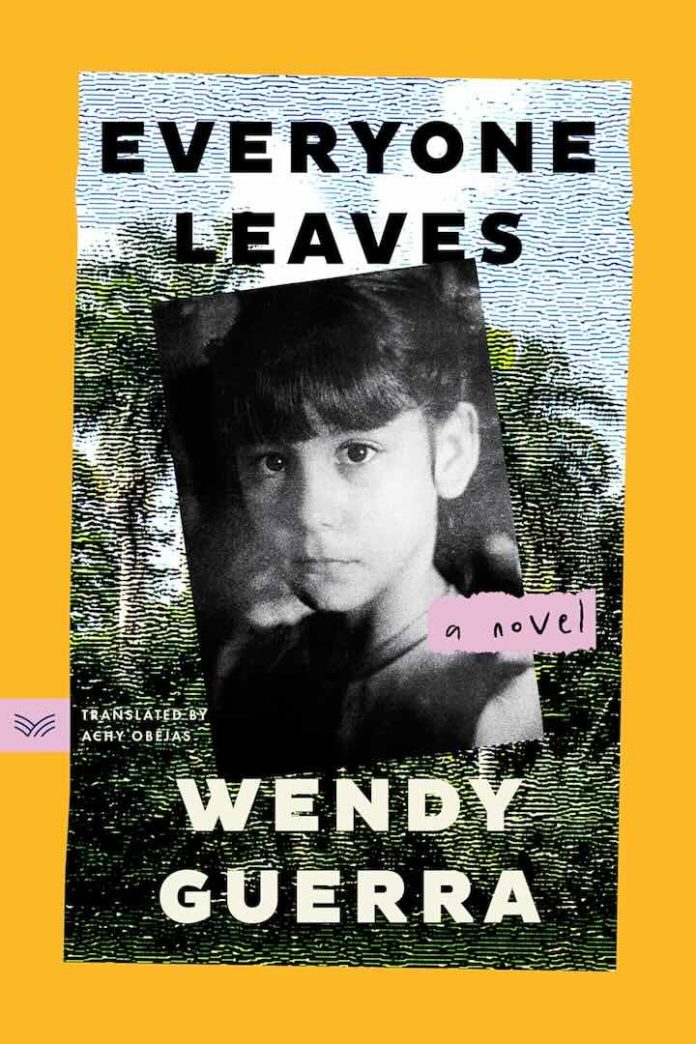
Wendy Guerra’s Everyone Leaves stands as one of the most unflinching and intimate portrayals of life in post-revolutionary Cuba ever committed to paper. Originally published as Todos se van in 2006 and winner of the Bruguera Novel Prize, this semi-autobiographical novel captures the profound personal cost of political upheaval through the eyes of a young girl navigating an increasingly fractured world. Translated with remarkable sensitivity by Achy Obejas, the English edition brings Guerra’s lyrical yet devastating narrative to a broader audience, offering readers an unvarnished glimpse into the human toll of ideological transformation.
The Art of Testimony: Writing Through Survival
Guerra’s decision to structure the novel as a diary proves both brilliant and heartbreaking. The protagonist Nieve—whose name ironically means “snow” in a tropical climate—begins writing at age eight, documenting her life with the raw honesty that only children possess. This narrative choice allows Guerra to capture the authentic voice of youth while simultaneously revealing how political systems infiltrate the most intimate spaces of family life.
The diary format serves multiple functions beyond mere storytelling device. It becomes Nieve’s lifeline, her constant companion as parents, lovers, and friends abandon her one by one. As she observes early in the novel, “I take refuge in my Diary; I only feel comfortable and normal within its pages.” This dependency on written expression mirrors Guerra’s own relationship with literature as both survival mechanism and artistic calling.
The progression from The Childhood Diary to The Adolescent Diary demonstrates Guerra’s masterful understanding of how voice evolves with experience. The earlier entries pulse with the immediate pain of abandonment and confusion, while later sections develop a more sophisticated political consciousness without losing their emotional core.
Political Intimacy and Personal Betrayal
Perhaps the novel’s greatest achievement lies in its refusal to treat politics as an abstract force. Instead, Guerra shows how ideology seeps into every corner of daily existence, poisoning relationships and distorting natural bonds. The custody battle between Nieve’s parents becomes a microcosm of larger political tensions, with personal grievances expressed through accusations of ideological deviation.
The character of Fausto, Nieve’s mother’s Swedish boyfriend, embodies the novel’s complex relationship with foreign influence. His eventual deportation serves as both personal tragedy and political metaphor, illustrating how the Revolution’s paranoia about external corruption ultimately destroys the very relationships that might have offered genuine love and stability.
Guerra’s treatment of gender dynamics within revolutionary Cuba proves particularly incisive. Despite the Revolution’s promises of equality, the women in the novel—Nieve’s mother, her friends, and eventually Nieve herself—find themselves repeatedly victimized by patriarchal structures that merely adopt revolutionary rhetoric while maintaining traditional power imbalances.
The Aesthetics of Displacement
The novel’s exploration of artistic identity within restrictive political frameworks adds another layer of complexity to its narrative. Nieve’s time at the National School of Art reveals the contradictions faced by young artists attempting to express themselves authentically while navigating ideological expectations. Her relationship with Alan Gutiérrez and the Arte Calle group illustrates how artistic rebellion becomes both necessary and dangerous.
Guerra’s descriptions of the school itself—built on the grounds of a former country club and designed to resemble a naked woman—serve as powerful metaphors for the Revolution’s attempt to transform bourgeois spaces into revolutionary ones. Yet the beauty of the architecture cannot mask the surveillance and control that permeate every aspect of student life.
The romantic subplot with Osvaldo, the successful painter, demonstrates how artistic privilege operates within Cuba’s system. His access to diplomatic stores, international travel, and luxury goods contrasts sharply with Nieve’s mother’s struggles with basic necessities. This relationship forces readers to confront uncomfortable questions about complicity and resistance within authoritarian systems.
Narrative Strengths and Structural Innovations
Guerra’s prose achieves remarkable emotional authenticity through its careful attention to sensory detail and psychological nuance. Her descriptions of food, weather, and physical spaces create an immersive experience that places readers directly within Nieve’s world. The recurring motif of swimming—from the lagoon in Cienfuegos to the ambassador’s pool to the final plunge into Havana’s harbor—provides structural coherence while symbolizing Nieve’s repeated attempts to escape her circumstances.
The novel’s treatment of time proves particularly sophisticated. Rather than following a strict chronological progression, Guerra allows the diary format to create a more organic sense of temporal flow, with certain periods compressed and others expanded based on their emotional significance rather than their duration.
The translation by Achy Obejas deserves special recognition for maintaining the novel’s linguistic authenticity while making it accessible to English-speaking readers. Obejas, herself a Cuban-born writer, brings cultural sensitivity and poetic sensibility to her rendering of Guerra’s prose.
Critical Considerations and Minor Limitations
While Everyone Leaves succeeds brilliantly as both political testimony and coming-of-age narrative, certain aspects of its structure occasionally strain credibility. Some diary entries, particularly in the later sections, achieve a level of literary sophistication that seems inconsistent with their supposed spontaneous composition. This tension between artistic achievement and documentary authenticity creates occasional moments of stylistic uncertainty.
The novel’s treatment of secondary characters sometimes feels underdeveloped, particularly in the adolescent sections where Nieve’s relationships with classmates and teachers could benefit from deeper exploration. The character of Antonio, while compelling, arrives relatively late in the narrative and disappears too quickly to achieve his full dramatic potential.
Additionally, readers unfamiliar with Cuban history may struggle with some of the novel’s political references and cultural contexts, though this limitation reflects the work’s authentic insider perspective rather than any failure on Guerra’s part.
Cultural Impact and Literary Significance
Everyone Leaves occupies an important position within contemporary Cuban literature, offering a female perspective on experiences typically dominated by male narratives. Guerra’s willingness to address difficult topics—including family violence, political persecution, and artistic censorship—establishes the novel as a crucial document of Cuban social history.
The work’s exploration of generational trauma proves particularly relevant to contemporary discussions about the lasting effects of political upheaval. Nieve’s repeated experiences of abandonment create psychological patterns that extend far beyond individual relationships, suggesting how political systems can damage entire generations’ capacity for trust and connection.
Essential Reading for Understanding Modern Cuba
Everyone Leaves succeeds as both intimate psychological portrait and broad social commentary, offering readers an essential perspective on one of the twentieth century’s most significant political experiments. Guerra’s courage in addressing difficult truths, combined with her considerable literary talents, creates a work that transcends its specific cultural context to speak to universal themes of loss, resilience, and the search for authentic self-expression.
For readers seeking to understand contemporary Cuba beyond political rhetoric and ideological abstractions, Everyone Leaves provides an invaluable resource. Its emotional honesty and artistic integrity make it essential reading for anyone interested in how individual lives intersect with historical forces.
Similar Reading Recommendations
Readers who appreciate Everyone Leaves should consider exploring:
- Dreaming in Cuban by Cristina García – Another multigenerational saga exploring Cuban family dynamics across political divides
- The Feast of the Goat by Mario Vargas Llosa – A powerful examination of dictatorship’s effects on personal relationships in the Dominican Republic
- The Cemetery of Untold Stories by Julia Alvarez – Chronicles resistance and survival under political oppression in another Caribbean context
- Waiting for Snow in Havana by Carlos Eire – A memoir offering another perspective on childhood in revolutionary Cuba
Guerra’s subsequent works, including her poetry collections and later novels, continue to explore themes of displacement and identity, though Everyone Leaves remains her most widely recognized achievement. This novel stands as both a powerful work of literature and an irreplaceable historical document, ensuring its place in the canon of essential Latin American fiction.







