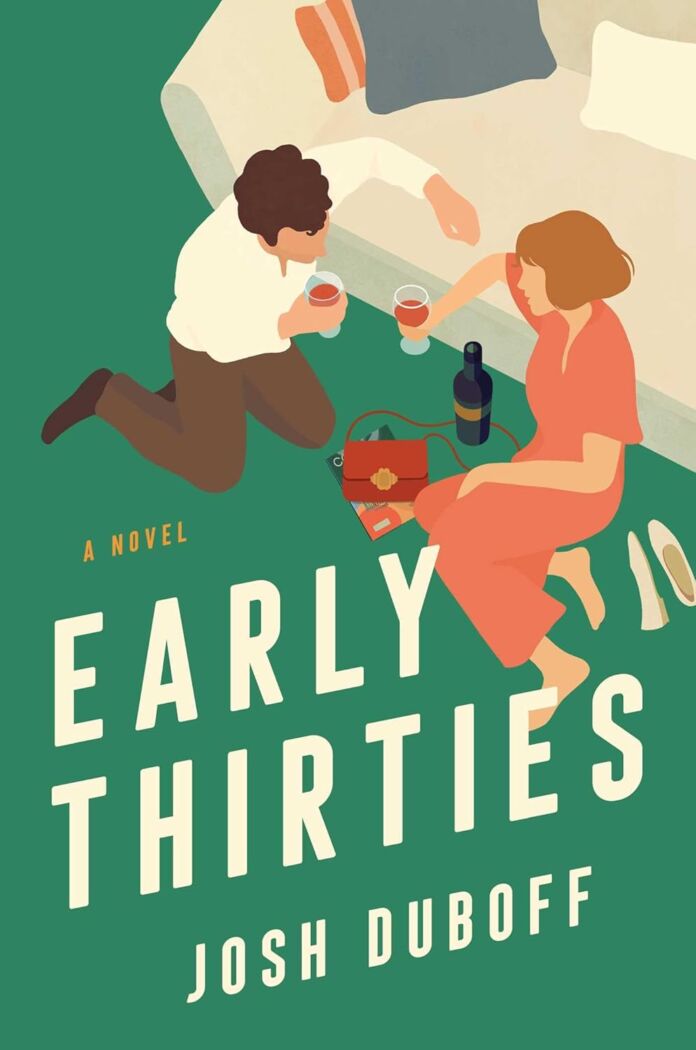
Josh Duboff’s debut novel “Early Thirties” offers a painfully accurate snapshot of that unsettling period when the carefree spontaneity of one’s twenties crashes headlong into the expectations of proper adulthood. Following best friends Victor and Zoey as they navigate career ambitions, romantic relationships, and the changing nature of their decade-long friendship, Duboff creates a narrative that’s equal parts witty and melancholic.
As someone who’s inhabited the New York media landscape similar to Victor’s, I found myself wincing with recognition at the novel’s sharp observations about professional insecurity and social media performance anxiety. Yet for all its cultural specificity, the emotional core of this story—the complex, evolving friendship between two people who’ve grown into different versions of themselves—feels universal and timeless.
Plot and Character: Misaligned Stars
In Josh Duboff’s “Early Thirties,” we meet Victor Harris, a gay entertainment journalist who’s just secured his dream job at glossy magazine Corridor after recovering from an accidental overdose following a devastating breakup with his boyfriend Oliver. His best friend Zoey Prince is planning her wedding to the straight-laced Tom while questioning her future at fashion startup Selah.
The novel tracks their parallel journeys as Victor navigates a career-threatening incident with actress Valentina Lack and later deals with Oliver’s sudden death, while Zoey ends her marriage, gets an abortion, and launches her own fashion company. The once-inseparable friends begin drifting apart, their communication fraught with unspoken resentments and divergent life paths.
What works brilliantly is Duboff’s refusal to romanticize this friendship. Victor and Zoey are messy, sometimes self-absorbed people who genuinely love each other but don’t always know how to express it. Their relationship isn’t idealized—it’s complicated by jealousy, neediness, and the reality that growing up sometimes means growing apart.
Style and Structure: A Social Media Feed in Novel Form
Duboff employs a rotating perspective that shifts between Victor, Zoey, and occasionally peripheral characters like publicist Erica or influencer-adjacent Hannah. This technique creates a mosaic effect that mirrors the fractured attention spans of the characters themselves.
The prose is conversational and witty, peppered with references to celebrity culture and social media dynamics. Dialogue flows naturally, capturing the particular cadence of educated millennials who use humor as both shield and connection point. In one particularly effective exchange at a baby shower, Victor and Zoey trade barbs while revealing deeper vulnerabilities:
“I can’t believe you wore a bow tie to Oliver’s funeral.”
“Yeah, that was weird. I wanted to make him laugh, I think.”
“Okay, so now we are communing with the deceased?”
“Yes, we are.”
However, this stylistic choice sometimes works against the novel’s emotional impact. Some sections feel like scrolling through an Instagram feed—entertaining but ultimately ephemeral. The narrative occasionally lacks the depth needed for readers to fully invest in the characters’ growth beyond their self-constructed personas.
Strengths: Authentic Voices and Cultural Commentary
Where Duboff truly excels is in his pitch-perfect rendering of millennial anxiety and the peculiar dynamics of friendship in the social media age. The novel captures with uncomfortable precision how we perform versions of ourselves for different audiences:
- Media industry insights: Having worked at Vanity Fair, Duboff brings authentic detail to Victor’s professional world, from the hollow thrill of celebrity encounters to the manufactured crisis of Twitter controversies.
- The friendships-as-partnerships phenomenon: The novel astutely explores how many millennials have invested in friendships with the emotional intensity once reserved for romantic relationships.
- Digital identity vs. authentic self: Characters constantly filter their experiences through the lens of how they’ll be perceived, whether on Instagram or by their immediate circle.
- Gentrified New York as character: The city appears as both enabler and constraint—offering endless possibilities while trapping its inhabitants in loops of comparison and FOMO.
Weaknesses: Emotional Depth and Pacing Issues
For a novel centered on friendship and personal growth, “Early Thirties” by Josh Duboff sometimes keeps readers at an emotional distance from its protagonists. This seems partly intentional—reflecting the characters’ own guardedness—but it occasionally undermines the novel’s most poignant moments.
The pacing sometimes feels uneven, with the first half devoted to establishing Victor and Zoey’s worlds, while major developments come rapidly in the second half. Oliver’s death, a pivotal event, happens off-page and might have benefited from more narrative weight.
Most frustrating is the resolution, which feels somewhat rushed after the carefully built tension between the friends. While realistic in its ambiguity, the ending might leave readers wanting a more definitive exploration of what Victor and Zoey’s relationship will look like moving forward.
Cultural Resonance: A Time Capsule of Millennial Unease
“Early Thirties” by Josh Duboff functions beautifully as cultural commentary on this specific moment in millennial history: the disillusionment with social media, the anxiety about career paths in dying industries, the recalibration of friendship as people pair off or pursue different life goals.
The novel keenly observes the peculiar career landscape its characters navigate:
- The hollowness of media jobs that blur work and identity
- The performance element of professional success
- The rise of influencer culture and personal branding
- The particular challenges of navigating these worlds as a gay man (Victor) or a woman trying to assert herself (Zoey)
In capturing these elements so precisely, Duboff creates a compelling time capsule of this particular moment in American urban life.
Comparison to Similar Works
Readers who enjoyed Rebecca Serle’s “In Five Years” will appreciate the emotional complexity and New York setting, though Duboff’s work is less focused on romance. Gabrielle Zevin’s “Tomorrow, and Tomorrow, and Tomorrow” similarly explores evolving friendship over time, albeit with more narrative sweep. Fans of Dolly Alderton’s “Ghosts” and Sally Rooney’s Normal People will recognize the sharp observations about dating and disillusionment.
The book also shares DNA with TV shows like “Search Party” or “Industry” in its keen observation of millennial professional culture and identity crises. Like these works, “Early Thirties” by Josh Duboff balances humor and poignancy while examining how we construct ourselves in relation to others.
Final Verdict: A Promising Debut with Room for Growth
“Early Thirties” by Josh Duboff is a sharp, entertaining debut that accurately captures the uncertainties of this life stage. While it doesn’t quite reach the emotional depths it occasionally gestures toward, the novel succeeds as both cultural commentary and character study.
Duboff’s strength lies in his ability to render the specific anxieties of his generation with humor and empathy. The novel is at its best when examining the shifting terrain of friendship—how we grow together and apart, how we fail each other, and how we sometimes find our way back.
For a first novel, it’s an impressive achievement that promises even better work to come as Duboff continues to develop his voice. Readers who recognize themselves in Victor and Zoey will find much to appreciate in this bittersweet portrait of millennial growing pains.
Who Should Read This Book:
- Anyone navigating the strange terrain between youth and established adulthood
- Readers interested in media industry dynamics and celebrity culture
- Those who appreciate complex, flawed friendships in fiction
- Millennials seeking fiction that reflects their specific cultural moment
- Fans of contemporary fiction that balances humor and emotional weight
“Early Thirties”by Josh Duboff may not be a perfect novel, but in capturing the uncomfortable space between who we were and who we’re becoming, it achieves something honest and worthwhile. Like its characters, it’s messy, sometimes frustrating, but ultimately endearing in its authenticity.







