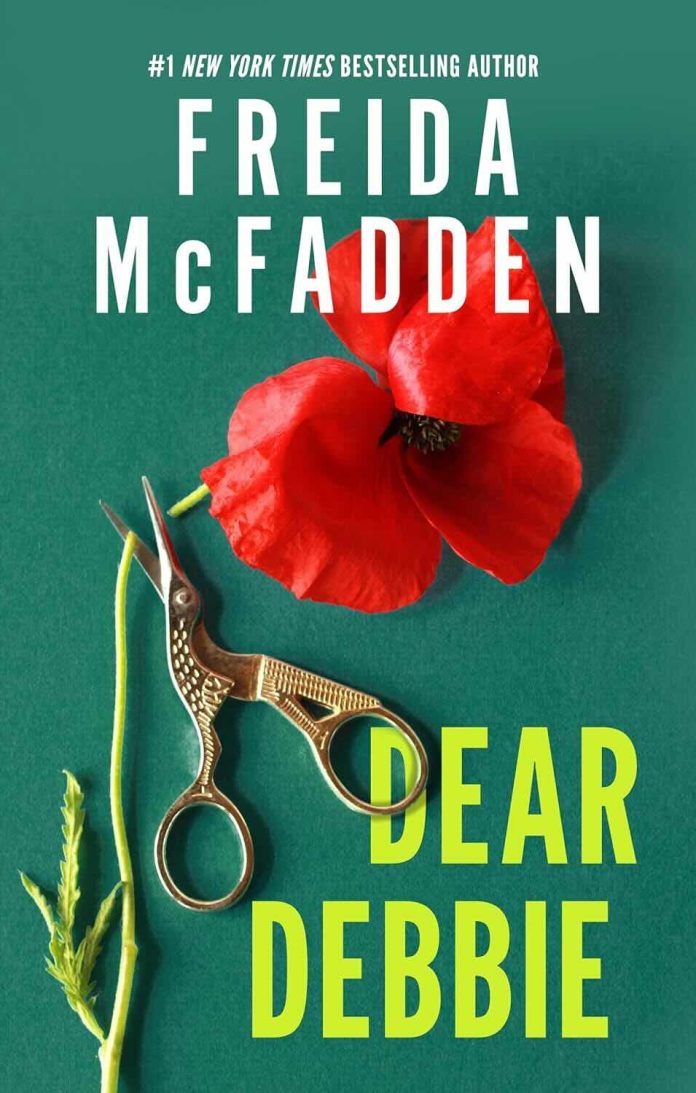
There’s something deliciously subversive about watching a middle-aged advice columnist transform from doormat to vigilante, and Dear Debbie by Freida McFadden delivers this transformation with the author’s signature blend of psychological suspense and dark wit. McFadden, the #1 New York Times bestselling author behind The Housemaid series, returns with a twisted tale that asks: what happens when a woman who spends her life solving other people’s problems finally decides to solve her own?
The Unraveling of a Perfect Suburban Life
Debbie Mullen appears to have it all figured out. As the voice behind the beloved “Dear Debbie” advice column in her local newspaper, she dispenses wisdom to the wives of New England with neighborly warmth and practical solutions. She’s a devoted mother to two teenage daughters, a supportive wife to her accountant husband Cooper, and the kind of woman who makes homemade brownies and maintains a pristine suburban existence. But beneath this carefully constructed facade, everything is falling apart.
When Dear Debbie by Freida McFadden opens, we’re immediately thrust into Debbie’s world as it begins to crumble. She loses her job after advising a woman to leave her abusive husband—advice that’s deemed too radical for a “family-oriented” publication. Her husband is keeping secrets. Her daughters are struggling with their own battles. And Debbie herself carries trauma from her past that she’s never shared with anyone. McFadden masterfully establishes the pressure cooker of suburban domesticity before turning up the heat to explosive levels.
A Protagonist Who Defies Expectations
What makes this thriller particularly compelling is McFadden’s portrayal of Debbie as neither purely victim nor villain. She’s a former MIT computer science student whose promising career was derailed by a traumatic assault in college—a wound she’s carried silently for over twenty years. Her decision to become an advice columnist and stay-at-home mother wasn’t born from lack of ambition but from circumstances beyond her control. This complexity elevates the narrative beyond simple revenge fantasy into something more nuanced and psychologically rich.
Debbie’s technical skills become central to the plot in unexpected ways. She’s created tracking apps, designed sophisticated software, and possesses the kind of digital literacy that makes her far more dangerous than anyone suspects. The juxtaposition of her domestic persona with her formidable intellect creates a fascinating tension throughout the novel. When she begins drafting increasingly violent responses to advice column letters—suggesting strangulation, poisoning, and worse—we watch a woman who’s been ignored and underestimated finally claim her power, albeit in the most disturbing ways possible.
Multiple Perspectives Deepen the Mystery
McFadden employs her trademark multiple-perspective narrative structure to exceptional effect here. We alternate between Debbie’s viewpoint and those of her husband Cooper, her daughters, and several other characters whose roles in the story gradually become clear. This technique serves multiple purposes:
- Building suspense through information gaps: Each character knows different pieces of the puzzle, keeping readers constantly reassessing their understanding
- Creating unreliable narration: As we see events through different eyes, we question who’s telling the truth and what’s really happening
- Developing empathy across characters: Even those who initially seem antagonistic become more complex when we access their thoughts
- Accelerating pacing: The short chapters and shifting perspectives create propulsive momentum that makes the book difficult to put down
Cooper’s chapters prove particularly effective as he slowly realizes his wife may be connected to a series of suspicious incidents affecting people who’ve wronged their family. His growing horror mirrors the reader’s own dawning comprehension that the sweet advice columnist might be capable of something truly dark.
Where the Thriller Excels and Where It Stumbles
Dear Debbie by Freida McFadden showcases the author’s strengths while also revealing some weaknesses that prevent it from achieving true masterpiece status. On the positive side, McFadden’s plotting remains incredibly tight. The web of revenge she weaves is intricate and satisfying, with each act of retribution building toward an explosive climax. The domestic thriller setting—book clubs, high school drama, neighborhood tensions—grounds the increasingly wild events in relatable reality.
The novel’s dark humor cuts through what could otherwise become oppressively grim material. Debbie’s sardonic internal monologue and the absurdity of suburban social politics provide necessary levity. McFadden has a gift for skewering upper-middle-class pretensions while maintaining empathy for her characters’ genuine struggles. The book club scenes, in particular, are both hilarious and uncomfortable in their accuracy.
However, the novel occasionally sacrifices character development for plot mechanics. Some supporting characters feel more like chess pieces moved into position for the twist rather than fully realized people. The pacing, while generally excellent, becomes almost frenetic in the final third as McFadden juggles multiple revelations and confrontations. Readers seeking deep psychological exploration may find the treatment somewhat surface-level despite the heavy themes of trauma, marriage, and maternal protection.
The ending, while providing the requisite McFadden twist, may strike some readers as either perfectly subversive or slightly too convenient depending on their tolerance for ambiguity. Without venturing into spoiler territory, the resolution raises questions about justice, complicity, and the price of secrets that the novel doesn’t fully explore in its rush to conclude.
Themes That Resonate Beyond the Thriller Framework
Beneath the suspenseful plotting, Dear Debbie by Freida McFadden grapples with weightier questions about women’s rage, domestic labor, and the performance of suburban perfection. Debbie’s transformation speaks to the exhaustion of being everyone’s caretaker while receiving no care in return. Her years of dispensing advice to women trapped in bad situations while unable to escape her own trauma creates a poignant parallel.
The novel also examines marriage and the secrets couples keep from each other. Cooper’s hidden alcoholism and Debbie’s concealed past create a relationship built on partial truths. Their mutual deceptions feel authentic to how many long-term partnerships function—not with dramatic lies but through strategic omissions and unspoken agreements not to probe too deeply. McFadden suggests that perhaps all marriages require a degree of selective blindness to survive.
The mother-daughter relationships prove equally complex, particularly Debbie’s fierce protectiveness over her girls that crosses into dangerous territory. When her eldest daughter faces exploitation from her boyfriend, Debbie’s response escalates beyond any reasonable intervention. This raises uncomfortable questions about where maternal protection ends and harmful control begins.
McFadden’s Signature Style Adapted to New Territory
Fans of The Housemaid, Never Lie, and The Coworker will recognize McFadden’s distinctive approach while noting how she adapts her formula here. Rather than centering on a single shocking twist, this novel builds layers of revelation throughout. The short chapters—often just a few pages—create compulsive readability. McFadden writes in accessible, straightforward prose that prioritizes story over stylistic flourishes, making even complex plot machinations easy to follow.
The New England setting adds atmospheric heft, with its old homes, close-knit communities, and veneer of respectability hiding darker truths. McFadden captures the specific social dynamics of suburban book clubs, school politics, and neighborhood hierarchies with obvious familiarity. These details ground the more extreme plot developments in recognizable reality.
Who Will Find This Thriller Most Satisfying
Dear Debbie by Freida McFadden will particularly appeal to readers who enjoy:
- Revenge narratives featuring underestimated women
- Domestic thrillers with suburban settings
- Multiple-perspective storytelling
- Fast-paced plotting with frequent twists
- Dark humor mixed with suspense
- Stories exploring marriage and motherhood
- Accessible writing that prioritizes entertainment
This may be less satisfying for those seeking:
- Deep psychological character studies
- Literary prose and experimental structure
- Slow-burn suspense
- Morally clear protagonists
- Realistic depictions of legal consequences
Final Thoughts on a Twisted Suburban Tale
Dear Debbie by Freida McFadden delivers exactly what the author’s millions of fans have come to expect: a twisty, entertaining thriller that keeps you guessing while providing vicarious satisfaction through its protagonist’s increasingly bold actions. While it doesn’t quite reach the heights of McFadden’s best work, it remains a solidly entertaining read that explores timely themes about women’s suppressed rage and the costs of maintaining perfect facades.
The novel succeeds most when allowing Debbie’s complexity to shine through—a woman simultaneously sympathetic and frightening, victim and aggressor, loving mother and potential murderer. Less successful are the moments when plot convenience overtakes character logic, but these missteps rarely derail the overall experience. McFadden has crafted another page-turner that will satisfy existing fans while potentially winning new readers with its subversive take on suburban domesticity and the dark side of being everyone’s problem-solver while drowning in your own.
If You Enjoyed This, Try These Similar Thrillers
Readers who appreciated the revenge elements and suburban setting of this novel should consider:
- The Housemaid by Freida McFadden – McFadden’s breakout hit featuring another seemingly powerless woman who turns the tables
- Never Lie by Freida McFadden – A therapist’s dark secrets emerge in this twisty psychological thriller
- The Coworker by Freida McFadden – Workplace drama meets murder mystery in McFadden’s signature style
- The Woman in Cabin 10 by Ruth Ware – Claustrophobic thriller with an unreliable narrator
- My Lovely Wife by Samantha Downing – A suburban couple’s deadly secret life explored with dark humor
- Something in the Water by Catherine Steadman – Ordinary people make extraordinary moral choices with deadly consequences
- The Perfect Marriage by Jeneva Rose – Secrets and lies in a seemingly ideal relationship
- The Last Mrs. Parrish by Liv Constantine – A con artist infiltrates wealthy circles with revenge in mind







