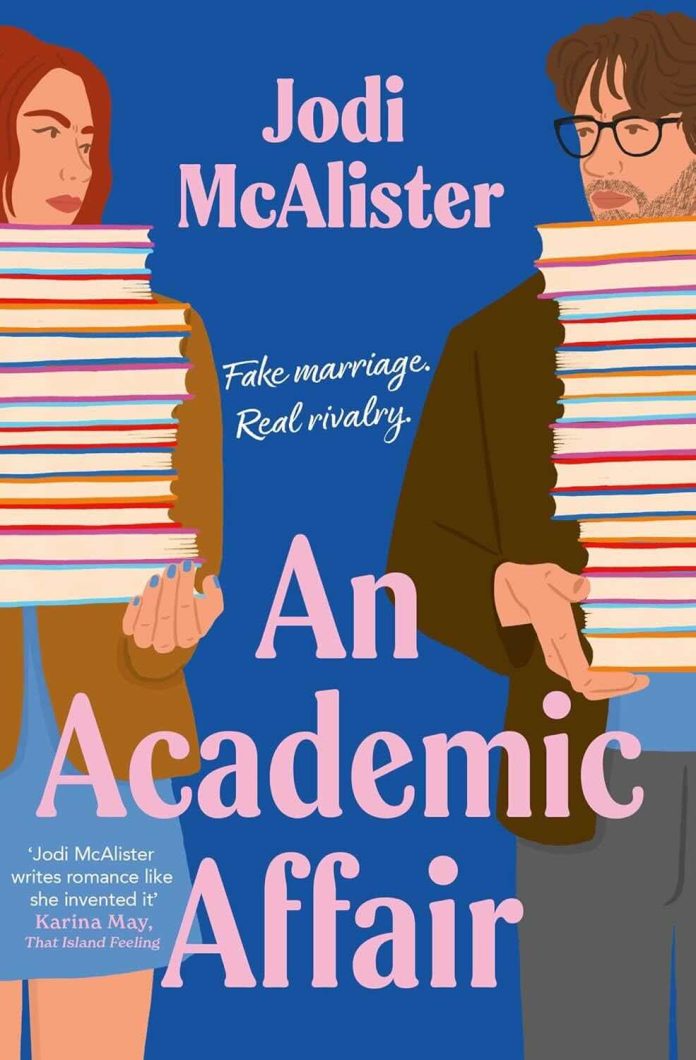
Jodi McAlister’s latest offering, An Academic Affair, presents readers with something genuinely refreshing in contemporary romance: a love story that acknowledges the messy realities of modern employment while delivering all the swoony moments we crave. This isn’t your typical enemies-to-lovers romance where the conflict stems from mere misunderstanding. Instead, McAlister crafts a narrative where two brilliant scholars must navigate actual systemic barriers while discovering their feelings run deeper than academic rivalry.
Dr. Sadie Shaw and Dr. Jonah Fisher have spent thirteen years as intellectual adversaries, their debates becoming legendary within their literature department. When a coveted permanent teaching position opens at Lyons University in Hobart, both recognize this might be their only escape from the brutal casualization of academia. Sadie, who grew up in poverty and fought tooth and nail for everything she’s achieved, researches popular fiction—a field many traditional scholars dismiss. Jonah, born into academic royalty as the son of an eminent professor, specializes in early modern drama but constantly questions whether his achievements stem from merit or privilege.
The setup transforms from competitive to collaborative when Sadie proposes something extraordinary: they should get married. Not for love, but to exploit the partner hire clause in her contract, securing them both permanent positions. What begins as a marriage of convenience gradually evolves into something neither protagonist anticipated, forcing both to confront their deepest insecurities about worthiness, belonging, and love itself.
The Heart of the Story: Eucatastrophe and Earned Happiness
In An Academic Affair, McAlister’s decision to frame this narrative around the concept of eucatastrophe—Tolkien’s term for the sudden joyous turn when all seems lost—proves ingenious. Sadie’s PhD research focused on this phenomenon in romance novels, and watching her live through her own eucatastrophe creates layers of meta-textual richness. The author demonstrates that happiness, particularly for those who’ve struggled, feels most profound when balanced against the possibility of loss.
The romance develops with remarkable patience. Rather than rushing toward physical intimacy, McAlister allows emotional connection to build through small domestic moments: morning coffee rituals, shared wine on the balcony, collaborative lecture writing sessions that stretch into early morning hours. These two scholars communicate primarily through literary references and academic banter, creating a unique romantic language that feels authentic to their world.
Jonah’s perspective, delivered through chapters filled with scholarly footnotes that reveal his hidden feelings, offers particular delight. His marginalia becomes a window into fifteen years of suppressed longing, transforming seemingly throwaway observations into profound declarations. When readers discover that annotations like “YES” and “RELATABLE CONTENT” pepper his texts about pining and unrequited love, the revelation lands with devastating emotional impact.
Characters Worth Investing In
Sadie Shaw emerges as one of romance’s most compelling heroines precisely because she refuses to be likable in conventional ways. She’s combative, defensive, and carries survivor’s guilt about her success. Her relationship with her sister Chess, a brilliant lawyer, provides the emotional backbone of her character arc. Chess, having essentially raised Sadie after their mother’s death, represents both unconditional love and the impossibility of perfection. Their reconciliation after a devastating rift demonstrates that familial love requires as much work and vulnerability as romantic love.
Jonah Fisher subverts the “cinnamon roll hero” archetype by presenting a man genuinely struggling with privilege and its implications. His journey from “Tweed Jonah”—pompous and entitled—to “Cardigan Jonah”—vulnerable and caring—happens gradually, with realistic setbacks. His relationship with his sister Fiona, who’s navigating divorce and single motherhood, grounds his character in genuine stakes beyond the central romance. Watching him learn to be present for his family without performing competence offers refreshing male character development.
The supporting cast of An Academic Affair enriches rather than clutters the narrative:
- Chess Shaw, whose legal brilliance and fierce protectiveness make her unforgettable
- Fiona Fisher, whose warmth contrasts beautifully with her family’s coldness
- Van and Annie, the housemates who’ve watched this romance develop for years
- Professor Petrovski, whose sexist microaggressions represent systemic academic discrimination
The Academic Setting: More Than Background
McAlister, herself an academic specializing in popular romance, brings insider knowledge to every page. The “precariat”—insecurely employed academics living contract-to-contract below the poverty line—forms the foundation of the entire plot. This isn’t window dressing; the casual employment crisis drives character motivation and stakes throughout.
The novel’s treatment of modern university corporatization, with its “Renewniversity” workforce realignment and budget cuts masquerading as innovation, will resonate painfully with anyone familiar with higher education. Yet McAlister balances critique with genuine love for scholarship, teaching, and intellectual community. The union organizing subplot, while sometimes feeling didactic, reflects real activist work happening in universities globally.
The professional wrestling-style teaching methodology Sadie and Jonah develop—interrupting each other’s lectures with scripted debates—demonstrates creative pedagogical thinking while serving as metaphor for their relationship dynamic. Students respond enthusiastically, showing how genuine intellectual disagreement can be generative rather than destructive.
Writing Style and Structure: Wit Meets Wisdom
McAlister’s prose sparkles with intelligence without becoming inaccessible. Literary references range from Christopher Marlowe to Jennifer Crusie, treating popular romance with the same scholarly respect as canonical drama. The dual perspective structure, alternating between Sadie’s straightforward narration and Jonah’s footnote-laden chapters, creates delightful tonal contrast.
The footnotes deserve special mention. Rather than gimmicky distraction, they function as Jonah’s internal monologue, revealing thoughts he cannot voice. These marginal notes—sometimes scholarly, sometimes desperately romantic—transform reading into an act of literary archaeology, uncovering his true feelings buried beneath academic performance.
Dialogue crackles with authentic academic banter. These characters speak like people who’ve spent years developing vocabulary and rhetorical skill, yet their conversations never feel artificial. The arguments feel earned, rooted in real intellectual differences and genuine emotional stakes.
Where the Story Occasionally Stumbles
Despite its many strengths, An Academic Affair isn’t without minor weaknesses. The pacing sags slightly in the middle section, where the workload complaints, while valid, sometimes overwhelm the romantic development. Readers might wish for more breathing room between the external conflicts (job security, family drama, union activism) and the internal emotional journey.
The resolution of the Chess-Sadie conflict, while emotionally satisfying, arrives somewhat abruptly after months of estrangement. Given how central their relationship is to Sadie’s character, the reconciliation could have benefited from more sustained exploration rather than happening largely off-page through letters.
Additionally, Professor Petrovski’s villainy occasionally tips into caricature. While sexist academics certainly exist, his consistent antagonism lacks the complexity that makes other conflicts in An Academic Affair feel so real. More nuanced institutional barriers might have served the story’s social commentary better.
The Verdict: Smart Romance for Thoughtful Readers
An Academic Affair succeeds brilliantly at what it attempts: creating a romance that takes both its genre and its setting seriously. This isn’t escapism that requires readers to forget real-world problems; instead, it asks what romance looks like when people face genuine structural barriers to happiness and stability.
McAlister demonstrates that smart romance doesn’t mean sacrificing emotional intimacy or steamy scenes for intellectual posturing. The sex scenes, when they arrive, feel earned and emotionally resonant, grounded in these characters’ specific needs and desires. The academic setting enhances rather than overshadows the love story.
Readers who enjoy character-driven romance with substantial emotional stakes will find much to love here. Those drawn to workplace romance, particularly in non-corporate settings, will appreciate the authentic portrayal of academic labor. Anyone who’s ever felt like an imposter in their own success will recognize themselves in these protagonists.
Similar Reads to Explore
If An Academic Affair captured your heart, consider these titles:
- The Love Hypothesis by Ali Hazelwood – Another STEM academic romance with fake dating elements
- The Roommate by Rosie Danan – Sex-positive romance with characters pursuing unconventional careers
- Get a Life, Chloe Brown by Talia Hibbert – Grumpy/sunshine dynamic with genuine character growth
- Beach Read by Emily Henry – Writers with different genres working in close proximity
- The Ex Talk by Rachel Lynn Solomon – Workplace enemies-to-lovers in radio broadcasting
McAlister’s previous Bachelor series (Not Here to Make Friends, Can I Steal You for a Second, and Here for the Right Reasons) showcases her talent for dissecting reality television romance with similar wit and warmth.
Final Thoughts
An Academic Affair represents contemporary romance at its most ambitious and intelligent. McAlister has crafted a love story that respects both the genre’s emotional conventions and readers’ desire for substance. This is romance that believes love can exist alongside career ambition, that happiness requires both personal growth and systemic change, and that the most profound connections develop when people see and accept each other’s full complexity.
For readers seeking romance that challenges as much as it comforts, that makes them think while making them swoon, this novel delivers eucatastrophe in the truest sense: joy made more profound by the darkness that preceded it.