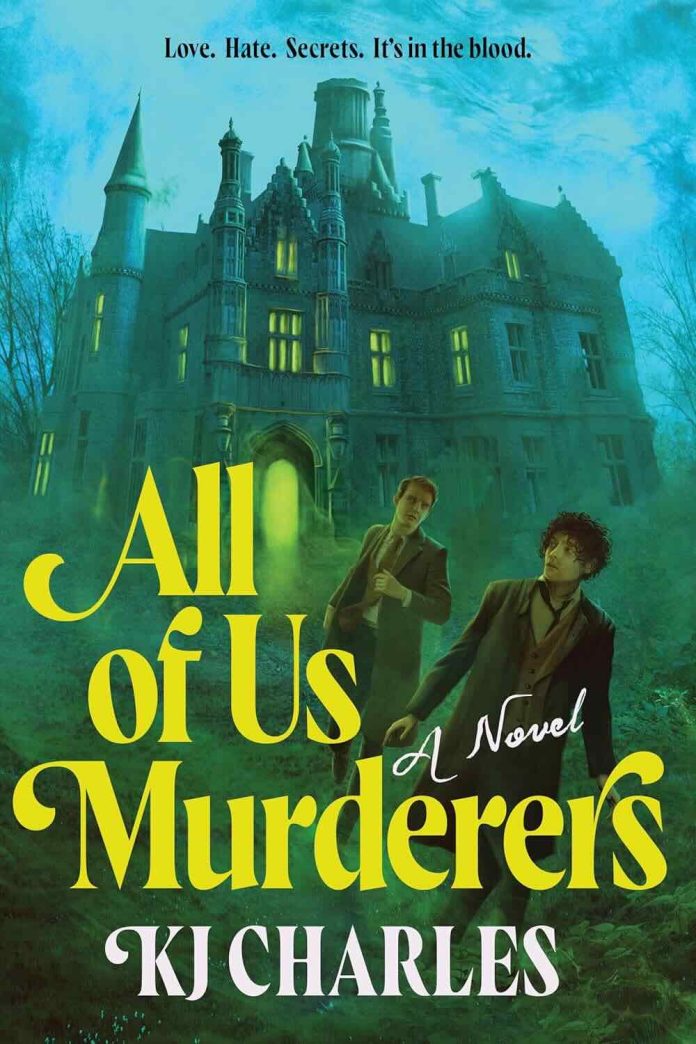
K.J. Charles delivers her most ambitious genre-blending yet with All of Us Murderers, a deliciously atmospheric tale that successfully marries the claustrophobic terror of classic Gothic fiction with the emotional complexity of a second-chance romance. Set against the windswept bleakness of Dartmoor in the early 1900s, this novel proves that sometimes the most frightening monsters are the ones we already know.
The story follows Zebedee “Zeb” Wyckham, summoned to the forbidding Lackaday House by his wealthy cousin Wynn, only to discover that all his least favourite relatives have been gathered for what amounts to a matrimonial competition. The prize? The hand of young Jessamine and the family fortune. The complication? Zeb’s ex-lover Gideon Grey is now employed as Wynn’s secretary, and the doors of the manor have been firmly locked behind them all.
Character Development That Transcends Genre Expectations
A Neurodivergent Protagonist Done Right
Charles’s portrayal of Zeb as a character with ADHD traits represents a masterclass in authentic neurodivergent representation. Rather than relying on tired stereotypes or treating his differences as mere quirks, the author weaves Zeb’s neurodivergence into the very fabric of his character. His tendency to hyperfocus—becoming completely absorbed in his writing or research to the exclusion of everything else—serves both the mystery plot and his personal growth arc.
The relationship dynamics between Zeb and Gideon gain particular poignancy through this lens. Their past breakup stemmed not from lack of love but from Gideon’s inability to understand Zeb’s different way of processing the world, while Zeb’s shame about his perceived failings prevented honest communication. Charles avoids the harmful narrative that neurodivergent people need to be “fixed” by their partners, instead showing how understanding and accommodation can strengthen relationships.
Romance That Earns Its Happy Ending
The reunion between Zeb and Gideon crackles with unresolved tension and genuine emotional stakes. Their relationship feels lived-in and real, marked by the kind of specific irritations and tender understanding that come from true intimacy. Charles doesn’t shy away from the messiness of their past—Zeb’s devastating response to Gideon’s declaration of love, Gideon’s rigid expectations—while building toward a reconciliation that feels earned rather than convenient.
The physical chemistry between them is palpable, but more importantly, their emotional reconnection unfolds with the careful attention to consent and communication that marks Charles’s best romantic writing. Their stolen moments of intimacy amid the growing danger provide both respite and heightened tension.
Gothic Atmosphere That Actually Chills
Literary Horror with Modern Sensibility
In All of Us Murderers, Charles demonstrates impressive literary sophistication in her handling of Gothic conventions. The meta-textual element—with Zeb realizing that events are mirroring his grandfather Walter’s sensationalist novels—adds layers without becoming gimmicky. Walter Wyckham’s fictional works (clearly inspired by the excesses of authors like William Beckford) provide both plot structure and thematic depth, exploring how stories of violence and exploitation continue to haunt subsequent generations.
The atmospheric writing genuinely unsettles. Charles builds dread through accumulating details: flickering gaslights, mysterious figures in cowls, and the oppressive weight of family secrets. The house itself becomes a character, its locked gates and towering walls creating a sense of inescapable doom that echoes the best Gothic tradition while avoiding melodrama.
Social Commentary Wrapped in Sensation
Beneath the supernatural trappings lies sharp social criticism. The servants’ stories of exploitation and abuse by the Wyckham family members reveal the novel’s true horror: not ghosts or druids, but the casual cruelty of the privileged class. Rachel’s matter-of-fact recounting of how various Wyckhams have ruined the lives of those in their power provides the story’s most chilling moments.
Where the Novel Stumbles
Pacing Issues in the Middle Act
While the opening and climax maintain excellent tension, the middle sections occasionally drag as Charles juggles multiple plot threads. Some of the family backstory, while thematically relevant, feels overly detailed for what it contributes to either the romance or mystery plots. Readers looking for constant forward momentum may find these sections testing their patience.
Supporting Character Development
Several secondary characters in All of Us Murderers, particularly the other Wyckham relatives, veer toward caricature. While Wynn emerges as a complex antagonist driven by genuine (if misguided) grief, characters like Hawley and Bram remain somewhat one-dimensional. Given the large cast, this limitation becomes noticeable, particularly when these characters play crucial roles in the climax.
Mystery Resolution
The revelation of the true culprit and their methods, while satisfying from a thematic standpoint, may leave readers who prefer more traditional puzzle-solving disappointed. The solution relies more on psychological understanding than deductive reasoning, which fits the novel’s themes but might not satisfy all mystery readers.
Technical Craft and Historical Detail
Charles’s research into the period feels thorough without overwhelming the narrative. The details of early automobile travel, domestic arrangements in grand houses, and social attitudes toward neurodivergence all ring true. Her prose maintains the slightly heightened tone appropriate to Gothic fiction while remaining accessible to modern readers.
The dialogue particularly shines, with each character maintaining a distinct voice. Zeb’s tendency toward rambling observations and Gideon’s careful formality both reveal character while advancing plot and theme.
Similar Reads for Gothic Romance Lovers
Readers who enjoy Charles’s blend of genres in All of Us Murderers might appreciate:
- The Death of Jane Lawrence by Caitlin Starling – another Gothic romance with supernatural elements and period setting
- Mexican Gothic by Silvia Moreno-Garcia – for atmospheric horror with strong romantic elements
- The Invisible Life of Addie LaRue by V.E. Schwab – for the longing and second chances theme
- The Secret Lives of Country Gentlemen (also by K.J. Charles) – for similar historical romance with mystery elements
- A Lady for a Duke by Alexis Hall – for nuanced historical romance with marginalized protagonists
Final Verdict
All of Us Murderers succeeds brilliantly as both Gothic horror and romantic fiction, proving that genre-blending can enhance rather than dilute storytelling when done with skill and purpose. Charles’s commitment to authentic representation, combined with her atmospheric writing and emotional intelligence, creates a novel that satisfies on multiple levels.
While not without flaws—particularly in pacing and some character development—the book offers rich rewards for readers willing to embrace its ambitious scope. The central romance between Zeb and Gideon provides genuine emotional stakes, while the Gothic elements create an appropriately dark backdrop for themes of family trauma and social inequality.
This is K.J. Charles at her most literary and ambitious, delivering a novel that respects both its genre heritage and its contemporary audience. For readers seeking sophisticated historical romance with genuine atmosphere and meaningful representation, All of Us Murderers proves well worth the claustrophobic journey through Lackaday House’s locked gates.







