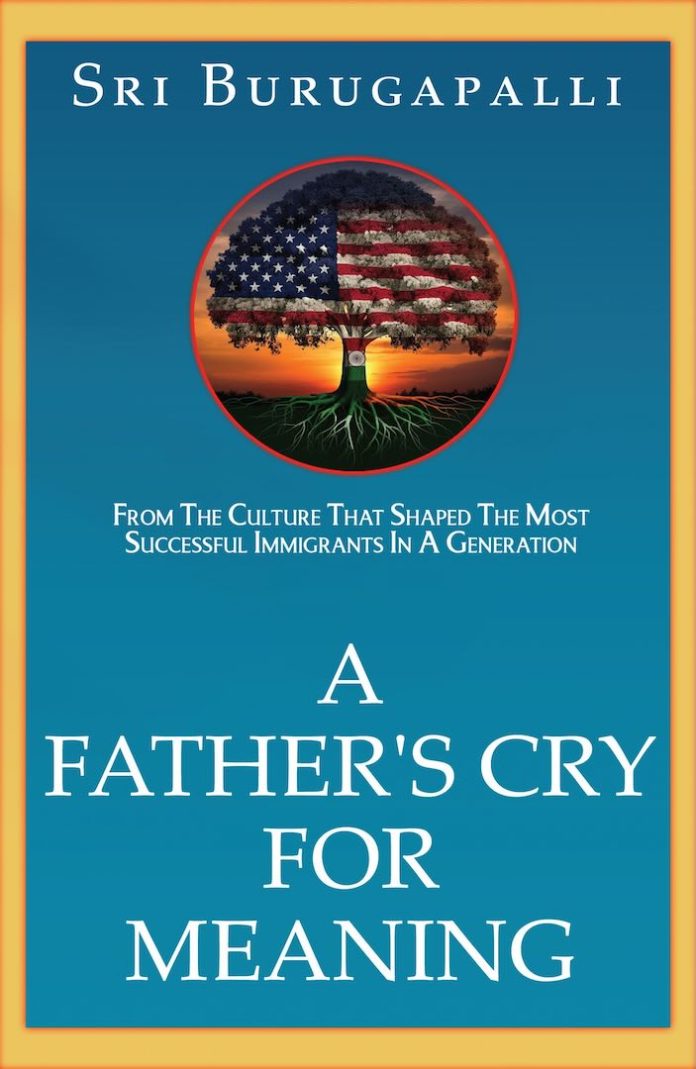
Sri Burugapalli’s debut memoir, A Father’s Cry For Meaning, emerges as a deeply moving testament to the universal human quest for purpose amid loss, separation, and cultural dislocation. This intensely personal narrative transcends the boundaries of typical immigrant stories, offering readers an authentic glimpse into the complex emotional landscape of a man caught between two worlds while grappling with profound grief and the weight of familial responsibility.
The Architecture of Memory and Meaning
Burugapalli structures his memoir with the careful precision of an architect designing a bridge between past and present. Divided into four thoughtfully crafted sections—”Having to Grow Up Fast,” “Having to Act the Adult,” “Starting the New and Ending the Old,” and “Ending the End and Starting the New”—the narrative follows a deliberate progression that mirrors the author’s own evolution from a boy forced into premature responsibility to a father seeking to create meaning from chaos.
The memoir’s framework operates on what Burugapalli calls the “Highlights and Insights” approach, deliberately choosing pivotal moments rather than exhaustive chronological detail. This selective storytelling technique proves remarkably effective, allowing readers to focus on the emotional core of each experience while maintaining narrative momentum. The author’s honesty about this approach—acknowledging that “there are some details and whole periods of time missing”—demonstrates a refreshing authenticity that permeates the entire work.
The Weight of Early Loss and Responsibility
The memoir’s emotional foundation rests on a series of profound losses that begin in childhood and continue throughout Burugapalli’s adult life. His father’s early death transforms him from a typical child into the de facto head of his family, a role that shapes every subsequent decision. The author’s exploration of this premature responsibility reveals how trauma can simultaneously wound and strengthen, creating individuals who are “excellent planners and good in a crisis” while harboring deep fears about catastrophic loss.
Burugapalli’s relationship with his mother emerges as one of the memoir’s most poignant threads. Her difficult decision to send him away for education—described as “the most difficult decision she ever made in her life”—establishes a pattern of separation that haunts the narrative. The author’s vivid recollection of childhood pain serves not as self-pity but as a lens through which he examines the cyclical nature of sacrifice within immigrant families.
Cultural Navigation and Identity Formation
A Father’s Cry For Meaning excels in its nuanced portrayal of what Burugapalli terms the “almost irreconcilable tension between two worlds.” His depiction of arranged marriages versus love marriages provides readers with an insider’s understanding of Indian social customs while avoiding both romanticization and judgment. The author’s own journey from rejecting arranged marriage at age ten to later helping arrange his sisters’ marriages illustrates the complex negotiations required when straddling two cultural paradigms.
Burugapalli’s prose shines brightest when describing these cultural intersections. His explanation of Indian marriage customs—”The general thinking was that just as they learn to live with someone, they learn to love as well”—offers Western readers genuine insight without condescension. The author’s ability to present both the logic and limitations of traditional arrangements demonstrates the mature perspective of someone who has lived authentically within both systems.
The American Dream Reimagined
Unlike many immigrant narratives that focus primarily on material success, Burugapalli’s American dream centers on family reunion and emotional healing. His audacious goal of earning “Rs 1 crore” to return to India reveals the initial naivety of his American venture, while his eventual realization that success might require permanent separation from family adds complexity to the traditional success narrative.
The author’s professional achievements—from industrial technology studies to business leadership—are presented as means rather than ends. This perspective allows him to explore deeper questions about what constitutes a meaningful life. His observation that “achieving the classic immigrant’s success story brought about one of my greatest personal crises about who I was” challenges readers to reconsider their own definitions of success.
The Philosophy of Loss and Resilience
Throughout the memoir, Burugapalli develops a personal philosophy that he distills into the equation: “Intent + Action + Chance = Life.” This framework emerges from his encounters with seemingly random tragedy—his father’s death, his mother-in-law’s accident, his mother’s passing—and provides a rational structure for understanding an often irrational world.
The author’s exploration of Indian concepts of karma and destiny offers readers a window into how different cultures process grief and meaning. His gentle challenge to traditional interpretations—proposing “Intent + Karma + Chance = Life”—demonstrates intellectual courage while respecting cultural foundations. This philosophical evolution feels earned rather than imposed, growing naturally from lived experience.
Literary Merit and Emotional Authenticity
Burugapalli writes with the clarity of a businessman and the heart of a poet. His prose avoids both sentimentality and detachment, maintaining an emotional honesty that makes even mundane details resonate with significance. Passages describing his departure from India—”It feels like your body is leaving while your soul remains behind”—capture the immigrant experience with poetic precision.
The memoir’s strength lies in its refusal to present easy answers or neat resolutions. Burugapalli acknowledges ongoing struggles with fear, questions about professional choices, and the perpetual tension between personal ambition and family devotion. This ongoing uncertainty makes the narrative feel alive and relevant rather than completed and distant.
Key Themes That Resonate:
- The cost of separation in pursuing dreams and opportunities
- Cultural identity formation in immigrant communities
- The redefinition of success beyond material achievement
- Intergenerational responsibility and its emotional weight
- The search for meaning following profound loss
A Voice for the Diaspora
A Father’s Cry For Meaning succeeds brilliantly as both personal narrative and cultural bridge. Burugapalli’s story will particularly resonate with members of the Indian diaspora who recognize their own struggles with cultural duality, family obligation, and the pursuit of meaning across geographic and cultural distances. However, the memoir’s themes of loss, responsibility, and the search for purpose speak to universal human experiences that transcend cultural boundaries.
The author’s dedication “to every ordinary person fighting their way forward in this uncertain journey together” reflects the memoir’s core strength: its ability to find profound meaning in ordinary struggles. Burugapalli demonstrates that heroism often lies not in extraordinary achievements but in the daily choice to continue building meaning from the fragments of loss and hope.
For readers seeking memoirs that offer both cultural insight and emotional depth, A Father’s Cry For Meaning stands as a remarkable achievement. It joins the ranks of important immigrant narratives while carving out its own distinctive space through its focus on family bonds, cultural negotiation, and the ongoing quest for purpose that defines the human experience.
Similar Reads for Further Exploration
Readers drawn to Burugapalli’s exploration of identity and belonging in A Father’s Cry For Meaning might also appreciate:
- “The Namesake” by Jhumpa Lahiri – For its nuanced portrayal of Indian-American identity
- “Born a Crime” by Trevor Noah – For its blend of personal memoir and cultural commentary
- “Educated” by Tara Westover – For its examination of family loyalty versus personal growth
- “The Glass Castle” by Jeannette Walls – For its exploration of resilience following childhood trauma
- “Americanah” by Chimamanda Ngozi Adichie – For its insights into the immigrant experience and cultural adaptation







