Desert sands remember
A queen defies history’s lies—
Her voice rises still
When Myths Breathe and Queens Speak
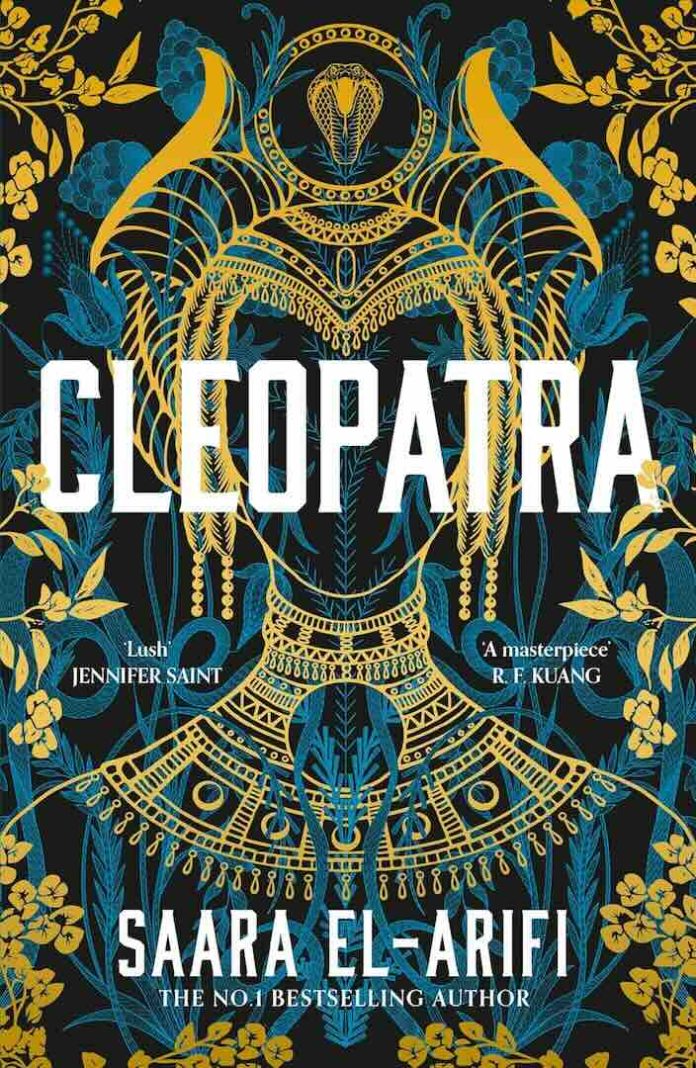
The moment you open Cleopatra by Saara El-Arifi, you’re not reading about Cleopatra—you’re listening to her. This isn’t another dusty historical retelling where scholars dissect the famous queen from a clinical distance. Instead, El-Arifi crafts something far more intimate and daring: a reclamation. The legendary pharaoh herself tears through centuries of propaganda, male-authored histories, and reductive archetypes to tell us, in her own words, “You know my name, but you do not know me.”
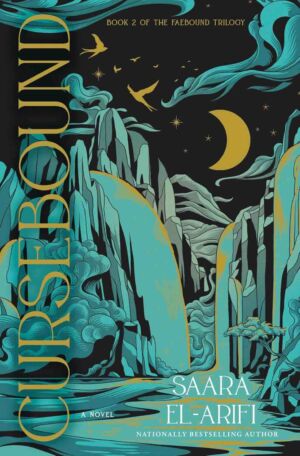
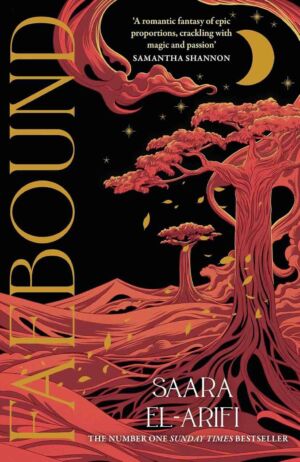
El-Arifi, whose previous works include the acclaimed Faebound trilogy and The Final Strife series, brings her signature blend of political intrigue and mythological resonance to ancient Egypt. But this time, she’s working with a figure who exists simultaneously in history and legend, and the author navigates this duality with remarkable confidence.
The Architecture of Myth-Making
The novel’s structure is its first masterstroke. Divided into three parts—”The Witch,” “The Whore,” and “The Villain”—Cleopatra by Saara El-Arifi confronts head-on the archetypes that have imprisoned its protagonist for millennia. Each section title represents the labels thrust upon Cleopatra by Roman propagandists and later historians, yet within these chapters, we discover a woman far more complex than any single designation could contain.
We meet Cleopatra first as a young princess, barefoot in Egyptian sand, playing senet and eating figs, her mind not yet burdened by crowns and kingdoms. This grounding in her humanity becomes crucial as the narrative unfolds. El-Arifi understands that to make us believe in Cleopatra the legend, she must first show us Cleopatra the girl—curious, intelligent, already multilingual, and desperate for her father’s approval.
The progression through her life feels both inevitable and surprising. Her early relationship with Julius Caesar emerges not as the seduction of historical stereotype but as a meeting of equally brilliant political minds. Their connection pulses with intellectual electricity before it ever becomes physical. When Cleopatra famously delivers herself to Caesar rolled in a carpet, El-Arifi transforms the moment from theatrical stunt into calculated strategy—the action of a queen who understands how to control narrative and presentation.
Where Fantasy Meets the Sands of History
Perhaps the most controversial choice in Cleopatra by Saara El-Arifi is its embrace of the fantastical. The Egyptian gods aren’t mere cultural window-dressing; they’re active participants in Cleopatra’s story. Isis herself becomes a pivotal character, her relationship with Cleopatra shifting from divine patronage to something more complicated and, ultimately, more cruel.
This fusion of mythology and history won’t satisfy purists seeking strict historical fiction, and that’s precisely the point. El-Arifi’s author’s note clarifies her intentions: with so little of Cleopatra’s own voice surviving (perhaps only one signature on papyrus), every biography is already interpretation. By leaning into the mythological, El-Arifi paradoxically gets closer to emotional truth than a strictly factual account ever could.
The magical elements manifest most powerfully in Cleopatra’s healing abilities and her connection to the divine. These aren’t mere fantasy flourishes but thematic necessities. In a world where Cleopatra’s enemies called her achievements “witchcraft” because they couldn’t fathom a woman possessing such strategic brilliance, El-Arifi reclaims that accusation. Yes, there is magic—but not where Rome claimed to find it.
The Language of Love and Power
El-Arifi’s prose oscillates between the lyrical and the visceral, mirroring Cleopatra’s own multifaceted nature. When describing the Nile, the writing flows with sensuous imagery—the river becomes “the blue veins that flutter under the translucent skin of your wrist.” Political machinations are rendered with sharp, precise language. Moments of motherhood soften into tenderness without losing strength.
The relationship between Cleopatra and Marcus Antonius (Mark Antony) particularly benefits from this stylistic dexterity. Where her connection with Caesar was cerebral fire, her love for Marcus burns with earthier intensity. El-Arifi doesn’t shy from the complexity here—this is a relationship built on genuine affection, strategic alliance, and mutual self-destruction. The scenes between them crackle with:
- Physical passion rendered without coyness
- Political calculation that never quite switches off
- Genuine emotional vulnerability that makes their eventual fate more devastating
- The tension between personal desire and imperial responsibility
The Weight of the Crown and the Cradle
If there’s a beating heart to this novel, it’s Cleopatra’s motherhood. Cleopatra by Saara El-Arifi refuses to separate the queen from the mother, the politician from the woman who nurses children and worries about their futures. Her children—Caesarion, the twins Alexander Helios and Cleopatra Selene, and Ptolemy Philadelphus—aren’t historical footnotes but living presences who fundamentally shape every decision she makes.
The most powerful passages often revolve around this central conflict: how does one rule an empire while protecting those you love most? El-Arifi doesn’t offer easy answers. Instead, she shows us a woman making impossible choices, each one leaving scars. The sections dealing with Cleopatra’s children demonstrate the author’s skill at balancing historical record with emotional authenticity. We know how these stories end historically, yet El-Arifi makes us hope against history.
Where the Serpent Bites Back
The novel’s most audacious move comes in its reimagining of Cleopatra’s death—or rather, her non-death. The traditional narrative of suicide by asp becomes something else entirely: a curse of immortality bestowed by a goddess both merciful and cruel. This twist elevates the story from historical fiction to something more akin to mythological commentary.
By making Cleopatra immortal, El-Arifi allows her to witness her own myth-making across centuries. She watches herself portrayed in Shakespeare’s plays, on cinema screens, in countless retellings—each one fragmenting her humanity further. It’s a brilliant metafictional device that lets the author comment on how women, particularly powerful women of color, get reduced to archetypes and fetishes by history.
This choice will divide readers. Some may find it a bridge too far from historical fiction into pure fantasy. The immortality subplot does occasionally slow the narrative’s momentum, particularly in the final third. Yet thematically, it’s essential—how else can Cleopatra truly speak back to the millennia of historians who’ve spoken for her?
The Shadows Between the Pillars
Cleopatra by Saara El-Arifi isn’t without its stumbling blocks. The middle section, encompassing much of the relationship with Marcus Antonius, occasionally meanders. While the character work remains strong, the pacing sags under the weight of political maneuvering that, while historically relevant, doesn’t always drive the emotional narrative forward with the same urgency as earlier chapters.
Additionally, readers seeking a traditionally plot-driven narrative may find the novel’s introspective nature challenging. This is a book more concerned with internal landscapes than external action. Battle scenes, when they occur, are often filtered through Cleopatra’s emotional response rather than described in tactical detail. It’s a deliberate choice that serves the character study El-Arifi is crafting, but it may frustrate those expecting epic historical battles.
The balance between showing versus telling occasionally tips toward the latter, particularly when Cleopatra addresses the reader directly to explain historical context or her emotional state. While this voice is compelling, there are moments where trusting the reader to infer might have strengthened the narrative impact.
Literary Lineage and Kindred Spirits
For readers drawn to Cleopatra by Saara El-Arifi, several other works occupy similar territory at the intersection of history, mythology, and feminist reclamation:
- Madeline Miller’s Circe shares this novel’s project of giving voice to a woman reduced to myth, using lyrical prose to humanize a figure known primarily through male-authored texts. Like El-Arifi, Miller isn’t afraid to blend historical/mythological setting with modern sensibilities.
- Pat Barker’s The Silence of the Girls similarly reclaims a classical narrative from a female perspective, though Barker hews closer to the source material while still subverting it from within.
- Rebecca Ross’s Divine Rivals (for those drawn to the mythological elements) and Natasha Pulley’s The Kingdoms (for those appreciating the temporal complexity) offer complementary reading experiences.
- Vaishnavi Patel’s Kaikeyi, another recent work of mythological revision from a woman’s perspective, shares Cleopatra by Saara El-Arifi‘s commitment to complicating vilified female figures.
The Verdict: A Queen Resurrected
What El-Arifi achieves with Cleopatra by Saara El-Arifi is nothing less than a resurrection. Not of Cleopatra as the doomed romantic of Shakespeare, nor as the calculating seductress of Roman propaganda, but as something far more radical: a complete human being. A woman who was simultaneously brilliant politician, devoted mother, strategic warrior, sensual lover, and flawed individual making impossible choices in impossible circumstances.
The novel’s greatest strength lies in its refusal to simplify. Cleopatra can be ruthless in defense of her kingdom and tender with her children. She can make cynical political calculations and genuinely fall in love. She can be victim and victor, powerful and vulnerable. El-Arifi rejects the either/or dichotomies that have always constrained Cleopatra’s story, offering instead the messy, contradictory both/and of actual human experience.
For readers willing to embrace its blend of history and fantasy, its introspective pacing, and its sometimes meandering narrative structure, this novel offers something precious: a chance to hear a voice that history tried to silence. In El-Arifi’s hands, Cleopatra doesn’t just speak—she sings, she rages, she mourns, she loves, and above all, she endures.
The prose occasionally stumbles, the pacing isn’t always perfect, and the fantasy elements will prove divisive. But these are minor criticisms of a work that swings for the literary heavens and mostly connects. This isn’t perfect, but it’s powerful—a fitting tribute to a woman who was never meant to be perfectly palatable to history.
In the end, Cleopatra by Saara El-Arifi succeeds in its central mission: when you close the book, you no longer know just Cleopatra’s name. Now, you know her.