 1
1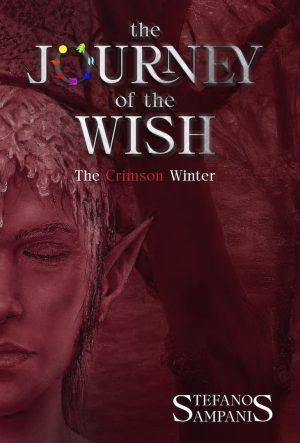 2
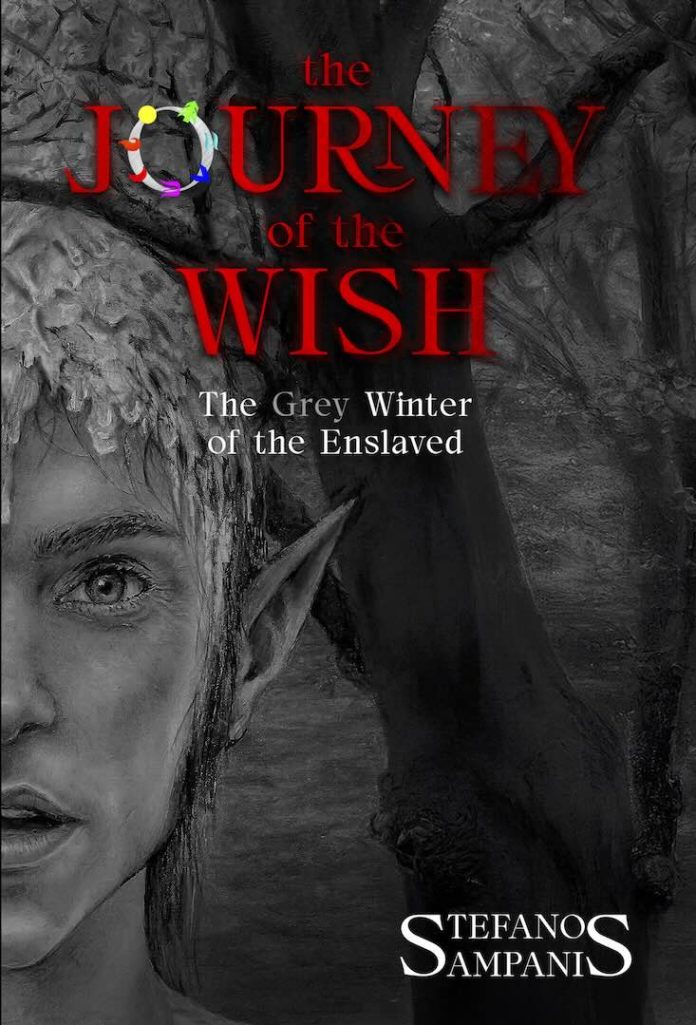
2What happens when a child loses everything — his mother, his season, his senses — and is forced to find meaning in a world stripped bare of warmth? This is the question at the heart of The Grey Winter of the Enslaved by Stefanos Sampanis, the opening volume of The Journey of the Wish series, and it is asked not through philosophical monologue but through a story so inventive, so layered with mythology and tenderness, that the answer unfolds across every chapter like a flower blooming in frost.
Set in a world divided between two eternal seasons — Spring and Winter — this novel introduces us to Glimm, a young fairy-child of Spring who witnesses his mother’s murder at the hands of rogue Orcs just days before the Equinox. Stranded in Winter with the Black Stigma of a monstrous Jackal scarring his shoulder, Glimm is offered an impossible choice by King Semela, ruler of the Mount of Billows: accept the curse of the Seven Gods and become one of Winter’s Enslaved — losing his sight and sense of touch — or face certain death in a season that was never meant to be his.
An Original Mythology Built from the Ground Up
One of the most striking achievements of The Grey Winter of the Enslaved by Stefanos Sampanis is its world-building. This is not a fantasy novel that borrows its scaffolding from familiar tropes and calls it a day. Sampanis has constructed an entire cosmology from scratch, beginning with the Ancient Psalm of Existence — a creation myth in which Void and Matter give birth to divine Seeds through their mutual Attraction. From these Seeds arise the Seven Gods, each governing an elemental domain, and from their laws emerge the creatures, the seasons, and the sacred Journey of the Wish itself.
The world is populated by a staggering variety of races — Elves, Fairies, Dwarves, Trolls, Orcs, Goblins, Troglodytes, Wisps, Golems, Giants, and Mermaids — each with distinct cultures and relationships to the divine. What elevates this beyond a simple bestiary is how each race interacts with the novel’s central system of perception: the Clarity. When creatures are cursed into enslavement, they lose their conventional senses and must navigate the world through this extrasensory awareness, perceiving shapes and motion in shades of grey but never colour, never warmth.
This single narrative device — Clarity — transforms the entire reading experience. Sampanis forces readers to inhabit a sensory world radically different from their own, where:
- Snow is experienced as grey bits falling from the sky, its whiteness unknown until a miraculous moment of restored sight
- The taste of love becomes the only intimacy available to a body that cannot feel touch
- A rose’s thorns pierce skin without pain, rendering the symbol of romance both beautiful and hollow
- Colour itself becomes a form of revelation, as profound as any spiritual awakening
Characters That Breathe and Bleed
Glimm is one of the most compelling protagonists in recent fantasy fiction. He is no chosen one armed with prophecy or hidden powers. He is a child who ran when his mother told him to run, and he has never forgiven himself for it. That guilt is the engine of his character — not rage, not ambition, but a quiet, corrosive shame that colours every relationship he forms in the Mount of Billows.
His bond with Than, the stone Giant who first brought him to the Mount, is drawn with wonderful restraint. Than communicates almost entirely through groans and gestures, yet his protective loyalty speaks louder than any dialogue in the book. Equally memorable is the fellowship of Dwarves who become Glimm’s unlikely family: Fawke, the stoic mentor who teaches combat and philosophy with equal precision; Edwin, the irrepressible storyteller whose tall tales grow taller with each Winter; and Pidleen, sharp-tongued and pragmatic. Their tavern scenes — where wine flows and stories are traded — are among the most alive passages in the book, proving that camaraderie can flourish even among the condemned.
And then there is King Semela — part tyrant, part philosopher, part trickster. He governs the Enslaved with a volatile mixture of theatrical fury and calculated wisdom. His explosive outbursts are legendary within the Mount, yet beneath the bluster lies a creature who arranges secret rewards for his charges and speaks in coded lessons that only the attentive can decipher. He lingers in the mind long after the book is closed — never fully trusted, never fully condemned.
A Romance Written in the Language of Deprivation
The love story between Glimm and Setierphiane — a water Wisp stranded in Winter — is unlike any romance you are likely to encounter in the fantasy genre. The Grey Winter of the Enslaved by Stefanos Sampanis does not offer its lovers moonlit confessions or dramatic rescues. Instead, it gives them something far more painful and far more honest: a connection defined entirely by what it cannot be.
Glimm cannot feel Setierphiane’s touch. He cannot see her in colour. The only sense left to him that bridges the gap between their bodies is taste, and the novel mines this single remaining intimacy with devastating emotional precision. Their first kiss is not a climax of passion but an agonising discovery of limitation — he can taste her warmth but cannot feel her lips. The scene is heartbreaking precisely because it refuses sentimentality.
Their meetings — stolen during moonless nights at the Lake of the Mermaids, always under the threat of the King’s eagle-spies — carry an urgency that propels the novel’s second half. Setierphiane’s ceremonial water dance, performed on the frozen Lake to the song of Sirens, is one of the most visually stunning sequences in the book, rendered entirely through Glimm’s grey Clarity yet somehow radiant with beauty.
Prose That Sings of Pain
Sampanis understands that fantasy prose need not choose between literary ambition and narrative momentum. The novel is threaded with original poetry and song — Glimm’s compositions of longing, Ephiren’s sorrowful melody, the ancient marches of the Shra tribe — and these lyrical interludes feel organic rather than decorative. As Ephiren tells Glimm: “Elves sing of beauty only the first time. But they sing of pain every time after.” Divided into sections titled “Elves Sing of Their Pain,” “A Taste of Spring,” and “A Taste of Winter,” the narrative builds a layered portrait of a young creature discovering that survival and living are not the same thing.
Themes That Resonate Beyond the Page
Beneath its fantasy surface, this novel is a meditation on several profoundly human concerns:
- Freedom and its costs — The Enslaved are stripped of their senses, yet some, like Fawke, discover a deeper kind of clarity. The novel asks whether true freedom is external or internal, and refuses to offer a simple answer.
- Guilt and forgiveness — Glimm’s survivor’s guilt over his mother’s death is the emotional spine of the story, examined without resolution, exactly as real grief operates.
- The politics of servitude — The Mount of Billows functions as a complex social system where punishment, reward, and manipulation exist in delicate balance. Semela’s governance raises uncomfortable questions about power and dependence.
- Love as resistance — In a world designed to strip creatures of sensation and connection, Glimm’s love for Setierphiane becomes an act of defiance — fragile, impractical, and utterly necessary.
Where This Book Stands in the Fantasy Landscape
Readers who appreciate the mythological depth of Tolkien, the emotional rawness of Patrick Rothfuss, or the lyrical world-building of Erin Morgenstern will find much to admire here. The Grey Winter of the Enslaved by Stefanos Sampanis occupies its own territory — darker and more sensory than most epic fantasies, yet tender in ways that catch you off guard.
Books You Might Also Enjoy
- The Name of the Wind by Patrick Rothfuss — For its lyrical prose and coming-of-age journey through hardship
- A Wizard of Earthsea by Ursula K. Le Guin — For its mythic simplicity and exploration of identity
- The Night Circus by Erin Morgenstern — For its atmospheric world-building and impossible romance
- Piranesi by Susanna Clarke — For its exploration of perception, isolation, and wonder
- Uprooted by Naomi Novik — For its blend of folklore, romance, and dark enchantment
Final Thoughts – A Journey Worth Beginning
This is a debut that announces a serious literary voice in fantasy fiction. With The Crimson Winter already continuing the saga, readers can be assured that the world Sampanis has built is only beginning to reveal its depths. The Journey of the Wish — both the sacred pilgrimage within the novel and the series that bears its name — promises to be one of the most original fantasy undertakings in recent years.
For those willing to step into a world without colour and find beauty there anyway, The Grey Winter of the Enslaved by Stefanos Sampanis is an extraordinary place to begin.