Alice Feeney has built her reputation on crafting psychological thrillers that challenge readers’ perceptions of truth, and My Husband’s Wife by Alice Feeney represents her most ambitious narrative architecture yet. This eighth novel from the New York Times bestselling author delivers a multi-layered mystery where nothing—not even the protagonist’s identity—can be taken at face value.
A House of Mirrors and Madness
The premise of My Husband’s Wife by Alice Feeney grabs you by the throat from page one. Eden Fox returns from a morning run to find her key no longer fits her front door. When someone finally answers, it’s a woman who looks eerily like her, wearing her clothes, living her life, and claiming to be married to her husband. Harrison Woolf stands beside this stranger and insists she—not Eden—is his wife.
This Kafkaesque nightmare scenario sets the stage for a psychological thriller that systematically dismantles everything readers think they know. Feeney excels at creating situations where reality itself becomes unreliable, and this novel takes that concept to extraordinary lengths. The coastal village of Hope Falls serves as the perfect backdrop for this disorienting tale—picturesque yet isolated, the kind of place where secrets can fester beneath a veneer of charm.
Narrative Architecture That Demands Attention
Feeney employs a complex multi-perspective structure that alternates between timelines and narrators. We follow Eden’s increasingly desperate attempts to reclaim her identity while simultaneously tracking Birdy (Olivia Bird), a London bookshop owner who inherits the mysterious house called Spyglass from a grandmother she never knew existed. Additional perspectives from Harrison, local police officer Carter, and others gradually reveal a conspiracy far more intricate than simple mistaken identity.
The technique mirrors the book’s central themes: when everyone has their own version of events, whose truth should we believe? Each narrator withholds crucial information, not always through deliberate deception but through the natural limitations of their own understanding. This creates a reading experience where puzzle pieces snap into place with satisfying clicks, though the complete picture remains elusive until the final pages.
The pacing proves both a strength and occasional weakness. The alternating timelines—”six months earlier” chapters interspersed with present-day action—create mounting tension as the two narratives converge. However, some middle sections feel unnecessarily protracted, particularly when Feeney revisits the same events from different angles. While this technique reinforces the theme of subjective truth, it occasionally slows momentum when readers crave forward motion.
Character Study in Shades of Gray
The women in My Husband’s Wife by Alice Feeney defy easy categorization as heroes or villains. Eden appears initially as a victim, yet her backstory reveals uncomfortable truths about her past. Birdy presents as a hardened detective seeking justice, but her motivations prove far more personal and morally ambiguous than professional duty.
Harrison Woolf emerges as perhaps the most fascinating character study. The CEO of Thanatos—a company that claims to predict death dates—he operates with the cold calculation of someone who views life as a series of problems requiring efficient solutions. His relationship with both women reveals different facets of his personality, none entirely sympathetic. Feeney resists the temptation to make him a straightforward villain, instead crafting a character whose love for his daughter drives him to increasingly questionable decisions.
Key character dynamics that elevate the narrative:
- The fraught mother-daughter relationship between Birdy and Gabriella, complicated by years of separation and guilt
- Harrison’s transformation from grieving father to calculating manipulator
- Carter’s struggle between professional duty and personal entanglements that cloud his judgment
- The surprising revelation about “Plain Jane” that recontextualizes everything readers thought they understood
Gabriella Woolf deserves special mention. Trapped at a mental age of eight following a traumatic incident, she exists as both catalyst and consequence of the novel’s central tragedy. Feeney handles this sensitive characterization with unexpected nuance, avoiding cheap sentimentality while exploring how trauma freezes development and how love manifests through protection that can become its own form of imprisonment.
Twists That Earn Their Impact
Readers familiar with Feeney’s previous works like Rock Paper Scissors and Daisy Darker know to expect revelations that reframe everything that came before. My Husband’s Wife by Alice Feeney delivers multiple such moments, though not all land with equal force.
The revelation about Birdy’s true connection to Harrison and Gabriella arrives with genuine shock value, recontextualizing her investigation from professional interest to deeply personal vendetta. The conspiracy involving Mary, the care assistant impersonating Eden around the village, demonstrates the elaborate lengths people will go to for revenge disguised as justice.
However, the novel’s crowning achievement—and potential point of contention—comes in its final twist regarding the actual identity of Eden’s killer. This revelation challenges readers to reconsider every interaction through a new lens, asking uncomfortable questions about whose stories we automatically believe and why. Some readers may find this twist borders on the absurd, stretching credibility for the sake of surprise. Others will appreciate how it forces reconsideration of seemingly minor characters and throwaway details that suddenly acquire sinister significance.
Where Ambition Meets Execution
The conceptual brilliance of My Husband’s Wife by Alice Feeney occasionally struggles under the weight of its own complexity. With multiple narrators, dual timelines, and layers of deception, some plot threads feel insufficiently developed. The Thanatos company that predicts death dates introduces a science-fiction element that sits uneasily alongside the psychological realism dominating most of the narrative. While this adds an unsettling dimension to Harrison’s character, the concept raises questions the novel never fully addresses.
The resolution, while clever, requires significant suspension of disbelief. The logistics of the conspiracy—particularly Mary’s sustained impersonation of Eden in a small village—strain plausibility. Even in an isolated community, the number of people who would need to remain oblivious or complicit stretches credibility. Feeney’s previous novels often danced close to this line but rarely crossed it; here, she occasionally stumbles into territory where clever plotting overshadows emotional truth.
Technical observations:
- The prose maintains Feeney’s signature concision, though some chapters feel padded with repetitive observations
- Dialogue crackles with subtext and misdirection, though occasional exposition feels forced
- Setting descriptions effectively establish mood without overwhelming the plot momentum
- The use of an unreliable narrator multiplied across several characters creates genuine uncertainty about events
Thematic Depth Beyond the Twists
Strip away the elaborate plotting and My Husband’s Wife by Alice Feeney emerges as a meditation on identity, motherhood, and the stories we tell ourselves to survive unbearable truths. Every major character has reconstructed their past to justify their present, creating competing narratives where everyone believes themselves the protagonist of a justified story.
The novel asks provocative questions about maternal love and sacrifice. What does it mean to be a mother when you’ve missed a decade of your child’s life? Can love justify elaborate deception? When protection becomes imprisonment, who truly benefits? These questions resonate beyond the thriller framework, lending emotional weight to what might otherwise feel like mere puzzle-solving.
The Thanatos subplot, despite its occasional awkwardness, raises interesting philosophical territory about knowledge and fate. If you knew your death date, would it liberate or imprison you? Would it make you more or less likely to take risks? The novel suggests that certainty about our endings might be more curse than blessing.
Verdict for Thriller Enthusiasts
My Husband’s Wife by Alice Feeney represents both the apex of her gift for narrative sleight-of-hand and the potential limitations of that approach. When it works—which is most of the time—the novel delivers the addictive page-turning experience that has made Feeney a bestselling phenomenon. The central mystery generates genuine urgency, and several revelations arrive with gut-punch force.
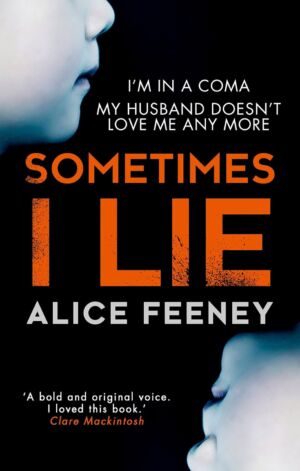
However, readers seeking the taut precision of Sometimes I Lie or the gothic atmosphere of Daisy Darker may find this latest offering somewhat bloated by comparison. At over 400 pages, the novel could benefit from trimming, particularly in its middle section where multiple perspectives occasionally cycle without advancing understanding.
Yet these criticisms feel minor weighed against the novel’s considerable achievements. Feeney has crafted a puzzle box that rewards careful attention while delivering emotional resonance. The exploration of maternal guilt and the lengths people will go to protect (or avenge) their children provides genuine pathos beneath the thriller mechanics.
Similar Reads for Psychological Thriller Fans
Readers captivated by the identity-swap premise of My Husband’s Wife by Alice Feeney might enjoy The Other Mrs. by Mary Kubica, which explores similar themes of impersonation and domestic suspense. B.A. Paris’s Behind Closed Doors offers comparable exploration of marriages hiding dark secrets, while Shari Lapena’s The Couple Next Door delivers twists within twists about seemingly perfect families.
For those drawn to Feeney’s unreliable narrator technique, Ruth Ware’s The Woman in Cabin 10 and Gillian Flynn’s Gone Girl remain essential reading. Lisa Jewell’s The Family Upstairs provides a similar multi-timeline structure revealing long-buried family secrets. Greer Hendricks and Sarah Pekkanen’s The Wife Between Us offers another take on competing claims to a husband’s affection with numerous perspective shifts.
Final Thoughts
My Husband’s Wife by Alice Feeney confirms her status as a master of the unreliable narrator while pushing her narrative ambitions to new heights—sometimes successfully, sometimes to the detriment of clarity and pacing. The novel works best when embraced as a deliberately over-the-top gothic thriller rather than a realistic crime procedural. Accept its heightened reality, surrender to its labyrinthine plotting, and you’ll find a genuinely surprising reading experience that demonstrates why Feeney remains one of contemporary thriller fiction’s most inventive voices.
This isn’t her most elegant work, but it may be her most audacious. That ambition, even when imperfect in execution, makes for compulsively readable entertainment that will keep thriller fans guessing until the final page reveals who truly earned the title of this husband’s wife—and at what terrible cost.