 1
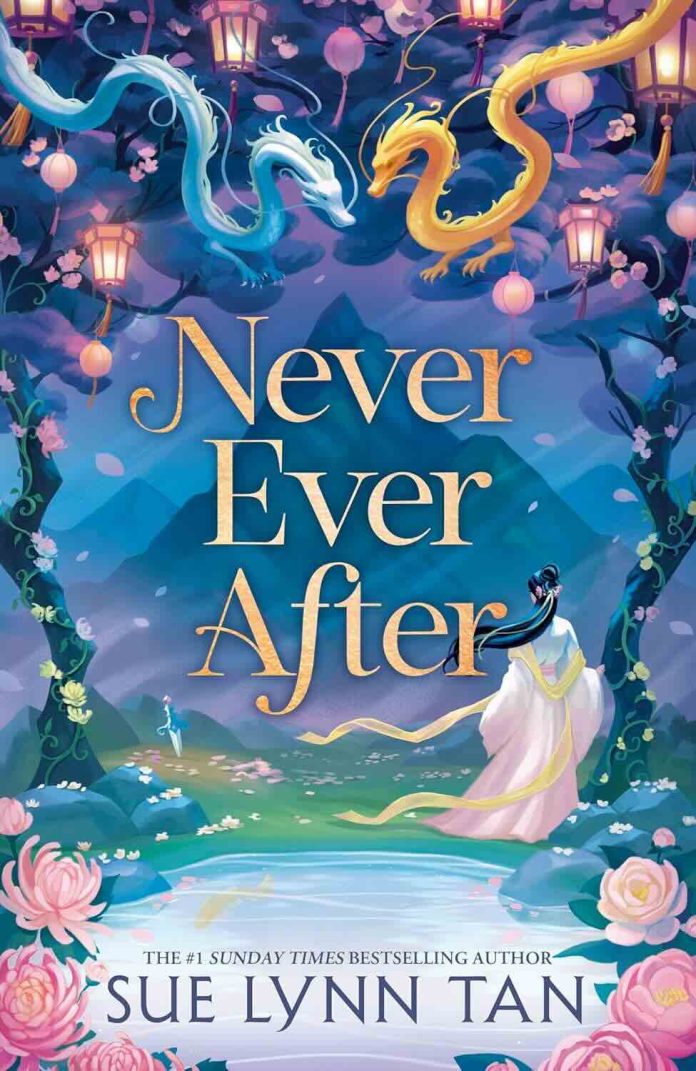
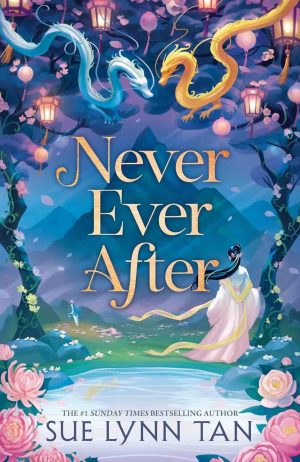
1Sue Lynn Tan returns to the realm of Asian-inspired fantasy with “Never Ever After,” a bold departure from her celestial “Daughter of the Moon Goddess” duology. Where her previous work shimmered with mythological grandeur and sweeping romance, this Cinderella-inspired tale embraces a grittier, more morally ambiguous landscape that challenges readers to question the very nature of heroes and villains.
A Thief’s Journey Through Treacherous Courts
Nineteen-year-old Yining survives in the harsh Iron Mountains through cunning and thievery, her only companion a wooden ring left by her mother. When a magical carp delivers an enchanted flower that transforms her ring into something far more powerful—and deadly—Yining’s carefully constructed life shatters. Her step-aunt steals the ring, forcing Yining to infiltrate the Palace of Nine Hills, where she catches the attention of Prince Zixin, a ruler as beautiful as he is ruthless.
What begins as a desperate quest for survival evolves into something far more complex. Tan subverts fairy tale expectations at every turn, crafting a narrative where glass slippers are replaced by political machinations, and the handsome prince might be the story’s greatest villain. The author’s prose carries a deceptive elegance that mirrors the glittering danger of the palace itself, where every smile conceals a blade and every kindness demands payment.
The world-building deserves particular recognition. Tan constructs a realm divided between the Three Kingdoms and the mysterious Land Beyond, each territory possessing distinct cultural identities and political tensions. The Iron Mountains’ obsession with iron as both resource and weapon creates a pervasive atmosphere of oppression, while the flower-spirit descendants of Mist Island and the thorn-wrapped forests of Thorn Valley offer tantalizing glimpses of magic systems rooted in nature rather than traditional sorcery.
Character Complexity That Defies Simple Labels
Yining emerges as a protagonist whose strength lies not in physical prowess but in adaptability and survival instinct. Tan allows her heroine to make morally questionable choices without apologizing for them, presenting a young woman shaped by hardship who understands that survival sometimes requires compromise. Her voice carries authenticity—sardonic humor masking vulnerability, pragmatism wrestling with emerging idealism. When Yining lies, manipulates, or even contemplates betrayal, these actions feel earned rather than contrived, rooted in her desperate circumstances.
The romantic elements prove equally layered. Prince Zixin defies easy categorization as villain or love interest, his devastating beauty concealing genuine complexity. Tan crafts scenes between Yining and the prince that crackle with tension—not merely romantic, but psychological warfare disguised as courtship. The author demonstrates remarkable restraint in refusing to excuse his controlling behavior or violent impulses, even as she allows readers to glimpse the wounded boy beneath the tyrant’s mask.
Jin (Lord Jin-Yong of Thorn Valley) provides an intriguing counterpoint—charming, calculating, and wielding secrets like weapons. His dynamic with Yining feels more balanced than her interactions with the prince, built on grudging respect that gradually transforms into something deeper. The romantic triangle never feels forced; instead, it serves as a vehicle for exploring themes of power, choice, and the cost of allegiance.
Perhaps most compelling is Dian, Yining’s long-lost sister and a magic-wielder of formidable skill. Their relationship captures the awkwardness of reconnection after years of separation—love complicated by resentment, joy shadowed by grief for lost time. Tan handles their gradual reconciliation with nuance, avoiding easy sentimentality while honoring the emotional weight of their reunion.
What Works Exceptionally Well
- Political intrigue that rivals the romance: The machinations between kingdoms, the deceptive alliances, and the quest for starfire create genuine stakes beyond personal relationships
- Morally gray characterization: Every major character exists in shades of complexity rather than clear good or evil, forcing readers to grapple with uncomfortable questions about redemption and forgiveness
- Magic system grounded in sacrifice: The rings that sustain Yining’s people carry real cost—lose them and you wither, making every threat to Yining’s ring genuinely terrifying
- Pacing that balances action with introspection: Tan knows when to accelerate into palace intrigue and when to slow for character development
- Atmospheric world-building: Each kingdom possesses distinct sensory details that make locations feel lived-in rather than merely decorative
Where the Narrative Stumbles
The novel’s ambitions occasionally exceed its execution. The middle section, while rich with political maneuvering, sometimes feels overstuffed with competing plot threads. Readers seeking the lighter tone of traditional retellings may find themselves disoriented by the story’s willingness to embrace genuine darkness—imprisonment, manipulation, and violence that carries real consequences.
The magic system, while intriguing, could benefit from clearer explanation. The rules governing what Yining can and cannot do with her newfound abilities shift enough to create occasional confusion, particularly during climactic confrontations. Some readers may also find the romantic tension frustrating, as Yining’s choices between Prince Zixin and Jin feel less like empowerment and more like maneuvering between equally problematic options.
The ending, while setting up future installments effectively, may leave some readers feeling incomplete. Certain plot threads remain deliberately unresolved, and while this works within a series framework, those seeking closure within a single volume might find it unsatisfying.
Tan’s Evolution as a Storyteller
Comparing this work to her “Daughter of the Moon Goddess” series reveals an author willing to take creative risks. Where Xingyin’s journey carried an almost mythic quality, Yining’s story feels grounded in political realism despite its magical elements. Tan has traded soaring celestial battles for intimate scenes of psychological manipulation, cosmic stakes for personal survival. The prose remains elegant but now carries an edge of darkness that feels deliberate and earned.
The author’s Chinese cultural influences manifest more subtly here than in her previous work, woven into naming conventions, court protocols, and philosophical underpinnings rather than explicit mythology. This approach creates a fantasy that feels distinctly inspired by Eastern traditions without becoming a direct retelling of specific legends.
Final Reflections: A Retelling That Refuses to Play Safe
“Never Ever After” succeeds precisely because it refuses to offer easy answers or comfortable resolutions. Tan has crafted a Cinderella story for readers who understand that princes don’t always deserve redemption, that escape from one cage might lead to another, and that happy endings require more than a ball and a shoe. The novel earns its place among sophisticated YA fantasy through its willingness to interrogate power dynamics, explore the psychology of survival, and present romance as something more complex than simple attraction.
This is not a book for those seeking light escapism or straightforward fairy tale comfort. Instead, Tan offers readers a story that challenges, provokes, and refuses to look away from difficult truths about power, choice, and the cost of survival. The writing occasionally strains under the weight of its ambitions, but these stumbles feel minor compared to the novel’s achievements in characterization and thematic depth.
For Readers Who Loved
If you enjoyed this book, consider:
- “Daughter of the Moon Goddess” by Sue Lynn Tan: Tan’s previous duology offers her signature lyrical prose with a more hopeful tone
- “These Violent Delights” by Chloe Gong: Another Asian-inspired fantasy exploring political intrigue and morally complex romance
- “The Jasmine Throne” by Tasha Suri: Adult fantasy featuring court politics, forbidden magic, and sapphic romance
- “Spin the Dawn” by Elizabeth Lim: Asian-inspired retelling with strong craftsmanship themes and adventure
- “She Who Became the Sun” by Shelley Parker-Chan: Historical fantasy examining identity, ambition, and the cost of power
“Never Ever After” establishes itself as a worthy first installment in what promises to be a complex, morally nuanced series. Tan has created something rare—a retelling that honors its source material while fearlessly subverting reader expectations, delivering a story that lingers long after the final page.