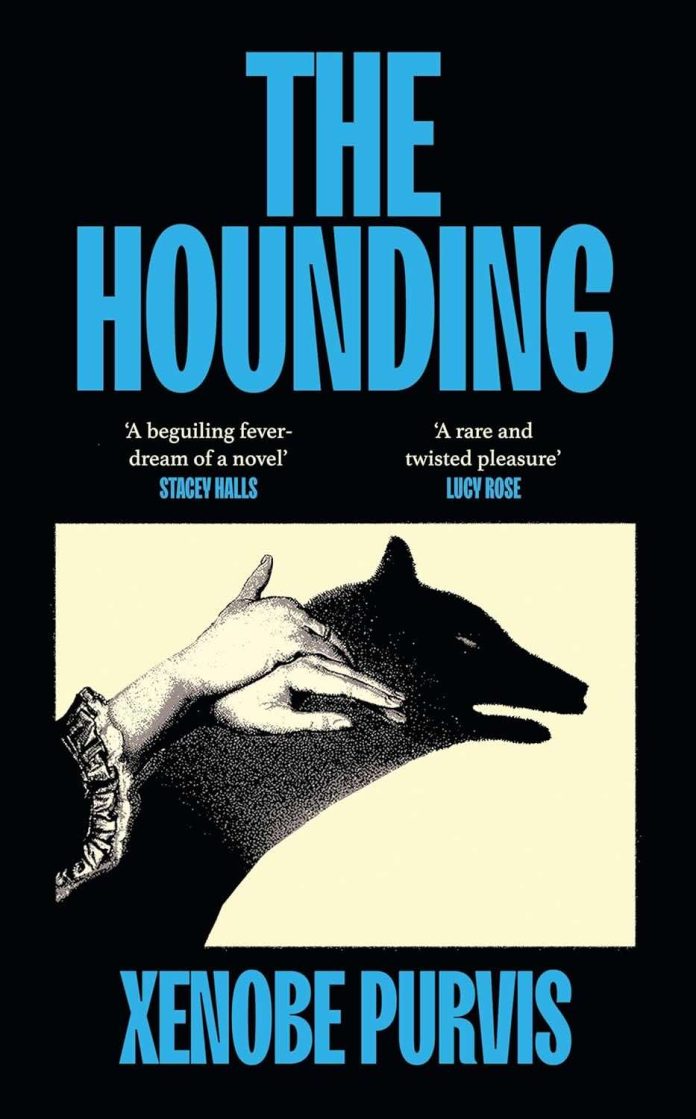
In the sweltering summer of 1701, the small Oxfordshire village of Little Nettlebed becomes a crucible of superstition and malice, where whispers turn to accusations and difference is met with violence. Xenobe Purvis’s debut novel, The Hounding, presents a masterful exploration of how communities can turn against their most vulnerable members when fear takes root. Set against the backdrop of a devastating drought that seems to presage darker changes, the novel follows the five Mansfield sisters—Anne, Elizabeth, Hester, Grace, and Mary—as they become the target of increasingly dangerous rumors that they transform into dogs.
Purvis, making her literary debut with this work, demonstrates a remarkable ability to weave historical atmosphere with psychological complexity. The novel unfolds through multiple perspectives, offering readers glimpses into the minds of villagers whose prejudices and fears ultimately drive them toward acts of unthinkable cruelty. What begins as idle gossip about the peculiar Mansfield girls escalates into a full-blown hysteria that threatens to consume not only the sisters but the entire community.
The Weight of Accusation and the Price of Difference
The brilliance of The Hounding by Xenobe Purvis lies in its unflinching examination of how societies manufacture scapegoats. The Mansfield sisters are guilty of nothing more than being orphaned, educated, and fiercely independent—qualities that make them stand out in a village where conformity is prized above all else. Their grandfather Joseph, nearly blind and struggling to maintain both his farm and his granddaughters’ safety, serves as a poignant figure of protection failing against forces beyond his control.
Purvis excels at creating characters whose motivations feel authentically human, even when their actions are reprehensible. Pete Darling, the ferryman whose drunken ravings about seeing the girls transform spark the initial rumors, emerges not as a cartoonish villain but as a man whose own insecurities and fears manifest as violent hatred toward what he cannot understand. His obsession with the sisters reveals the dangerous intersection of misogyny and superstition that drives much of the novel’s conflict.
The character of Thomas Mildmay, the young farmhand who falls desperately in love with Anne Mansfield, provides a compelling counterpoint to the village’s growing hostility. His devotion to the sisters—particularly his willingness to sacrifice himself for their protection—demonstrates that even in the darkest circumstances, individual acts of courage and love can shine through. Purvis handles his romantic subplot with remarkable sensitivity, avoiding the trap of making it the novel’s central focus while still allowing it to drive crucial plot developments.
Atmospheric Mastery and Historical Authenticity
The author’s commitment to historical authenticity permeates every aspect of the novel. From the detailed descriptions of 18th-century village life to the careful attention paid to the social dynamics of the period, Purvis creates a world that feels both alien and unnervingly familiar. The recurring imagery of drought and heat serves multiple symbolic functions—representing both the community’s spiritual barrenness and the fevered intensity of their growing paranoia.
The novel’s supernatural elements remain deliberately ambiguous throughout, never quite confirming whether the sisters truly possess any otherworldly abilities or if they are simply victims of mass hysteria. This uncertainty adds layers of complexity to the narrative, forcing readers to grapple with questions about the nature of truth and perception. The occasional glimpses we get of the sisters’ own perspectives—particularly through Grace’s worried conversations and Anne’s fierce protectiveness—humanize them while preserving the mystery that surrounds their situation.
Purvis demonstrates particular skill in her portrayal of the village’s supporting characters. Temperance Shirly, the publican’s wife who struggles with her own relationship to alcohol and power, provides fascinating commentary on gender roles and social expectations. Robin Wildgoose, the gentle young man whose violent act ultimately precipitates the novel’s climax, represents the tragic cost of a society that demands masculine aggression while punishing those who resist its call.
Narrative Structure and Literary Merit
The novel’s multi-perspective structure allows Purvis to explore the same events through different lenses, revealing how individual biases and fears shape perception of reality. This technique proves particularly effective in building tension, as readers gradually understand the full scope of the danger facing the Mansfield sisters while watching various villagers contribute to their persecution through action and inaction alike.
The prose itself is elegant and measured, with Purvis demonstrating a keen ear for period-appropriate dialogue while maintaining accessibility for contemporary readers. Her descriptive passages achieve a remarkable balance between lush detail and narrative momentum, creating a sense of place that feels lived-in and authentic. The author’s background in literary research is evident in her careful attention to historical detail, from the specifics of rural English life to the broader social and religious currents of the early 18th century.
Contemporary Relevance and Thematic Depth
While firmly rooted in its historical setting, The Hounding by Xenobe Purvis speaks powerfully to contemporary anxieties about otherness, persecution, and the fragility of social order. The novel’s exploration of how communities can turn against their most vulnerable members feels painfully relevant in an era of increasing polarization and scapegoating. Purvis skillfully draws parallels between historical witch hunts and modern forms of persecution without ever making these connections feel forced or anachronistic.
The book’s treatment of female agency and sisterhood proves particularly compelling. The five Mansfield sisters, despite their youth and precarious situation, consistently support one another and resist attempts to diminish their autonomy. Their refusal to conform to village expectations—their education, their independence, their fierce loyalty to one another—marks them as threats to a social order built on female submission and male control.
Strengths and Minor Limitations
The Hounding by Xenobe Purvis succeeds brilliantly as both a historical novel and a psychological study of collective paranoia. Purvis’s character development is consistently strong, and her ability to maintain suspense while building toward an inevitable tragedy demonstrates considerable narrative skill. The book’s exploration of how ordinary people can become complicit in extraordinary cruelty feels both historically accurate and disturbingly contemporary.
The novel’s pacing occasionally slows in its middle sections, particularly during extended sequences focusing on village life and character development. While these passages contribute significantly to the atmosphere and theme, some readers may find them less immediately engaging than the more dramatic scenes of confrontation and transformation. Additionally, the deliberate ambiguity surrounding the supernatural elements, while thematically appropriate, may frustrate readers seeking more definitive answers about the nature of the sisters’ alleged abilities.
Literary Context and Recommendations
The Hounding by Xenobe Purvis joins a distinguished tradition of historical fiction exploring persecution and otherness, drawing clear inspiration from works like Arthur Miller’s The Crucible and Shirley Jackson’s explorations of community violence. Readers who appreciate atmospheric historical fiction with supernatural elements will find much to admire here, particularly those drawn to authors like Sarah Waters, Jess Walter, or Susanna Clarke.
The novel also shares thematic DNA with contemporary works examining female solidarity in the face of persecution, such as The Once and Future Witches by Alix E. Harrow or The Invisible Bridge by Julie Orringer. Purvis’s work distinguishes itself through its careful historical grounding and its refusal to offer easy answers or comfortable resolutions.
For readers seeking similar explorations of community dynamics and supernatural suspicion, several excellent options present themselves:
- The Witch Elm by Tana French – for its psychological complexity and atmospheric tension
- The Silent Companions by Laura Purcell – for Victorian Gothic elements and unreliable narration
- The Mercies by Kiran Millwood Hargrave – for its historical treatment of witch trials and female solidarity
- Mexican Gothic by Silvia Moreno-Garcia – for its blend of historical setting and supernatural horror
A Powerful and Haunting Debut
The Hounding announces Xenobe Purvis as a significant new voice in historical fiction, demonstrating remarkable maturity and skill for a debut novel. Her ability to balance historical authenticity with contemporary relevance, while maintaining genuine suspense and emotional depth, marks her as an author to watch. The novel succeeds both as an engrossing period piece and as a thoughtful meditation on the persistence of persecution and the courage required to resist it.
This is a book that lingers in the memory long after its final pages, raising questions about justice, community, and the price of being different in a world that demands conformity. Purvis has crafted a story that honors both its historical setting and its contemporary readers, creating a work that feels both timeless and urgently relevant. For anyone interested in thoughtful historical fiction that doesn’t shy away from difficult questions, The Hounding represents an exceptional achievement and a compelling introduction to a promising literary career.
More Halloween reading: Looking for more like it? See our full list of small town horror books.