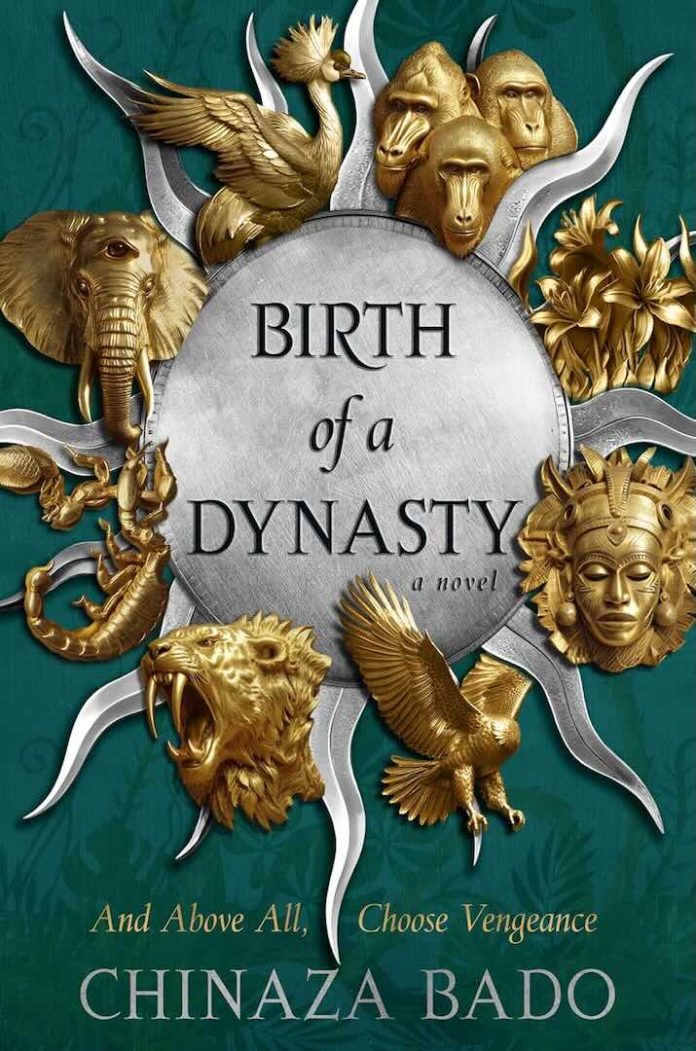
Chinaza Bado’s debut novel Birth of a Dynasty erupts onto the fantasy scene with the explosive force of its opening massacre, delivering a politically charged epic that weaves African-inspired mythology into a tale of vengeance, prophecy, and survival. Set in the richly imagined land of Ahkebulin, this first installment of a planned trilogy demonstrates both remarkable ambition and narrative sophistication that places it among the most promising fantasy debuts in recent years.
The novel opens with brutal efficiency as ten-year-old M’kuru Mukundi witnesses the slaughter of his entire noble family by the tyrannical Zenzele dynasty. Forced to assume the identity of farm boy Khalil Rausi—whose father happens to be the very general responsible for his family’s murder—M’kuru begins a dangerous game of deception that will span years as he plots his revenge from within enemy ranks.
Dual Protagonists, Dual Strengths
M’kuru’s Journey from Victim to Avenger
Bado excels in crafting M’kuru’s psychological transformation from traumatized child to calculating young man consumed by vengeance. The author’s portrayal of how survival necessitates moral compromise feels authentically painful. Watching M’kuru betray the very villagers who sheltered him in order to maintain his cover as Khalil creates a morally complex protagonist whose actions disturb even as they compel understanding. Bado doesn’t shy away from the uncomfortable reality that revenge often requires becoming what one hates.
The author’s exploration of identity fragmentation proves particularly compelling. M’kuru literally becomes multiple people—first the noble heir, then the traumatized survivor, then the farm boy Khalil, and finally the general’s son seeking to infiltrate the palace. Each identity shift is handled with psychological nuance that elevates the character beyond typical fantasy archetypes.
Zikora’s Palace Politics and Hidden Strength
Meanwhile, in Winneba, young Zikora Nnamani provides a brilliant counterpoint to M’kuru’s story. Initially presented as a spirited girl who dreams of becoming a warrior, Zikora evolves into something far more complex when thrust into the dangerous political environment of the Zenzele palace. Bado’s decision to have Zikora adopt deliberate naivety as protective camouflage while observing and manipulating court politics demonstrates sophisticated character development.
The Rite of Blessing sequence, where Zikora receives magical inheritance from her uncle Zeikel, stands among the novel’s most powerful scenes. Bado infuses this mystical transformation with genuine weight and consequence, suggesting that magic in this world comes with profound personal cost.
World-Building That Breathes with Cultural Authenticity
A Richly Imagined African-Inspired Fantasy
Bado’s greatest triumph lies in creating a fantasy world that draws deeply from African cultures without falling into exoticism or superficial appropriation. The author’s Igbo heritage permeates the narrative through naming conventions, political structures, and cultural practices that feel lived-in rather than decorative. The presence of giants, the complex relationship between noble houses, and the intricate palace hierarchies all contribute to a world that feels both fantastical and grounded in recognizable human dynamics.
The magic system, centered around seers and dœwers, remains tantalizingly underdeveloped in this first volume. While the prophecy driving the plot provides compelling motivation for the antagonists’ actions, readers hoping for detailed magical mechanics may find themselves wanting more exposition. However, this restraint may prove wise for a debut novel already juggling multiple complex plotlines.
Political Intrigue That Rivals the Best
The palace sequences showcase Bado’s understanding of power dynamics with remarkable sophistication. The deadly competition between Queen Esraa and Princess Hasina, Prince Effiom’s ruthless ambition, and the complex web of alliances and betrayals all feel authentically Byzantine. The author demonstrates particular skill in showing how women navigate restricted agency within patriarchal power structures, using intelligence, manipulation, and strategic alliances as weapons when physical force is denied them.
Pacing and Structure: Strengths and Weaknesses
Compelling Character Development
Bado’s character work represents the novel’s greatest strength. Both protagonists undergo genuine transformation over the course of the narrative, with their parallel journeys from innocence to experience providing thematic coherence. The supporting cast, from the conflicted General Khalaf to the mysteriously wise grandfather figure who first shelters M’kuru, feels fully realized rather than functional.
The relationship dynamics, particularly M’kuru’s growing friendship with Ashon (an Inaobi boy) and Zikora’s careful navigation of palace friendships, provide emotional grounding for the larger political machinations. Bado demonstrates particular skill in writing children who think and act like children while still driving complex adult plots.
Structural Challenges
However, the novel occasionally suffers from pacing issues inherent to epic fantasy debuts. The three-year time jump between the opening massacre and the palace sequences, while necessary for character development, creates some narrative choppiness. Additionally, certain plot threads—particularly those involving the broader prophetic implications—feel underdeveloped in favor of character focus.
The political maneuvering, while generally excellent, sometimes becomes dense enough to challenge reader comprehension. Bado includes numerous noble houses, court positions, and political relationships that require careful attention to track effectively.
Thematic Depth and Cultural Resonance
Revenge and Its Costs
The novel’s exploration of revenge transcends simple “villain gets comeuppance” plotting. Bado forces readers to confront the reality that pursuing vengeance often requires compromising one’s moral foundation. M’kuru’s betrayal of innocent villagers to maintain his cover creates genuine moral complexity that elevates the narrative beyond typical fantasy revenge plots.
Power, Identity, and Survival
Both protagonists must learn to manipulate their identities for survival—M’kuru through deception, Zikora through performed innocence. This shared theme of protective performance resonates with contemporary discussions about marginalized people’s survival strategies while remaining organically connected to the fantasy context.
The Weight of Prophecy
The underlying prophecy about a new dynasty that will “drown the earth in blood” provides ominous backdrop without overwhelming the human-scale stories. Bado wisely allows the prophecy to influence character motivations without becoming a mechanical plot device.
Writing Style and Prose Quality
Bado’s prose demonstrates remarkable maturity for a debut novelist. The author excels at intimate character moments while maintaining the scope necessary for epic fantasy. Dialogue feels natural and period-appropriate without becoming archaic, and action sequences balance clarity with intensity.
The cultural specificity in language choices enhances rather than hinders accessibility. Terms like “Seh Llinga” (female warriors) and “dœwers” (magic users) feel organic to the world while remaining comprehensible to readers unfamiliar with their cultural origins.
Comparative Context and Genre Positioning
Birth of a Dynasty belongs to the growing movement of fantasy literature that centers non-European mythologies and cultural frameworks. Readers who enjoyed N.K. Jemisin’s The Fifth Season, Tomi Adeyemi’s Children of Blood and Bone, or Suyi Davies Okungbowa’s Son of the Storm will find familiar themes of cultural authenticity and political complexity.
However, Bado’s approach feels more grounded in political realism than many contemporary fantasy debuts. The novel shares DNA with works like Robin Hobb’s Farseer Trilogy in its focus on character psychology and political maneuvering over magical spectacle.
Essential Reading for Fantasy Enthusiasts
For readers seeking fantasy that prioritizes character development, cultural authenticity, and political complexity over magical systems and world-conquering plots, Birth of a Dynasty delivers exceptional rewards. The novel requires patience and attention from readers but provides correspondingly rich returns for that investment.
Areas for Improvement
While Birth of a Dynasty succeeds brilliantly in many areas, certain elements could benefit from refinement in future volumes:
- Magic system development: The mystical elements remain intriguingly vague but may require more concrete definition as the trilogy progresses
- Pacing consistency: Some sections feel rushed while others linger perhaps too long on political details
- Supporting character depth: While the protagonists are expertly developed, some secondary characters could use additional complexity
Final Verdict: A Promising Start to an Epic Journey
Birth of a Dynasty announces Chinaza Bado as a significant new voice in fantasy literature. While the novel occasionally struggles with the ambitious scope typical of epic fantasy debuts, its character work, cultural authenticity, and political sophistication mark it as essential reading for genre enthusiasts.
The book succeeds in creating protagonists whose journeys feel genuinely meaningful rather than merely functional to larger plot requirements. Bado’s willingness to explore moral complexity and psychological transformation elevates the narrative beyond typical revenge fantasy into something approaching literary sophistication.
Readers should approach this novel with patience and attention to detail, as Bado rewards careful readers with rich character development and authentic cultural worldbuilding. Those seeking fast-paced action or extensive magical elements may find the political focus occasionally challenging, but the payoff in terms of character depth and thematic resonance justifies the investment.
Birth of a Dynasty establishes Chinaza Bado as an author to watch, delivering a fantasy debut that feels both culturally specific and universally compelling. The foundation laid here promises even greater achievements in the planned sequels.
Similar Books to Explore
If you enjoyed Birth of a Dynasty, consider these similar titles:
- Children of Blood and Bone by Tomi Adeyemi – West African-inspired fantasy with themes of oppression and magical awakening
- The Rage of Dragons by Evan Winter – African-inspired fantasy focusing on revenge and military conflict
- The Fifth Season by N.K. Jemisin – Complex fantasy with themes of oppression and hidden powers
- Son of the Storm by Suyi Davies Okungbowa – West African-inspired epic fantasy with political intrigue
- Black Sun by Rebecca Roanhorse – Pre-Columbian inspired fantasy with complex politics and prophecy
- The Priory of the Orange Tree by Samantha Shannon – Epic fantasy with multiple POV characters and political complexity
- The Goblin Emperor by Katherine Addison – Court intrigue and political maneuvering in a fantasy setting







