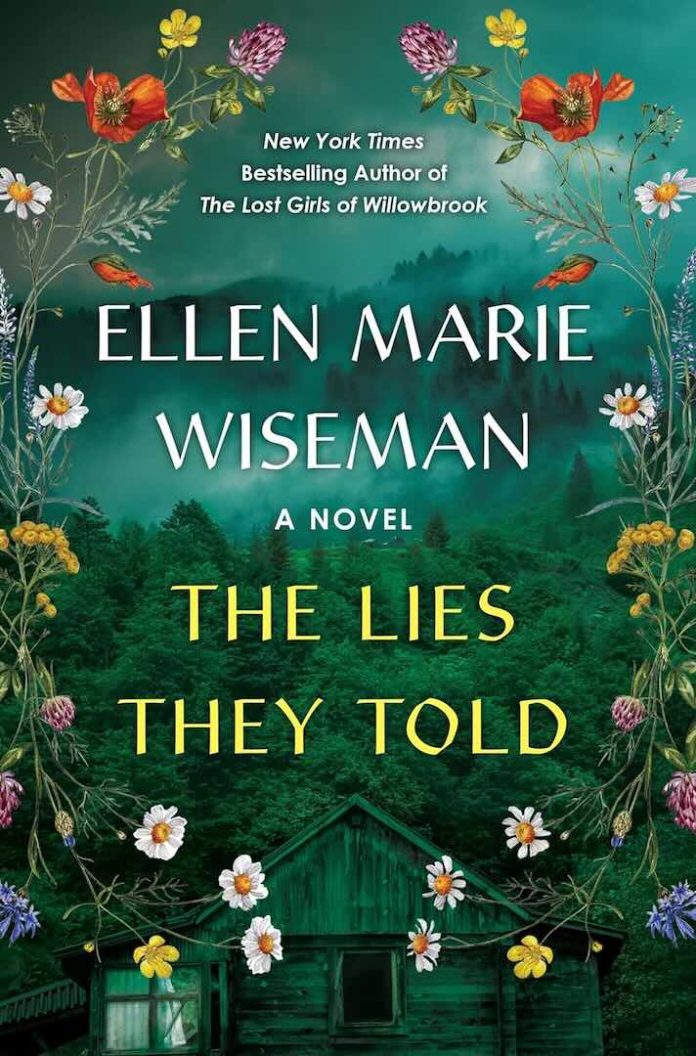
Ellen Marie Wiseman’s seventh novel, The Lies They Told, arrives with the weight of historical truth and the devastating power of human resilience. Set against the backdrop of 1930s America, this latest offering from the bestselling author tackles one of the darkest chapters in American history—the eugenics movement—with unflinching honesty and profound emotional depth. Through the eyes of Lena Conti, a young German immigrant mother, Wiseman exposes the systematic cruelty that masqueraded as scientific progress, creating a narrative that is both historically significant and deeply personal.
The Heart of Darkness: Plot and Historical Context
The novel follows Lena Conti’s journey from the cramped quarters of Ellis Island to the remote mountains of Virginia’s Blue Ridge. After being separated from her mother and teenage brother Enzo during immigration processing—both deemed “burdens to society” and deported back to Germany—Lena finds herself alone in a foreign country with her two-year-old daughter Ella. What begins as a desperate search for safety evolves into a nightmare when she accepts help from Silas Wolfe, a bitter widower living in the soon-to-be-displaced community of Wolfe Hollow.
Wiseman masterfully weaves together three interconnected tragedies: the immigrant experience at Ellis Island, the forced displacement of Blue Ridge Mountain communities for Shenandoah National Park, and the horrific sterilization programs targeting America’s most vulnerable populations. The historical context is not merely backdrop but becomes a living, breathing antagonist that stalks every character throughout the narrative.
Character Development and Emotional Resonance
Lena Conti: A Portrait of Maternal Fury
Lena emerges as one of Wiseman’s most compelling protagonists. Her evolution from hopeful immigrant to fierce protector showcases the author’s ability to create characters who feel authentically human rather than historically convenient. The language barrier that initially makes Lena vulnerable to officials becomes a powerful metaphor for the broader communication breakdown between the marginalized and those in power. Her German phrases peppered throughout the text—”Ach, Gott,” “mein Liebling”—serve as reminders of her otherness in a society increasingly hostile to difference.
The Wolfe Family: Fractured but Not Broken
Silas Wolfe represents the complex masculinity of Depression-era America. Wiseman avoids the trap of making him simply villainous, instead revealing a man broken by war trauma and profound loss. His relationship with his children, Bonnie and Jack Henry, demonstrates how grief can both protect and destroy. Bonnie, in particular, shines as a character who embodies the resilience of mountain culture—caring for her father’s household while maintaining her childhood wonder and fierce loyalty to family.
The Author’s Craft: Style and Narrative Technique
Wiseman’s writing style has matured significantly since her debut, The Plum Tree. Her prose here carries the weight of mountain vernacular without becoming caricature, and her dialogue feels natural rather than forced. The pacing builds tension methodically, particularly in the sequences at the Virginia State Colony, where clinical detachment masks unspeakable horrors.
The author’s use of multiple perspectives enriches the narrative complexity. When photographer Arthur Rothstein and social worker Miriam Sizer arrive in the mountains, their presence introduces competing worldviews that reflect the period’s cultural tensions. Sizer’s casual cruelty and condescension feel particularly authentic to the era’s prejudices.
Historical Accuracy and Research Excellence
Wiseman’s extensive research shines throughout the novel. Her author’s note reveals consultation of crucial texts including Edwin Black’s “War Against the Weak” and Elizabeth Catte’s “Pure America,” and this scholarly foundation supports every devastating detail. The inclusion of real historical figures like Carrie Buck (whose name was changed to avoid confusion) and actual quotations from eugenicists like Joseph S. DeJarnette create an unsettling authenticity.
The Ellis Island sequences, with their focus on intelligence testing and the delousing process on Hoffman Island, reveal lesser-known aspects of the immigrant experience. The detail about Zyklon B being used for delousing carries chilling historical resonance that Wiseman handles with appropriate gravity.
Strengths That Elevate the Work
Emotional Authenticity
The separation scenes between mothers and children feel genuinely heartbreaking without becoming manipulative. Wiseman understands that readers don’t need overwrought prose to feel devastated—the historical facts speak for themselves.
Cultural Sensitivity
The portrayal of mountain communities avoids both romanticization and condescension. These are complex people with rich traditions, not stereotypes or victims requiring rescue. The corn-husking scenes and community gatherings celebrate mountain culture while acknowledging the very real poverty and isolation that made these families vulnerable.
Contemporary Relevance
The novel’s themes resonate powerfully in our current political climate. The author’s note mentions that forced sterilizations continued as recently as 2020 in ICE detention centers, making this historical fiction feel urgently contemporary.
Areas for Critical Consideration
Pacing and Length
While the novel’s 400+ pages allow for deep character development, some middle sections feel slightly padded. The detailed descriptions of daily mountain life, while atmospheric, occasionally slow the narrative momentum when tension should be building toward the climactic Colony sequences.
Predictable Elements
Readers familiar with historical fiction about marginalized communities may anticipate certain plot developments. The arrival of government officials and the subsequent family separations follow expected patterns, though Wiseman’s execution remains compelling despite the familiarity.
Resolution Complexity
The novel’s ending, while emotionally satisfying, requires some suspension of disbelief regarding the likelihood of reunification given the historical realities Wiseman has so carefully established. This tension between hope and historical accuracy creates mild cognitive dissonance.
Literary Merit and Comparison to Contemporary Works
The Lies They Told stands alongside other exceptional historical fiction examining American injustices, including Colson Whitehead’s The Underground Railroad and Kristin Hannah’s The Four Winds. Like those works, Wiseman’s novel functions both as entertainment and education, ensuring that forgotten histories receive the attention they deserve.
The book particularly resonates with readers of Christina Baker Kline’s Orphan Train and Susan Meissner’s The Nature of Fragile Things, sharing their focus on vulnerable women navigating institutional cruelty. However, Wiseman’s specific focus on eugenics sets her work apart in its willingness to confront America’s most uncomfortable truths.
Ellen Marie Wiseman’s Literary Evolution
Comparing this work to Wiseman’s earlier novels reveals significant growth in both scope and sophistication. While The Plum Tree and What She Left Behind dealt with historical trauma, The Lies They Told demonstrates increased confidence in handling complex moral territories. The author’s previous works, including The Lost Girls of Willowbrook and The Orphan Collector, established her expertise in institutional narratives, but this latest novel represents her most ambitious and successful treatment of systemic oppression.
Essential Reading Recommendations
Readers who appreciate The Lies They Told should consider:
- War Against the Weak by Edwin Black – The non-fiction foundation for understanding American eugenics
- The Orphan Train by Christina Baker Kline – Similar themes of family separation and institutional care
- The Book Woman of Troublesome Creek by Kim Michele Richardson – Another nuanced portrayal of Appalachian communities
- The Four Winds by Kristin Hannah – Comparable scope in examining American social failures
- Pure America by Elizabeth Catte – Academic examination of eugenics in Virginia specifically
Final Verdict: A Necessary and Powerful Achievement
The Lies They Told succeeds as both historical fiction and moral imperative. Wiseman has created a novel that honors the victims of America’s eugenics movement while crafting a thoroughly engaging story about love, loss, and the lengths to which people will go to protect their families. The book’s greatest strength lies in its refusal to let readers look away from uncomfortable truths about American history.
While the novel occasionally stumbles under the weight of its historical burden, these minor flaws pale beside its significant achievements. Wiseman has written a book that will educate readers about a crucial period in American history while providing the emotional satisfaction that comes from witnessing characters fight against impossible odds.
This is essential reading for anyone interested in American history, immigration narratives, or simply powerful storytelling that illuminates the darkest corners of our national past. The Lies They Told proves that historical fiction at its best can serve as both mirror and warning, reflecting who we were while challenging us to become better.
The novel reminds us that the lies referenced in the title were not just told to justify eugenics policies—they were lies about human worth, about who deserves dignity and freedom, about what makes someone truly American. In our current moment, when similar rhetoric resurfaces in political discourse, Wiseman’s unflinching examination of these themes feels not just relevant but urgent.
The Lies They Told stands as a testament to the power of historical fiction to preserve memory, honor victims, and challenge readers to confront uncomfortable truths about the societies we’ve inherited and continue to shape.