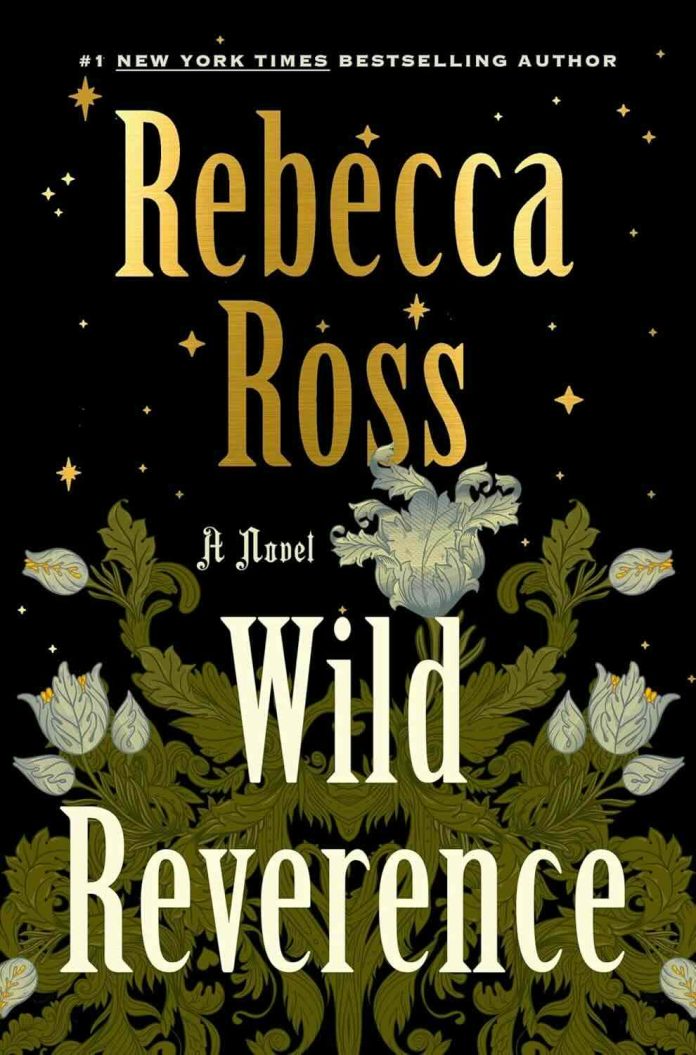
Rebecca Ross returns to the enchanting world that captivated readers in Divine Rivals (2023) and Ruthless Vows (2023) with Wild Reverence, a prequel that serves as Book 0 in the Letters of Enchantment series. While the previous duology focused on Iris and Roman’s wartime romance amid divine conflict, this new installment ventures into the mystical origins of the god-mortal relationships that would later shape their world.
Ross demonstrates her mastery of atmospheric fantasy romance by crafting a story that feels both intimately connected to her previous work and refreshingly independent. The author’s signature blend of lyrical prose and emotional depth remains intact, though Wild Reverence carries a distinctly darker, more mature tone that reflects the primordial nature of its divine protagonists.
The Heart of Divine Conflict
At its core, Wild Reverence explores the complex relationship between Matilda, a young goddess blessed with messenger magic, and Vincent of Beckett, a mortal lord haunted by dreams of a crimson-haired girl. Born in the firelit underworld domain but belonging to both Skyward and Underling realms, Matilda occupies a precarious position in the divine hierarchy—one that makes her simultaneously powerful and vulnerable.
The story’s central premise revolves around a desperate deception: a fake marriage between goddess and mortal designed to prevent Vincent’s prophesied death. This premise allows Ross to examine themes of sacrifice, vulnerability, and the price of survival in a world where gods routinely kill each other to steal power and alliances crumble as quickly as morning frost.
Vincent emerges as a compelling counterpart to Matilda—a lord burdened by family tragedy and political machinations who has long forgotten the goddess who once visited his dreams. Ross skillfully portrays his transformation from a lonely boy seeking divine comfort to a hardened, irreverent leader who has learned to distrust the very gods who once fascinated him.
Strengths in World-Building and Character Development
Ross excels at expanding the divine mythology established in her previous books. The intricate court system, with its Low, Middle, and High Courts determined by constellation power, adds layers of political complexity that feel both fantastical and grounded in recognizable power structures. The author’s depiction of divine magic as something that can be stolen, bargained, and lost creates genuine stakes for immortal beings who might otherwise feel invulnerable.
The character development proves particularly strong in Matilda’s arc. Her evolution from a naive young goddess seeking acceptance to someone willing to risk everything for connection feels authentic and hard-earned. Ross doesn’t shy away from exploring Matilda’s darker impulses or her genuine fear of vulnerability—traits that make her more human despite her divine nature.
The supporting cast, including Vincent’s loyal brother Nathaniel and the various divine court members, adds depth without overwhelming the central romance. Each character serves a distinct purpose in the narrative while maintaining individual agency and motivation.
Atmospheric Excellence and Prose Quality
Ross’s prose remains one of her greatest strengths. Her descriptions of the divine realms feel both ethereal and visceral, particularly in scenes depicting the firelit underworld or the storm-swept mortal castle of Wyndrift. The author has a gift for creating atmospheric tension—readers can practically feel the weight of prophecy and the threat of approaching doom in every scene.
The dream sequences, where Vincent and Matilda first connected, showcase Ross’s ability to blur the lines between reality and fantasy without losing narrative coherence. These moments provide crucial backstory while maintaining the mysterious, otherworldly quality that makes the romance feel destined rather than convenient.
Areas of Challenge
Despite its many strengths, Wild Reverence faces some structural challenges that prevent it from achieving the seamless excellence of its predecessors. The pacing occasionally stumbles in the middle sections, particularly during extended court intrigue sequences that, while atmospherically rich, sometimes slow the momentum of the central romance.
The fake marriage trope, while executed competently, feels somewhat predictable given its popularity in recent fantasy romance. Ross adds her own twists and complications, but readers familiar with the genre may find themselves anticipating certain plot developments ahead of their revelation.
Additionally, some divine politics threads feel underdeveloped compared to the central romance. While the broader conflict between realms provides necessary context, certain subplots involving stolen magic and divine alliances could benefit from deeper exploration or clearer resolution.
Romance and Emotional Resonance
The romance between Matilda and Vincent operates on multiple levels that showcase Ross’s understanding of both fantasy conventions and emotional truth. Their relationship must overcome not just the typical obstacles of class and species difference, but also the fundamental challenge of Vincent’s lost faith in divine goodness.
Ross handles their physical attraction and emotional connection with sensitivity and heat. The tension between Matilda’s divine power and her very human need for acceptance creates compelling internal conflict, while Vincent’s struggle between cynicism and hope provides excellent romantic tension.
The fake marriage framework allows both characters to explore intimacy within boundaries that feel safe for their respective traumas. Ross doesn’t rush their emotional development, allowing their connection to deepen gradually through shared vulnerability and genuine understanding.
Connection to the Broader Series
For readers of Divine Rivals and Ruthless Vows, Wild Reverence provides satisfying context for the divine conflicts that shaped Iris and Roman’s world. The prequel nature works in the book’s favor, as Ross can reference future events without spoiling them for new readers while providing deeper understanding for series veterans.
The book functions well as both a standalone entry point and a series continuation. New readers won’t feel lost in established mythology, while returning fans will appreciate the expanded understanding of divine politics and the origins of god-mortal relationships in this universe.
Similar Reads and Recommendations
Readers who enjoyed Wild Reverence will likely appreciate other fantasy romances that blend divine mythology with intimate character development. Jennifer L. Armentrout’s From Blood and Ash series offers similar themes of god-mortal relationships and political intrigue, though with a more action-heavy focus.
For those drawn to Ross’s atmospheric writing style, The Song of Achilles by Madeline Miller provides comparable mythological grounding and lyrical prose, while The Invisible Life of Addie LaRue by V.E. Schwab explores similar themes of divine power and human connection across time.
Fans of court intrigue and magical politics might also enjoy The Priory of the Orange Tree by Samantha Shannon or The House in the Cerulean Sea by TJ Klune for different but equally immersive fantasy experiences.
Final Verdict
Wild Reverence succeeds as both a worthy addition to the Letters of Enchantment series and a compelling standalone fantasy romance. Ross demonstrates continued growth as a storyteller, particularly in her handling of complex divine mythology and mature romantic themes. While not without minor pacing and predictability issues, the novel delivers on emotional satisfaction and world-building excellence.
The book’s exploration of vulnerability, sacrifice, and the courage required to love despite past pain resonates beyond its fantasy framework. Ross has created characters who feel genuinely worth caring about and a world rich enough to sustain continued exploration.
For readers seeking atmospheric fantasy romance with strong character development and mythological depth, Wild Reverence offers exactly the kind of immersive experience that makes the Letters of Enchantment series so compelling. It stands as proof that Ross’s talent for blending fantasy elements with genuine human emotion continues to evolve and mature with each new installment.







