 2
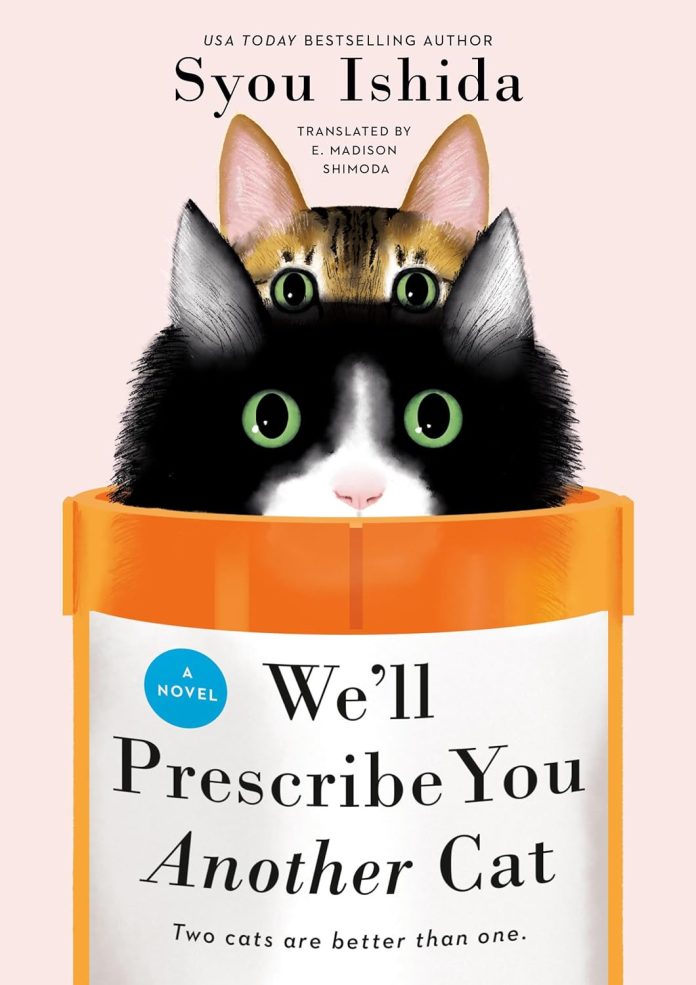
2In the labyrinthine streets of Kyoto’s Nakagyō Ward, where ancient addresses confuse even locals, exists a clinic that appears only to those who need it most. Syou Ishida’s “We’ll Prescribe You Another Cat,” the enchanting sequel to her bestselling debut, returns readers to the Nakagyō Kokoro Clinic for the Soul, where Dr. Nikké and his formidable nurse Chitose continue their peculiar practice of prescribing cats as treatment for the soul’s deepest wounds.
This follow-up to “We’ll Prescribe You a Cat” maintains the delicate balance between magical realism and contemporary Japanese fiction that made the first installment an international sensation. However, where the original introduced us to this mysterious world, the sequel deepens our understanding through a more complex narrative structure, weaving four interconnected stories that reveal how individual healing ripples outward to touch unexpected lives.
The Architecture of Interconnected Hearts
Ishida’s narrative design resembles a carefully constructed cat tower, where each story serves as a platform that supports and connects to the others. The book opens with Moé Ohtani, a university student wandering Kyoto’s streets while avoiding the inevitable conversation with her boyfriend. Her prescribed cats—Kotetsu, Noelle, and Bibi—each serve as mirrors reflecting different aspects of her relationship anxieties and growing independence. The author’s attention to feline behavior is extraordinary; Kotetsu’s explosive litter-box habits and Noelle’s curtain-climbing escapades aren’t merely cute details but authentic representations of cat ownership’s chaotic reality.
The second chapter shifts to Tatsuya Satonaka, a seventy-eight-year-old widower whose grief has transformed him into a recluse. His encounter with Ms. Michiko, a magnificently lazy Maine Coon mix, provides some of the book’s most touching moments. Ishida captures the weight of loss with remarkable restraint, never veering into sentimentality while acknowledging the profound emptiness that follows death. The parallel drawn between Tatsuya’s isolation and his grandson’s nocturnal lifestyle creates a multigenerational examination of withdrawal and connection.
In the third chapter, Reona Kajiwara’s story explores family dynamics through the lens of sibling rivalry and parental favoritism. Her prescribed kitten, Shasha, becomes the catalyst for examining resentments that simmer beneath polite surfaces. What makes this section particularly effective is how Ishida handles the revelation of memory and its unreliability—Reona’s realization about her childhood actions and their long-term consequences on her brother carries genuine emotional weight without feeling manipulative.
The final chapter, focusing on Reona’s brother Tomoya, serves as both conclusion and revelation, explaining the mysterious clinic’s true nature while exploring the profound bond between a cat rescue worker and his own ailing feline companion. This section transforms the book from simple episodic storytelling into a meditation on sacrifice, love, and letting go.
The Poetry of Feline Observation
Ishida’s greatest strength lies in her authentic portrayal of cat behavior and the human-feline relationship. Unlike books that anthropomorphize cats into furry humans, “We’ll Prescribe You Another Cat” respects feline inscrutability while finding profound meaning in their mysterious ways. The author understands that cats are simultaneously therapeutic and utterly indifferent to human need—it’s precisely this contradiction that makes them healing.
Consider how she describes different litter preferences across multiple cats, or the way Shasha’s fearless attempts to jump onto progressively higher surfaces mirror her human companion’s need to take emotional risks. These aren’t cute observations tacked onto a story; they’re integral to understanding how the characters grow. The book suggests that caring for another being—especially one as demanding and independent as a cat—forces us outside our own suffering.
The prose itself moves with feline grace, alternating between playful observation and contemplative stillness. Ishida’s sentences can be surprisingly funny, particularly in scenes involving the eccentric magnetic necklace salesman or the nurse Chitose’s cutting remarks to Dr. Nikké. Yet she can shift seamlessly into moments of profound sadness, as when Tomoya describes his dread of returning home to find his beloved Nikké has died.
The Kyoto Setting as Character
The specificity of place grounds the magical realism in tangible reality. Kyoto’s confusing grid system of streets, the boiled tofu restaurants near Nanzen-ji Temple, the distinction between genuine Kyoto natives and those from Yamashina—these details create authenticity that makes the impossible clinic feel possible. The city itself becomes a metaphor for the human heart: ancient, beautiful, difficult to navigate, and full of hidden treasures for those willing to search.
Ishida also captures contemporary Japanese life with precision, from university students working part-time at traditional restaurants to the pressures of entrance exam culture. The book exists in a recognizably modern world while maintaining a timeless quality through its fable-like central premise.
Where the Formula Falters
Despite its considerable charms, the book isn’t without limitations. The structure, while ambitious, occasionally works against narrative momentum. Readers invest in one character’s journey only to be pulled into another’s story, and while the connections eventually reveal themselves, the transitions can feel abrupt. Some may find the third-person omniscient perspective creates emotional distance, particularly in the earlier chapters before the full pattern emerges.
The magical realism, while beautifully rendered, operates on rules that remain frustratingly opaque. Why does the clinic appear to some but not others? How do the cats actually work as prescriptions? Dr. Nikké’s mysterious nature is intentional, but readers seeking concrete answers about the clinic’s mechanics may feel unsatisfied. The book asks for faith in its premise without always earning it through narrative necessity.
Additionally, while each story carries emotional weight, they don’t all resonate equally. Moé’s romantic troubles, though sympathetically rendered, feel somewhat slight compared to Tatsuya’s grief or Tomoya’s impending loss. The book’s episodic nature means some characters receive more development than others, and certain resolutions feel rushed or overly tidy given the complexity of the emotional problems presented.
The translation by E. Madison Shimoda generally succeeds in capturing what feels like Ishida’s original voice, though occasionally phrases feel slightly awkward or overly explanatory. This is more noticeable in dialogue than in descriptive passages, where the prose flows with consistent grace.
The Deeper Prescription
What elevates “We’ll Prescribe You Another Cat” beyond simple comfort reading is its willingness to acknowledge that healing isn’t about fixing what’s broken but learning to live with imperfection. The cats don’t solve their humans’ problems; they demand care that forces people outside their own suffering. This is a book about the courage required to love knowing loss is inevitable, about the selfish thoughts we harbor even toward those we cherish, and about the unexpected ways our choices ripple through others’ lives.
Ishida trusts her readers to sit with ambiguity and unresolved emotions. Not every character achieves complete healing by their chapter’s end, and that honesty feels more respectful than false reassurance. The book suggests that sometimes the prescription isn’t a cure but companionship through difficulty—a thoroughly feline philosophy.
For Those Who Seek Similar Comfort
Readers enchanted by Ishida’s blend of gentle magic and emotional depth should explore Hiro Arikawa’s “The Travelling Cat Chronicles,” which similarly examines human-feline bonds through a road trip narrative. Takashi Hiraide’s “The Guest Cat” offers a more literary, contemplative approach to how cats transform daily life. For those drawn to the interconnected story structure, Gabrielle Zevin’s “The Storied Life of A.J. Fikry” provides comparable warmth through books rather than cats, while David Mitchell’s “Ghostwritten” offers more complex interconnections with darker undertones.
Within Japanese literature, Banana Yoshimoto’s works, particularly “Kitchen,” share Ishida’s interest in grief, found families, and everyday magic. Readers who appreciate the Kyoto setting might enjoy Noriko Ogiwara’s historical fantasies or the contemporary city portraits in Mieko Kawakami’s work, though with significantly different tonal registers.
The Final Diagnosis
“We’ll Prescribe You Another Cat” succeeds as both standalone reading and series continuation, deepening the world established in the first book while telling complete, satisfying stories. It’s a book that understands both the comedy and tragedy of loving creatures whose lifespans are heartbreakingly brief, and the courage required to open your heart knowing eventual loss is guaranteed.
Ishida has crafted something rare: a book that’s simultaneously cozy and challenging, whimsical and wise. It won’t appeal to readers seeking plot-driven narratives or those allergic to sentimentality, but for those willing to slow down and observe how small moments of connection accumulate into meaning, it offers genuine rewards. Like the best cats, it’s demanding in its own way—requiring patience, attention, and willingness to accept mystery—but for those who submit to its particular rhythms, it provides exactly the comfort needed, even if not always the comfort expected.