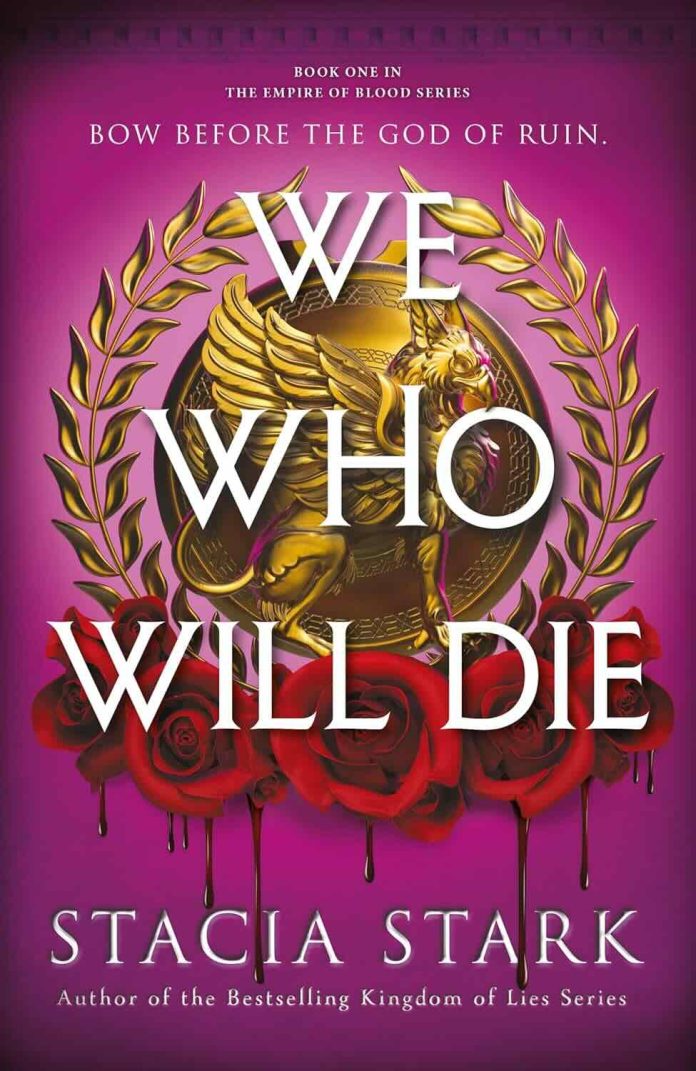
When survival demands you become the weapon your enemies never saw coming, the arena becomes more than entertainment—it becomes your battlefield for redemption. Stacia Stark, the bestselling author behind the Kingdom of Lies series, returns with a visceral new romantasy, We Who Will Die, that plunges readers into a Roman-inspired vampire empire where the cost of love might just be measured in blood.
A World Built on Blood and Sand
Stark constructs a meticulously detailed society that feels both familiar and unnervingly fresh. The Empire of Senthara operates on a brutal hierarchy where vampires rule with ancient power, the sigilmarked possess magical abilities marked across their foreheads, and mundanes exist at the mercy of those above them. This isn’t the glamorous vampire world of ballrooms and seduction—though those elements certainly appear. Instead, Stark presents a ruthlessly pragmatic empire where the Colosseum’s legacy lives on through compulsory arena combat called the Sands, and advancement means surviving three deadly challenges known as the Sundering.
The ludus beneath the emperor’s arena becomes a character in itself. Stark’s classical education shines through in the architectural details, the hierarchical structure of gladians and their guardants, and the political machinations that mirror Rome’s own Praetorian Guard. The underground training complex, complete with impossible gardens and secret libraries, creates an atmosphere thick with danger and ancient power. Every corridor holds potential betrayal, every training session could be your last, and even victory offers no guarantee of survival.
A Heroine Forged in Desperation
Arvelle Dacien embodies the kind of protagonist that romantasy readers crave: fierce yet vulnerable, strategic yet impulsive, hardened by trauma but not broken by it. Six years before the novel opens, she survived the Sands and watched her best friend die in the arena. Now, she guards drunkards in the poverty-stricken Thorn district, using her sword skills to keep her two younger brothers fed and her brother Evren’s lung condition medicated.
When vampire Bran appears with an impossible ultimatum—enter the Sundering and assassinate Emperor Vallius Corvus, or watch Evren suffocate—Arvelle’s careful survival collapses. Stark excels at showing how desperation transforms people. Arvelle’s internal conflict feels authentic as she grapples with becoming an assassin while maintaining enough humanity to look her brothers in the eyes afterward. Her evolution from reluctant participant to calculating survivor demonstrates character development that never sacrifices her core values, even as those values are repeatedly tested.
What elevates Arvelle beyond typical “strong female protagonist” territory is Stark’s willingness to let her fail. She makes impulsive decisions that have devastating consequences. She trusts the wrong people. Her combat skills, while formidable, don’t make her invincible—every victory costs her something, whether that’s physical injury or moral compromise.
The Complicated Dance of Second-Chance Romance
The romantic triangle between Arvelle, Tiernon (the Primus), and his sadistic brother Rorrik crackles with tension, history, and genuine emotional stakes. Tiernon was Arvelle’s first love, the noble boy who befriended her in the Thorn before vanishing without explanation on the worst day of her life. Now he’s the emperor’s younger son, the helmeted Primus leading the elite imperius guard—and he’s desperate to protect Arvelle from his own family.
Stark handles the second-chance romance with nuanced complexity. Rather than simply reuniting the lovers, she forces them to confront how six years of separation, trauma, and secrets have transformed them both. Tiernon’s tortured past—literally tortured to protect Arvelle’s identity—adds layers of guilt and sacrifice that complicate their rekindling attraction. The slow burn feels earned rather than frustrating, as both characters must rebuild trust while navigating deadly political waters.
Rorrik serves as the brilliantly rendered wild card. Cruel, calculating, and possessing his own mysterious agenda, he shouldn’t be compelling—yet Stark makes him fascinating. His interest in Arvelle stems from her rare abilities, particularly her capacity to mindpath and her mysterious power absorption from magical creatures. The psychological chess matches between Rorrik and Arvelle provide some of the novel’s most electric scenes, as she simultaneously fears and understands him in ways even Tiernon doesn’t.
Arena Combat That Delivers Visceral Thrills
Stark doesn’t shy away from the brutal realities of gladiatorial combat in We Who Will Die. The three challenges of the Sundering—each more deadly than the last—showcase her ability to choreograph action sequences that balance tactical strategy with emotional resonance. The first challenge forces Arvelle to face a griffon blessed by the gods. The second plunges competitors into water filled with kelpies and hostile criminals. The third becomes a bloodbath where former allies turn on each other.
What makes these sequences exceptional:
- Strategic preparation balances raw talent and desperate improvisation
- Each fight reveals character through combat choices—who Arvelle saves versus who she sacrifices
- Physical consequences accumulate realistically; injuries don’t magically heal between chapters
- The moral weight of killing never diminishes, even when survival demands it
- Stark varies the combat scenarios to prevent repetition while escalating stakes
The arena scenes also illuminate the empire’s systemic cruelty. Vampires compete with supernatural advantages but face no real danger. The sigilmarked and mundanes provide entertainment while their deaths reinforce vampire supremacy. When Arvelle recognizes that even her victories serve the emperor’s propaganda machine, it deepens her motivation beyond simple survival.
Where the Foundation Shows Cracks
Despite its considerable strengths, We Who Will Die stumbles in areas that prevent it from achieving masterpiece status. The pacing occasionally suffers from uneven distribution. The middle section, while building necessary character relationships and political intrigue, sometimes loses momentum between the spectacular arena sequences. Readers eager for constant action may find themselves impatient during the quieter moments, even though these scenes provide essential emotional development.
The world-building, while impressive in scope, occasionally relies on information dumps. Stark has clearly developed an intricate magic system involving gods, sigilmarked powers, and vampire abilities, but the delivery sometimes feels more like a lecture than organic revelation. The distinction between different sigil colors and their hierarchical implications could have been woven more seamlessly into the narrative.
Some secondary characters remain frustratingly underdeveloped. Maeva, Arvelle’s fellow gladian and potential ally, shows promise but never quite achieves the depth she deserves. Leon, the trainer haunted by his daughter’s death, fulfills his mentoring role competently but predictably. When compared to the richly drawn central trio, these supporting players occasionally feel more like functional plot devices than fully realized individuals.
The cliffhanger ending, while effective at ensuring readers return for book two, resolves very little. Readers seeking any sense of completion in this first installment will be disappointed. Nearly every plot thread remains dangling, from Arvelle’s assassination mission to the looming threat of the god Mortuus breaking free from his divine prison.
The Literary Landscape This Story Inhabits
Stark’s prose strikes a balance between lyrical and brutal that serves the story well. She can describe the beauty of aether-lit gardens before plunging into visceral combat without tonal whiplash. The first-person narration from Arvelle’s perspective maintains intimacy while allowing for unreliable observations and evolving understanding as secrets unfold.
The novel’s dedication—”For the eldest daughters. You are seen, you are loved, and you are enough”—hints at the thematic depth Stark weaves throughout. Arvelle’s burden of responsibility for her brothers, her inability to pursue her dream of becoming a healer, and her role as surrogate parent all resonate with anyone who’s sacrificed personal ambitions for family survival. This emotional core prevents the story from becoming merely spectacle.
For Readers Who Crave Similar Flavors
If you devoured We Who Will Die, reach for:
- A Dawn of Onyx by Kate Golden — another heroine thrust into enemy territory with forbidden romance and political intrigue
- The Savior’s Champion by Jenna Moreci — gladiatorial trials with romantic complications and deadly competition
- From Blood and Ash by Jennifer L. Armentrout — forbidden love in a oppressive supernatural hierarchy with arena elements
- Gild by Raven Kennedy — captivity, complex power dynamics, and a heroine finding strength in impossible circumstances
- Heartless Hunter by Kristen Ciccarelli — enemies-to-lovers tension against a backdrop of magical persecution and political upheaval
For readers already familiar with Stark’s work from the Kingdom of Lies series, We Who Will Die represents an evolution in her craft—darker, more violent, and more ambitious in scope, while maintaining her signature found family dynamics and morally complex characters.
The Final Verdict
We Who Will Die establishes Stacia Stark as a formidable voice in adult romantasy willing to embrace both genuine darkness and emotional vulnerability. While the novel’s cliffhanger ending and occasional pacing issues prevent it from perfection, the visceral arena combat, complex romantic dynamics, and richly detailed world-building create an addictive reading experience.
Arvelle’s journey from desperate survivor to calculating player in deadly games captivates from the opening chapter, and the introduction of gods threatening to break free from divine prisons promises explosive developments ahead. The slow-burn romance between Arvelle and Tiernon satisfies without overshadowing the larger political and personal stakes, while Rorrik’s chaotic presence adds delicious unpredictability.
We Who Will Die is romantasy for readers who appreciate their love stories wrapped in blood-soaked ambition, their heroines armed with both swords and strategy, and their happy endings earned through genuine sacrifice rather than convenient plot armor. The empire of blood demands payment in full—and Stark ensures every drop counts.







