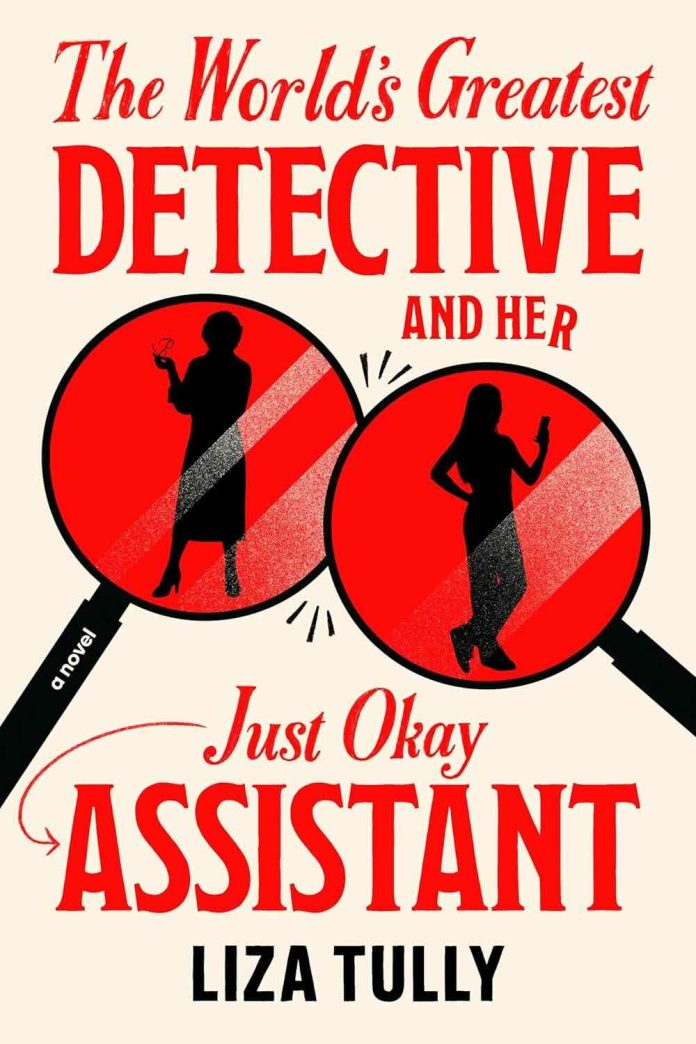
Liza Tully’s debut mystery novel, The World’s Greatest Detective and Her Just Okay Assistant, delivers exactly what its playful title promises: a clever, character-driven mystery that combines sharp investigative work with genuine heart. This engaging whodunit marks an impressive entry point for readers new to the cozy mystery genre while offering enough sophistication to satisfy veteran mystery enthusiasts.
Set against the picturesque backdrop of Vermont’s Wild Goose Resort, the novel introduces us to the dynamic duo of renowned private investigator Aubrey Merritt and her eager assistant Olivia Blunt. When Victoria Summersworth, the resort’s beloved matriarch, is found dead at the bottom of a rocky cliff after her 65th birthday party, the police quickly rule it suicide. But Victoria’s daughter Haley refuses to accept this verdict, hiring the formidable Merritt to uncover the truth.
Character Development: The Heart of the Mystery
Tully’s greatest strength lies in her character development, particularly in crafting the complex relationship between Merritt and Olivia. Merritt emerges as a fascinating contradiction—a brilliant detective whose aloof professionalism masks deeper emotional complexities. She’s demanding, sometimes harsh, yet ultimately fair in her mentorship approach. Her teaching philosophy of “slow down, way down” and emphasis on observing “flat notes” and “cracks in the plaster” reveals both her methodical nature and her belief in thorough investigation over flashy deduction.
Olivia Blunt proves to be far more than just an ordinary assistant. Her journey from eager novice to competent investigator forms the novel’s emotional backbone. Tully skillfully portrays Olivia’s frustration with routine tasks while gradually revealing her natural investigative instincts. The young woman’s relationship with her boyfriend Trevor adds welcome depth, grounding her character in relatable concerns about work-life balance and career ambitions.
The supporting cast sparkles with authenticity. Victoria Summersworth, though deceased, emerges as a fully realized character through flashbacks and testimonies—a complex woman who inspired both loyalty and resentment. Robin Tucci, Victoria’s long-suffering assistant, is particularly well-crafted, her decades of suppressed resentment building to a shocking climax that feels both surprising and inevitable.
Plot Structure: A Masterclass in Fair Play Mystery
Tully demonstrates impressive skill in constructing a fair-play mystery where all clues are available to the reader. The investigation unfolds methodically, with Merritt’s systematic approach providing a strong framework for the narrative. The author expertly weaves together multiple red herrings—from the embezzlement subplot involving Lauren Perry and Arthur Doyle to the stalker storyline with Tristan Morrissey—without losing focus on the central mystery.
The resolution hinges on brilliant detective work involving a forged suicide note. Merritt’s discovery that Robin Tucci altered Victoria’s farewell message by adding two small ‘s’ letters to change “friend” to “friends” and “darling” to “darlings” represents the kind of clever, logical deduction that mystery readers crave. The evidence trail—fingerprints on the suicide note, lightbulb, and water bottle—provides satisfying concrete proof of guilt.
Atmospheric Setting and Pacing
Vermont’s Wild Goose Resort serves as more than mere backdrop; it becomes a character itself. Tully captures the resort’s seasonal rhythms and the insular dynamics of its long-term guests with remarkable precision. The contrast between the resort’s genteel facade and the dark undercurrents of jealousy, greed, and long-buried resentments creates effective tension throughout the narrative.
The pacing maintains steady momentum while allowing for proper character development. Tully resists the temptation to rush toward the resolution, instead building suspense through careful revelation of clues and gradual deepening of character relationships. The investigation spans several days, giving readers time to form their own theories while following Merritt and Olivia’s methodical work.
Writing Style and Dialogue
Tully’s prose strikes an appealing balance between accessibility and sophistication. Her writing style mirrors Olivia’s voice—observant, occasionally self-deprecating, and genuinely engaging. The dialogue feels natural and serves dual purposes of advancing plot and revealing character. Merritt’s precise, sometimes cutting remarks contrast effectively with Olivia’s more casual observations, creating a pleasing verbal dynamic.
The author demonstrates particular skill in handling exposition, weaving necessary background information seamlessly into character interactions rather than relying on clunky information dumps. The revelation of family relationships and financial motivations emerges organically through the investigation process.
Strengths That Shine
Several elements elevate “The World’s Greatest Detective and Her Just Okay Assistant” above standard cozy mystery fare:
- Realistic Investigation Procedures: Tully clearly researched proper investigative techniques, from crime scene analysis to witness interviews. Merritt’s methods feel authentic and professional rather than relying on convenient coincidences or unrealistic amateur sleuthing.
- Complex Motivations: The murder motive—decades of exploitation and resentment between employer and employee—resonates with genuine psychological truth. Robin’s crime stems from accumulated grievances rather than a single dramatic trigger, making her actions both understandable and tragic.
- Fair Play Elements: All crucial clues appear before the solution, allowing readers to potentially solve the mystery alongside the detectives. The altered suicide note, loosened lightbulb, and timeline discrepancies all point toward the true culprit for observant readers.
- Character Growth: Olivia’s development from frustrated assistant to competent investigator provides satisfying character progression that promises interesting future installments.
Areas for Improvement
Despite its many strengths, “The World’s Greatest Detective and Her Just Okay Assistant” has some minor weaknesses that prevent it from achieving absolute excellence:
- Secondary Plot Threads: While the embezzlement subplot adds complexity, it occasionally feels disconnected from the main mystery. The revelation that Lauren Perry, Eric Perry, and Arthur Doyle were stealing from Kingfisher Development seems more like a distraction than an integral plot element.
- Predictable Elements: Some red herrings feel somewhat obvious, particularly the focus on Monty Draper as a potential fortune hunter. Experienced mystery readers may eliminate him as a suspect earlier than intended.
- Convenient Resolutions: Certain evidence discoveries, such as the preserved water bottle with fingerprints, strain credibility slightly. More organic evidence gathering would strengthen the investigative authenticity.
Literary Merit and Genre Positioning
“The World’s Greatest Detective and Her Just Okay Assistant” fits comfortably within the cozy mystery tradition while bringing fresh elements to familiar territory. Tully’s academic background (writing under the pseudonym for Elisabeth Brink, who has published darker thrillers as Elisabeth Elo) shows in her sophisticated plotting and character psychology. The book successfully bridges the gap between cozy comfort and serious crime fiction without sacrificing either accessibility or intelligence.
The mentor-student relationship between Merritt and Olivia echoes classic detective partnerships while avoiding tired stereotypes. Their dynamic promises rich material for future series installments, with Olivia’s growing competence setting up interesting possibilities for their evolving professional relationship.
Recommended Similar Reads
Readers who enjoy “The World’s Greatest Detective and Her Just Okay Assistant” should consider:
- Louise Penny’s Inspector Gamache series for similar character depth and atmospheric Canadian settings
- Agatha Christie’s Hercule Poirot novels for classic fair-play mystery construction
- Elizabeth Peters’ Amelia Peabody series for strong female protagonists and witty dialogue
- Martha Grimes’ Richard Jury series for complex character relationships and English countryside atmosphere
- Julia Spencer-Fleming’s Clare Fergusson/Russ Van Alstyne series for modern mysteries with relationship elements
Final Verdict
The World’s Greatest Detective and Her Just Okay Assistant succeeds admirably as both an engaging standalone mystery and a promising series launch. Tully demonstrates impressive skill in balancing multiple plot elements while maintaining focus on character development and fair play detection. The novel’s combination of clever plotting, authentic character relationships, and atmospheric setting creates a thoroughly satisfying reading experience.
While not without minor flaws, this debut establishes Tully as a welcome new voice in contemporary mystery fiction. The book offers enough complexity to challenge experienced mystery readers while remaining accessible to newcomers to the genre. Most importantly, it leaves readers eager to follow Merritt and Olivia’s future investigations.
For mystery enthusiasts seeking intelligent entertainment with genuine heart, this novel delivers exactly what its charming title promises. Tully has created a world and characters worth revisiting, making this an excellent choice for readers looking for their next favorite mystery series.
- Recommended for: Fans of cozy mysteries, character-driven crime fiction, and anyone seeking a well-crafted detective story with authentic investigative procedures and engaging protagonists.







