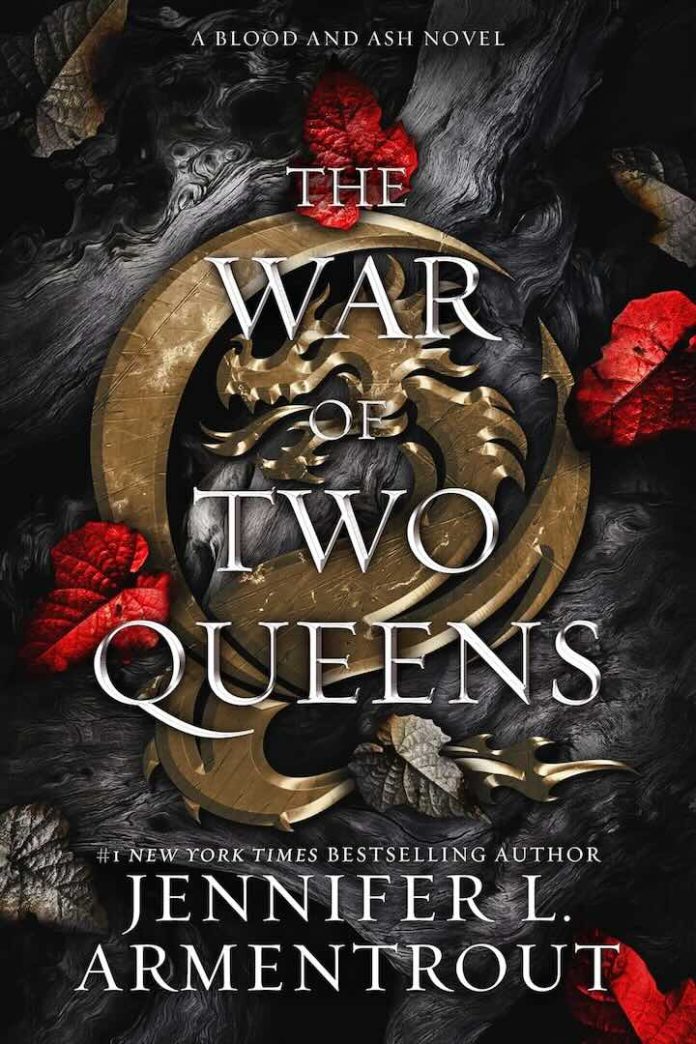
Jennifer L. Armentrout delivers a heart-wrenching and action-packed fourth installment in her beloved Blood and Ash series with The War of Two Queens. This novel serves as both a culmination of previous plot threads and a devastating setup for what’s to come, proving that sometimes the most anticipated victories can herald the beginning of even greater catastrophes.
The story picks up twenty-eight days after the cliffhanger ending of The Crown of Gilded Bones (2021), with Poppy consumed by rage and desperation as Casteel remains imprisoned by the Blood Queen Isbeth. Armentrout masterfully captures the psychological toll of separation on both characters, particularly Poppy’s internal struggle between her growing divine power and her human heart.
Character Development: Growth Through Anguish
Poppy’s Evolution into True Queenship
Poppy’s character arc in this installment represents her most significant transformation yet. No longer the naive Maiden from From Blood and Ash (2020), she has evolved into a formidable leader grappling with the weight of godhood. Armentrout expertly portrays her internal conflict between mercy and vengeance, particularly when Poppy must make impossible choices that affect not just herself and Casteel, but entire kingdoms.
The author’s exploration of Poppy’s relationship with power proves especially compelling. Her struggle to control the Primal essence within her while maintaining her humanity creates palpable tension throughout the narrative. The moments where she nearly loses herself to rage—particularly during the devastating scene in Stonehill—showcase Armentrout’s ability to write morally complex characters who must confront the darkness within themselves.
Casteel’s Captivity and Resilience
Casteel’s chapters, written from his perspective while imprisoned, offer some of the novel’s most emotionally resonant moments. Armentrout doesn’t shy away from depicting the psychological and physical toll of his captivity, yet maintains his characteristic wit and devotion to Poppy. His refusal to feed, despite his growing hunger, demonstrates the depth of his sacrifice and love—a choice that reverberates throughout the story with devastating consequences.
World-Building: Expanding the Mythological Foundation
Armentrout significantly expands the series’ mythology in The War of Two Queens, introducing crucial backstory about the Primals and the true nature of Poppy’s destiny. The revelation about Kolis, the true Primal of Death, and his connection to Poppy’s family tree adds layers of complexity that recontextualize the entire series. These mythological elements feel organic rather than exposition-heavy, woven seamlessly into the emotional narrative.
The introduction of Millicent as Poppy’s sister creates one of the book’s most intriguing dynamics. Their relationship, built on shared trauma yet divided by loyalty, provides fascinating insight into how the same circumstances can shape individuals so differently. This sibling revelation adds emotional weight to Poppy’s journey while setting up compelling conflicts for future installments.
Romance: Love Tested by Impossible Circumstances
The romance between Poppy and Casteel, while physically separated for much of the novel, remains the emotional core of the story. Armentrout’s strength lies in showing how their connection transcends physical presence. Their dream sequences, while providing moments of intimacy, also serve to highlight the growing distance created by their circumstances and Poppy’s transformation.
The author handles their reunion with both tenderness and realistic complexity. Rather than simply celebrating their reunion, she forces both characters—and readers—to confront how their experiences have changed them. The question of whether their love can survive not just external threats but internal transformation adds mature depth to their relationship.
Pacing and Structure: A Tale of Two Perspectives
Armentrout employs dual perspectives effectively, alternating between Poppy’s war preparations and Casteel’s imprisonment. This structure creates natural tension and allows readers to experience both the external conflict and internal struggles simultaneously. However, some middle sections feel slightly padded, particularly during strategic planning sequences that, while necessary for world-building, occasionally slow the narrative momentum.
The book’s climax, centered around the ritual to free Malec, delivers the promised epic confrontation while subverting expectations about victory and defeat. Armentrout’s decision to make this apparent triumph actually herald a greater catastrophe demonstrates sophisticated storytelling that refuses easy resolutions.
Themes: Power, Sacrifice, and the Price of Destiny
The Burden of Power
One of the novel’s strongest themes explores how power—divine or otherwise—fundamentally changes those who wield it. Poppy’s journey from reluctant Chosen to emerging Primal forces her to confront uncomfortable truths about leadership and the impossible choices it demands. Armentrout doesn’t present power as inherently corrupting but examines how the weight of responsibility can isolate even the most well-intentioned leaders.
Family and Loyalty
The complex family dynamics introduced through Millicent’s revelation add emotional depth to the political conflict. The exploration of how family bonds can both strengthen and complicate moral choices provides some of the novel’s most poignant moments. These themes resonate particularly strongly in fantasy literature, where chosen families often supersede blood relations.
Critical Analysis: Strengths and Areas for Growth
What Works Exceptionally Well
Armentrout’s character development shines throughout, particularly in her handling of trauma and its lasting effects. The psychological realism she brings to fantasy situations grounds even the most fantastical elements in genuine emotion. Her ability to balance multiple perspectives while maintaining distinct voices for each character demonstrates technical skill that has clearly evolved throughout the series.
The world-building expansion feels natural and necessary rather than purely expository. The connections between past events and present consequences create a satisfying sense of narrative cohesion across the entire series.
Room for Improvement
Some sections suffer from pacing issues, particularly in the middle act where strategic discussions sometimes overwhelm character development. While the multiple plot threads generally weave together effectively, certain subplots—particularly those involving secondary characters—feel underdeveloped and could benefit from more focused attention.
The book’s length, while justified by its scope, occasionally works against narrative tension. Some sequences could be tightened without losing emotional impact, particularly during transitional chapters between major plot points.
Series Context and Evolution
As the fourth book in the Blood and Ash series, this installment successfully builds upon the foundation established in From Blood and Ash and A Kingdom of Flesh and Fire (2020) while expanding the scope introduced in The Crown of Gilded Bones. Readers familiar with the series will appreciate the payoff of long-developing plot threads, while newcomers may feel overwhelmed by the complex mythology and character relationships.
The book serves as both conclusion and beginning—resolving the immediate conflict with Isbeth while revealing the true scope of the threat posed by Kolis and the awakening Primals. This positioning makes it feel like the end of the series’ first major arc while clearly establishing the foundation for future conflicts.
The Verdict: Epic Fantasy at Its Most Emotionally Complex
The War of Two Queens succeeds as both an epic fantasy adventure and an intimate character study. Armentrout demonstrates remarkable skill in balancing large-scale world-building with deeply personal stakes, creating a narrative that feels both mythologically grand and emotionally authentic.
While the book has minor pacing issues and occasionally struggles under the weight of its own scope, the emotional payoff and character development more than compensate for these concerns. The devastating ending, which reframes everything readers thought they knew about the series’ direction, proves that Armentrout isn’t afraid to challenge both her characters and her audience.
This installment will satisfy long-time fans while potentially attracting new readers to the series, though starting with From Blood and Ash remains highly recommended for full appreciation of the character relationships and mythological complexity.
For readers who have followed Poppy and Casteel’s journey from the beginning, The War of Two Queens delivers the epic scope and emotional depth they’ve been craving, even as it breaks their hearts and leaves them desperately anticipating A Soul of Ash and Blood (2023) and the upcoming The Primal of Blood and Bone (2025).
Similar Reading Recommendations
Readers who enjoyed The War of Two Queens might also appreciate:
- Throne of Glass series by Sarah J. Maas – For epic fantasy with complex mythology and character growth
- Serpent & Dove series by Shelby Mahurin – For enemies-to-lovers romance in a fantasy setting
- Divine Might series by Jenna Wolfhart – For Primal-like beings and divine romance
- The Cruel Prince series by Holly Black – For morally complex characters and political intrigue
- Shadow and Bone trilogy by Leigh Bardugo – For power struggles and magical abilities that corrupt
The War of Two Queens stands as a testament to Armentrout’s growth as a storyteller, delivering an emotionally complex narrative that refuses to provide easy answers while promising even greater challenges ahead.







