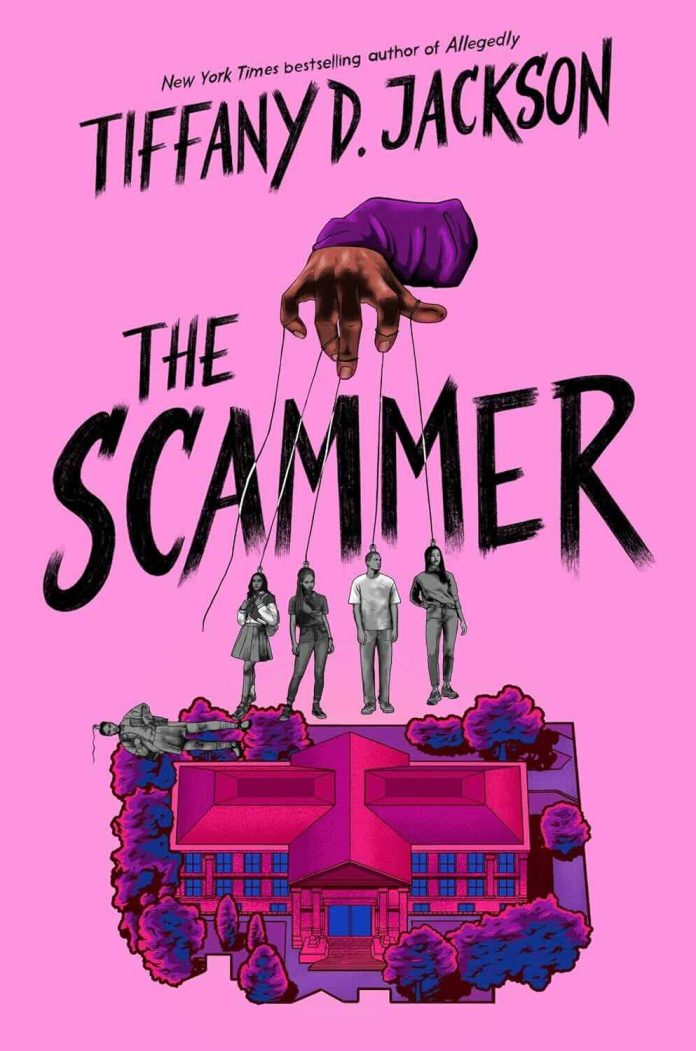
Tiffany D. Jackson returns with another riveting psychological thriller that cements her position as one of the most compelling voices in young adult fiction. “The Scammer” by Tiffany D Jackson delivers a sophisticated exploration of manipulation, grief, and the dangerous allure of charismatic predators, all set against the vibrant backdrop of a historically Black college and university.
The novel follows Jordyn Monroe, a privileged freshman who defies her parents’ expectations by choosing Frazier University over Yale. Seeking belonging and authenticity in an HBCU environment, Jordyn’s college experience takes a sinister turn when her roommate’s recently released ex-convict brother, Devonte, moves into their dorm suite. What begins as an uncomfortable living situation evolves into something far more menacing as Devonte’s magnetic personality begins to exert control over the young women in increasingly disturbing ways.
Character Development: A Study in Psychological Complexity
Jackson demonstrates exceptional skill in crafting multidimensional characters that resist simple categorization. Jordyn emerges as a protagonist whose privileged background and quest for authentic Black identity creates internal tension that drives the narrative forward. Her journey from sheltered overachiever to someone grappling with profound loss and seeking justice reveals layers of complexity that unfold gradually throughout the novel.
The supporting cast of roommates—Vanessa, Loren, and Kammy—each possess distinct personalities and vulnerabilities that make them believable targets for manipulation. Jackson avoids the trap of creating one-dimensional victims, instead presenting young women with agency who make increasingly questionable decisions under psychological pressure. Their individual responses to Devonte’s influence feel authentic and reflect the varied ways people respond to charismatic manipulation.
Devonte himself represents one of Jackson’s most chilling antagonists. Rather than relying on obvious villainy, she creates a character whose philosophical rhetoric and apparent wisdom mask predatory behavior. His ability to exploit Black liberation theology and legitimate social justice concerns to serve his manipulative agenda makes him particularly insidious. The author skillfully demonstrates how dangerous individuals can weaponize truth and righteous anger for personal gain.
Thematic Depth: Beyond Surface-Level Thrills
While “The Scammer” by Tiffany D Jackson functions effectively as a suspenseful thriller, its thematic resonance elevates it beyond genre fiction. Jackson weaves together complex explorations of grief, identity, belonging, and the vulnerability of young people seeking community. The novel examines how predators exploit legitimate desires for acceptance and purpose, particularly within marginalized communities.
The HBCU setting serves multiple narrative functions beyond mere backdrop. Jackson presents Frazier University as a space of genuine Black excellence and community, which makes Devonte’s corruption of this environment even more disturbing. The contrast between authentic belonging and manufactured community becomes central to the novel’s psychological impact.
The exploration of grief proves particularly powerful, as Jackson demonstrates how unprocessed trauma can drive individuals toward dangerous decisions. The novel suggests that healing requires facing truth rather than seeking revenge, though it acknowledges the seductive appeal of retribution when justice seems impossible through conventional means.
Writing Style: Atmospheric and Psychologically Astute
Tiffany D Jackson’s prose style in “The Scammer” reflects her growth as a writer while maintaining the accessibility that makes her work so compelling. Her ability to create atmosphere through sensory details transforms the college dorm setting into a psychological pressure cooker. The author excels at building tension through seemingly mundane interactions, allowing readers to sense danger before characters fully recognize it themselves.
The narrative structure proves particularly effective, with Jackson employing strategic revelation of information that maintains suspense while providing necessary context. Her handling of multiple perspectives allows readers to understand various characters’ motivations without telegraphing plot developments. The pacing accelerates naturally as psychological pressure intensifies, culminating in revelations that feel both surprising and inevitable.
Jackson’s dialogue captures authentic college-age voices while avoiding dated slang that might quickly feel obsolete. Characters speak with distinct voices that reflect their backgrounds and personalities, contributing to the novel’s overall believability.
Cultural Authenticity and Social Commentary
One of “The Scammer’s” greatest strengths lies in its authentic portrayal of HBCU culture and the complex dynamics of Black identity in academic settings. Jackson, drawing from her own Howard University experience, infuses the narrative with genuine details about campus life, student relationships, and the unique sense of community found at historically Black institutions.
The novel thoughtfully examines issues of class privilege within Black communities, particularly through Jordyn’s character arc. Jackson avoids simplistic treatments of these dynamics while acknowledging how different backgrounds can create barriers to authentic connection. The author also explores how legitimate concerns about social justice and Black liberation can be manipulated by those with selfish agendas.
Psychological Realism: Understanding Manipulation
Perhaps most impressively, “The Scammer” by Tiffany D Jackson provides realistic insight into how psychological manipulation operates. Jackson demonstrates understanding of grooming techniques, isolation tactics, and the gradual erosion of critical thinking that characterizes abusive relationships. The novel shows how intelligent, capable individuals can become victims of manipulation when their vulnerabilities are expertly exploited.
The author avoids victim-blaming while acknowledging the choices characters make under pressure. This nuanced approach helps readers understand how manipulation works without excusing harmful behavior or minimizing the agency of those being manipulated.
Minor Criticisms and Considerations
While “The Scammer” by Tiffany D Jackson succeeds on multiple levels, some elements feel slightly underdeveloped. Certain supporting characters could benefit from deeper exploration, particularly given their importance to the plot’s resolution. Additionally, some of the novel’s philosophical discussions, while thematically relevant, occasionally slow the narrative momentum.
The novel’s ending, while satisfying from a plot perspective, raises complex moral questions that some readers might find troubling. Jackson’s willingness to explore moral ambiguity should be commended, though it may challenge readers expecting clear-cut resolution.
Comparison to Jackson’s Previous Works
“The Scammer” demonstrates Tiffany D Jackson’s continued evolution as a writer while maintaining the social consciousness that defines her work. Like her previous novels “Allegedly,” “Monday’s Not Coming,” and “White Smoke,” this book tackles serious social issues through the lens of young adult experience. However, “The Scammer” feels more psychologically complex than some of her earlier works, with deeper character development and more sophisticated exploration of moral ambiguity.
The novel shares thematic DNA with “Grown,” particularly in its examination of how predators exploit young people’s vulnerabilities. However, “The Scammer” focuses more on psychological manipulation than physical abuse, creating a different type of tension that proves equally compelling.
Recommendations for Similar Reads
Readers who appreciate “The Scammer” by Tiffany D Jackson might enjoy:
- “Allegedly” by Tiffany D. Jackson – Another morally complex thriller exploring justice and revenge
- “The Female Persuasion” by Meg Wolitzer – Examines manipulation within feminist movements
- “My Education” by Susan Choi – Psychological exploration of influence and manipulation in academic settings
- “Social Creature” by Tara Isabella Burton – A thriller about toxic friendship and manipulation
- “The Secret History” by Donna Tartt – Classic exploration of charismatic manipulation among college students
Final Verdict: A Powerful Addition to Contemporary YA Thriller
“The Scammer” by Tiffany D Jackson succeeds as both an entertaining thriller and a thoughtful examination of serious social issues. Jackson’s ability to create suspense while exploring complex themes of identity, grief, and manipulation makes this novel particularly valuable for readers seeking substance alongside entertainment.
The book works effectively for its intended young adult audience while offering enough sophistication to engage adult readers. Its exploration of college life, particularly within HBCU culture, provides representation often missing from mainstream fiction while avoiding tokenism or superficial treatment.
Jackson has crafted a novel that respects its readers’ intelligence while delivering the emotional impact they seek. “The Scammer” confirms her position as one of the most important voices in contemporary young adult fiction, combining social awareness with masterful storytelling in ways that few authors achieve.
For readers seeking psychological thrillers that examine real-world issues through compelling characters and authentic settings, “The Scammer” by Tiffany D Jackson delivers on every level. It’s a book that will stay with readers long after the final page, raising questions about justice, identity, and the dangerous appeal of simple answers to complex problems.







