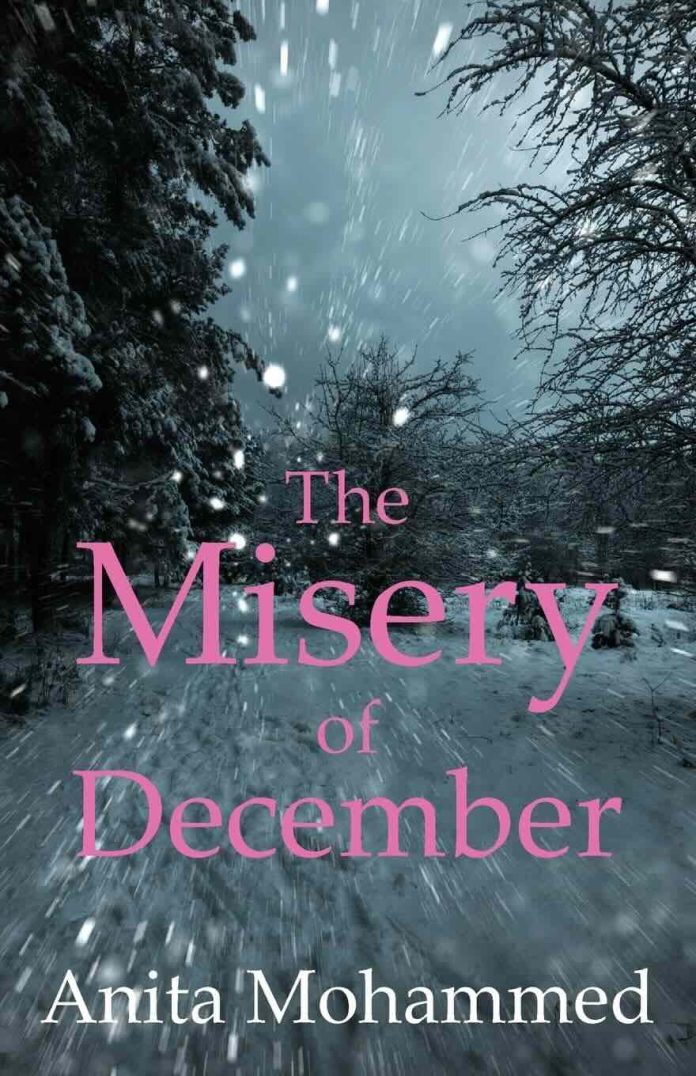
Anita Mohammed’s debut novel, The Misery of December, arrives with the force of a winter storm descending upon the quiet streets of Burlington, Vermont. Published by Gatekeeper Press in 2025, this crime thriller introduces readers to a world where carefully negotiated peace can shatter overnight, where the line between justice and survival blurs, and where December babies are destined to untangle the chaos that threatens to consume an entire city.
The novel opens in October 2007, immersing us in the daily routine of Detective Anara Ali, a woman who begins her mornings before dawn with coffee, prayer, and the sobering reality of radio broadcasts announcing Burlington’s latest violence. What follows is a meticulously crafted narrative that weaves together organized crime, cultural heritage, personal sacrifice, and the relentless pursuit of justice.
The Heart of the Story: Burlington’s Fragile Equilibrium
For nearly two decades, Burlington has operated under an unusual arrangement. Three crime syndicates—led by Vladimir Umansky of the Russian faction, Curtis Chang of the Chinese organization, and Abdul Khan of the Afghan network—have maintained a peace pact that divided territories, minimized civilian casualties, and allowed detectives to occasionally collaborate with underworld figures when cases demanded unconventional solutions.
This equilibrium forms the backbone of Mohammed’s world-building. Rather than presenting a simplistic dichotomy of good versus evil, the author constructs a morally complex landscape where law enforcement and criminal enterprises exist in delicate balance. The arrival of a new threat—a mysterious gang led by the ruthless Oscar Solando and his calculating right-hand man, Martel—disrupts this balance with surgical precision and brutal efficiency.
Mohammed demonstrates remarkable skill in establishing stakes that feel genuinely consequential. Warehouses are ransacked, trusted soldiers vanish, and bodies appear with tongues removed—a signature method that becomes the calling card of this new terror.
Detective Anara Ali: A Protagonist Worth Following
At the centre of this storm stands Anara Ali, a detective who embodies the contradictions of modern American immigrant life with grace and authenticity. Born on Christmas Eve to Hindu and Muslim parents who are both doctors, Anara navigates her professional world with the spiritual grounding of mala and tabeez necklaces hanging from her rearview mirror—symbols of the dual faiths that shaped her upbringing.
What distinguishes Anara from typical crime fiction protagonists is her multidimensional characterization. She possesses the sharp instincts required of a skilled detective while maintaining genuine connections with family and colleagues. Her relationship with fellow detective Jared Ublonski reveals a brotherly bond that transcends professional boundaries, while her interactions with her protective father showcase the push and pull between cultural expectations and personal ambition.
Mohammed writes Anara with intimate knowledge of what it means to exist between worlds. The protagonist’s fluency in Spanish, her comfort navigating tense meetings with crime lords, and her ability to remain composed while bullets fly all contribute to a character who feels earned rather than constructed.
The Misery Team: Seven December Capricorns United by Fate
One of the novel’s most inventive elements is the formation of “The Misery of December,” a special task force comprised of seven detectives all born in the final week of December. Detective Payton Henry, who leads the team, views this cosmic coincidence as divine intervention—a sign that these particular individuals hold the key to saving Burlington from its newest predator.
The team members each contribute unique strengths to the investigation:
- Payton Henry (December 26): The visionary leader whose unconventional thinking drives the investigation
- Nic Ublonski (December 25): Payton’s trusted partner with deep street connections
- Anara Ali (December 24): The intuitive detective whose instincts prove invaluable
- Jared Ublonski (December 27): Nic’s younger brother navigating past trauma
- Dimitri (December 29): An experienced detective balancing family and duty
- Kate Vanyard (December 28): A Boston transplant bringing fresh perspective
- Edward Bennington (December 23): Kate’s Boston colleague with methodical precision
The team dynamics feel authentic and lived-in. Mohammed avoids the trap of making each detective a mere function of the plot; instead, these characters experience fear, doubt, and moments of genuine camaraderie that make their eventual confrontation with evil all the more compelling.
Antagonists Forged in Vengeance
Oscar Solando and Martel represent a new breed of villainy for Burlington—one rooted not merely in greed but in deeply personal grievance. Mohammed occasionally shifts the narrative perspective to Oscar’s point of view, a bold choice that humanizes the antagonist without excusing his atrocities.
Through Oscar’s internal monologue, readers glimpse the psychological machinery driving his campaign of terror. His contempt for American complacency, his memories of cartel politics in Mexico, and his unwavering trust in Martel create a portrait of a man who believes himself righteous in his destruction. The relationship between Oscar and Martel—the muscle and the architect, as street dealers describe them—forms the organizational spine of the threat facing Burlington.
Martel himself emerges as perhaps the more fascinating of the duo. His connection to Burlington runs deeper than mere business opportunity, and the gradual revelation of his backstory adds layers of tragedy to his present-day ruthlessness. Mohammed plants seeds throughout the narrative that careful readers will recognize as they bloom into devastating revelations.
Cultural Richness Woven Throughout
Mohammed infuses The Misery of December with cultural textures that elevate the story beyond conventional crime fiction. Anara’s South Asian heritage permeates her experience in authentic ways—from the aroma of masala chai at her parents’ home to the Diwali and Christmas decorations that adorn family gatherings. These details emerge naturally as extensions of character rather than ethnic window dressing.
The author, herself of Trinidadian origin with roots in Canada, clearly draws from personal experience when depicting the immigrant experience. Burlington itself becomes a character—its ferry systems, shopping centres, and neighbourhood dynamics contributing to the sense of a real community under siege.
Pacing and Narrative Structure
The novel unfolds across approximately seven months, from early October tensions through devastating aftermath that will reshape Burlington permanently. Mohammed demonstrates confident control of pacing, alternating between high-octane action sequences and quieter moments of character development.
Key structural elements that strengthen the narrative include:
- First-person intimacy through Anara’s perspective grounds readers in immediate emotional stakes
- Strategic shifts to Oscar’s viewpoint provide chilling counterpoint to the investigative thread
- Cliffhanger chapter endings maintain momentum without feeling manipulative
- Seasonal progression from autumn through winter mirrors the escalating danger
Writing Style and Craft
Mohammed writes with clarity and purpose. Her prose serves the story with directness befitting the crime genre while occasionally blooming into more lyrical passages during emotionally charged moments. Dialogue feels natural and distinct—characters speak in ways that reflect their backgrounds and emotional states.
The debut novelist demonstrates particular strength in action sequences. When violence erupts, Mohammed choreographs chaos with precision, ensuring readers follow the geography of confrontation while feeling the visceral impact of each desperate decision.
Similar Books You May Enjoy
Readers who appreciate The Misery of December should consider exploring:
- The Bone Collector by Jeffery Deaver: For intricate procedural elements and detective partnerships
- The Girl with the Dragon Tattoo by Stieg Larsson: For complex investigations and institutional corruption
- The Force by Don Winslow: For examinations of organized crime and law enforcement intersection
- Long Bright River by Liz Moore: For character-driven crime fiction with family dynamics
- The Silent Patient by Alex Michaelides: For psychological depth wrapped in mystery
- Cartel by Don Winslow: For Mexican drug cartel narratives with brutal authenticity
Final Verdict: A Promising Debut Worth Your Time
The Misery of December represents an accomplished first novel from Anita Mohammed. The author—who, like her protagonist, is a proud December Capricorn—brings personal understanding to themes of cultural identity and the burden of being born in the year’s final week.
Burlington comes alive as a setting ripe for crime fiction exploration, and the ensemble cast provides multiple entry points for reader investment. Mohammed balances procedural authenticity with emotional storytelling, creating a thriller that satisfies on multiple levels.
For readers seeking a crime novel that combines relentless pacing with genuine heart, that features a protagonist who feels refreshingly authentic, and that promises future instalments in what should become a compelling series, The Misery of December delivers precisely what its premise promises.
The storm has arrived in Burlington. Detective Anara Ali and her December-born colleagues face an enemy unlike any they have encountered before. Pick up this debut thriller and discover why the last week of December might just hold the key to everything.