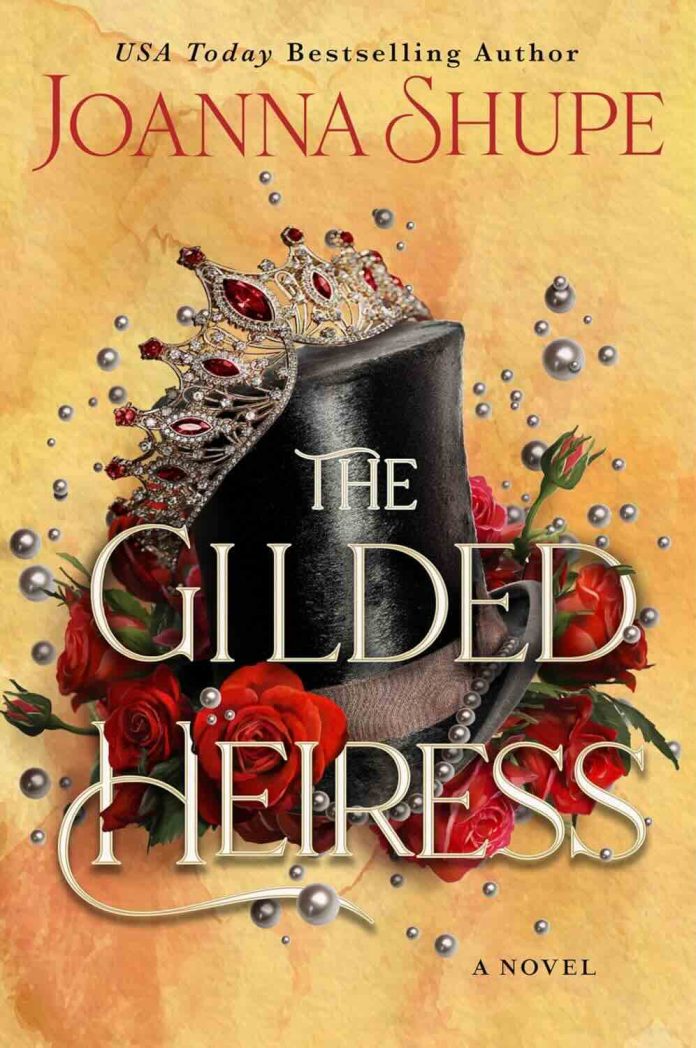
Joanna Shupe has carved her niche in historical romance by masterfully capturing the extravagance and hidden fractures of America’s Gilded Age. Known for series like The Four Hundred and Uptown Girls, her novels often explore power, scandal, and the dangerous allure of wealth in New York’s high society. The Gilded Heiress continues this tradition but adds a twist of mystery, deception, and reinvention, turning a familiar Anastasia-inspired tale into something layered, romantic, and morally gray.
Set in 1880s New York, the novel plunges readers into a city of dazzling excess where fortunes are made and reputations destroyed in a single evening. Against this backdrop, Shupe introduces two protagonists—Josie Smith, a streetwise singer with dreams of fame, and Leo Hardy, a clever grifter intent on avenging his family. Their story is at once a con, a love story, and a meditation on what truly defines belonging.
Plot Overview: A Game of Masks and Identities
The story begins with Josie, raised in an asylum and hardened by poverty, who has learned to survive through her voice and her wits. She longs for recognition and escape from her past, believing success will erase her pain. Leo Hardy, equally desperate but for his family’s survival, sees in Josie not just a beautiful singer but an uncanny resemblance to Mrs. Thomas Pendelton, mother of the long-missing Pendelton heiress.
The Pendelton family’s fortune and influence loom large over the novel: their infant daughter was stolen years ago, and their search has become legendary, with a reward that tempts fortune-seekers across the city. Leo convinces Josie to play the role of the lost child, orchestrating a swindle that could lift his family from ruin and secure Josie the fame she craves. But as the scheme draws them into the orbit of Knickerbocker society, the line between deception and truth begins to blur.
The unraveling of their plan is where Shupe shines. Tension builds as secrets surface, betrayals cut deep, and Josie and Leo are forced to confront not only the lies they tell others but also the ones they’ve told themselves.
Character Analysis: Josie and Leo
Joanna Shupe thrives on complex characters, and in The Gilded Heiress both leads embody the contradictions of the Gilded Age.
- Josie Smith: At once vulnerable and ambitious, Josie embodies the struggle of the underclass yearning for a place in a world designed to exclude her. Her voice is both literal and symbolic—she survives by singing on the streets but dreams of commanding the attention of opera houses and drawing rooms. Josie’s arc is not only about discovering her origins but also about realizing her worth is not tied to her “birthright” but to her resilience and talent.
- Leo Hardy: A classic Shupe hero—charismatic, morally flexible, and yet deeply loyal to his family. His grifter’s charm makes him an entertaining lead, but it is his internal conflict—between revenge against the Pendeltons and his growing love for Josie—that gives his character weight. Leo’s duplicity makes him both alluring and frustrating, a balance Shupe handles well.
Together, Josie and Leo’s relationship thrives on tension. Their banter, attraction, and eventual trust create one of Shupe’s more memorable pairings. Their chemistry feels earned because it is forged through deception, risk, and shared vulnerability.
Themes and Motifs
Shupe blends romance with themes that resonate beyond the glitter of high society.
- Identity and Reinvention: Josie’s uncertain parentage and her assumed role force readers to question what defines identity—bloodlines, social status, or self-determination.
- Class and Inequality: The novel exposes the vast divide between New York’s elites and its destitute. While Josie dreams of luxury, Leo’s motivation stems from his family’s suffering under systemic inequities.
- Revenge vs. Redemption: Leo’s quest begins as vengeance but evolves into something more nuanced as his feelings for Josie deepen.
- Truth and Lies: From whispered secrets in ballrooms to outright fraud, deception permeates the novel. The truth, when revealed, forces characters to reckon with the cost of ambition and desire.
Writing Style and Atmosphere
Shupe’s prose is lush yet accessible, balancing the sparkle of Gilded Age ballrooms with the grit of city streets. She has a talent for sensory detail: readers can almost hear Josie’s songs echoing against brick alleyways or see the glitter of diamonds against candlelight. Dialogue is sharp, particularly in the exchanges between Josie and Leo, which oscillate between flirtation and confrontation.
The pacing is brisk, with the swindle propelling the narrative forward, but Shupe allows for quieter emotional beats that give the romance its depth. If there is a critique, it is that some side characters—particularly members of the Pendelton family—feel underdeveloped compared to the richly drawn leads.
Strengths of the Novel
- Vivid immersion into New York’s Gilded Age, capturing both opulence and desperation.
- A romance that balances passion with moral tension.
- An intriguing premise rooted in mystery and deception.
- Strong, flawed protagonists whose growth feels authentic.
- Seamless weaving of historical detail without overwhelming the narrative.
Weaknesses and Critiques
- The resolution of the mystery, while satisfying, may feel predictable to seasoned readers of the genre.
- Certain secondary characters are sketched rather than fleshed out, reducing the impact of subplots.
- The novel leans heavily on familiar Anastasia-inspired tropes, which, though well-executed, may not feel wholly original to readers seeking a fresh premise.
Comparison with Shupe’s Previous Works
Fans of Shupe’s earlier series will find familiar elements here: the clash between classes, heroines with strong voices (both literal and figurative), and heroes who straddle the line between respectability and scandal. Compared to The Uptown Girls trilogy, The Gilded Heiress feels darker, more morally ambiguous, and more steeped in intrigue. It also echoes the glamour of The Four Hundred series but shifts its focus from industrial tycoons to the con artists and outsiders attempting to infiltrate that world.
Similar Book Recommendations
Readers who enjoy The Gilded Heiress may also appreciate:
- My Notorious Life by Kate Manning – a similarly rich dive into 19th-century New York through the eyes of a scandalous heroine.
- Bringing Down the Duke by Evie Dunmore – blending romance with themes of class and ambition.
- An Heiress’s Guide to Deception and Desire by Manda Collins – mystery, romance, and women defying societal expectations.
- The Luxe series by Anna Godbersen – for readers drawn to glamour and secrets in historical high society.
Final Thoughts: A Romance Beneath the Glitter
The Gilded Heiress is both a romance and a con, dazzling with the allure of wealth while never letting readers forget the cost of deception. Joanna Shupe proves once again why she is a leading voice in historical romance: she gives us characters who are as flawed as they are magnetic, plots that weave together desire and danger, and a setting that is both intoxicating and treacherous.
While it does not entirely escape the predictability of its genre roots, the novel succeeds in its execution—delivering emotional stakes, immersive atmosphere, and a love story that lingers long after the last page. For readers of historical romance who crave not only gowns and galas but also grit, ambition, and hard-earned redemption, The Gilded Heiress is a rewarding addition to their shelves.







