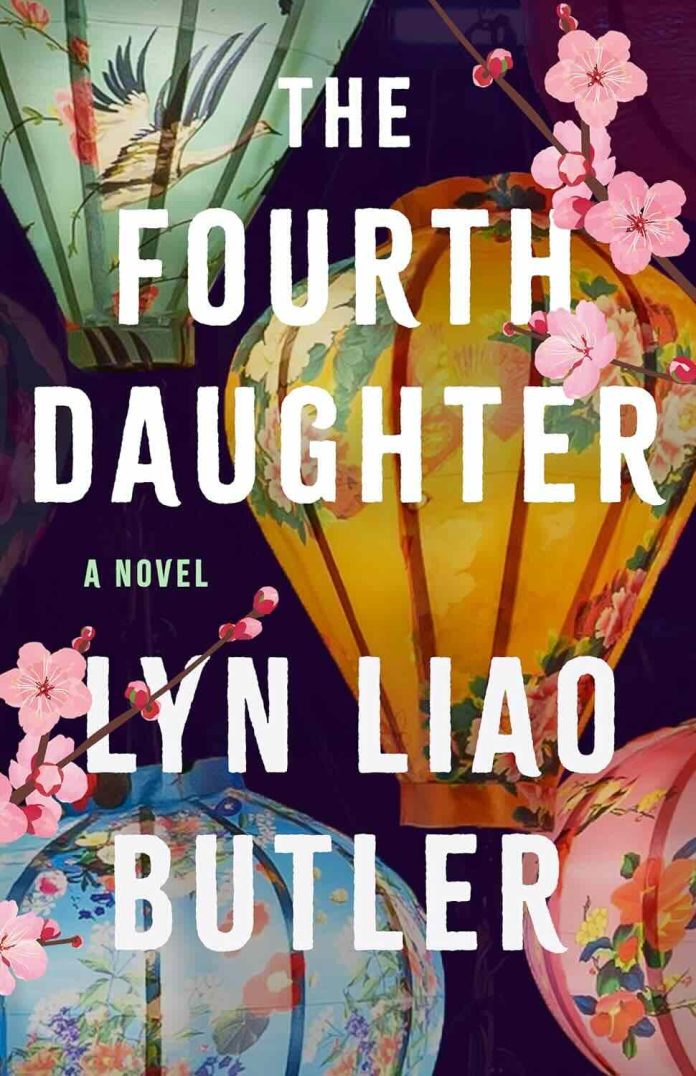
Lyn Liao Butler’s The Fourth Daughter emerges as a powerful testament to the enduring bonds between generations, weaving together a contemporary tale of trauma recovery with a historical narrative of unimaginable sacrifice. This multi-layered novel demonstrates Butler’s growing mastery as a storyteller, building upon the foundation established in her previous works The Tiger Mom’s Tale, Red Thread of Fate, and Someone Else’s Life.
The novel centers on Chef Liv Kuo, a talented but struggling culinary professional who has been unable to leave her Manhattan apartment for months following a traumatic shooting at her restaurant that claimed her colleague’s life. When her beloved Taiwanese grandmother, Yi-ping, calls with an urgent request to help find her long-lost fourth daughter, Liv embarks on a journey that becomes as much about her own healing as it is about reuniting a fractured family.
The Weight of Historical Trauma
Butler excels in her portrayal of Taiwan during the martial law period, crafting a historical backdrop that feels both authentic and deeply personal. Yi-ping’s story unfolds through alternating timelines, revealing how her infant daughter Yili was torn from her arms in 1961 by her own husband, who viewed the fourth daughter as a harbinger of bad luck. The superstition surrounding the number four in Taiwanese culture becomes a haunting metaphor for the ways in which arbitrary beliefs can destroy lives.
The historical elements of the novel are particularly compelling, drawing from Butler’s own research into Taiwan’s political upheaval during the KMT era. The author doesn’t shy away from depicting the brutality of martial law, the arbitrary arrests, and the climate of fear that pervaded daily life. Through the character of Ang-Li, a journalist whose wife is arrested for alleged espionage, Butler illustrates how political persecution tore families apart and forced impossible choices upon ordinary citizens.
Culinary Connections and Cultural Identity
Food serves as both a bridge between cultures and a pathway to healing throughout the narrative. Butler’s descriptions of Taiwanese cuisine are vivid and sensual, from the comforting congee that Yi-ping prepares for Liv’s arrival to the elaborate braised pork belly that becomes a symbol of family tradition. The author demonstrates particular skill in showing how cooking can serve as a form of meditation and recovery, as Liv slowly rediscovers her passion for culinary creation through her grandmother’s recipes.
Chef Wu’s harsh but necessary criticism of Liv’s cooking philosophy serves as a crucial turning point in her character development. His observation that she has been “imitating, replicating what you think Asian food should be” rather than cooking from her own cultural soul resonates beyond the kitchen, reflecting broader questions about identity and authenticity that many second and third-generation immigrants face.
Character Development and Emotional Depth
Liv’s journey from trauma survivor to someone capable of helping others is portrayed with remarkable sensitivity. Butler avoids the trap of presenting a linear healing process, instead showing how recovery comes in waves, with setbacks and breakthroughs occurring in unpredictable patterns. The panic attacks are written with visceral authenticity, never feeling exploitative or overly dramatic.
Yi-ping emerges as perhaps the novel’s most compelling character, a woman whose decades of searching for her lost daughter have shaped every aspect of her existence. Her relationship with food, her memories, and her unwavering hope create a portrait of maternal love that transcends time and geography. The revelation that she has been mentally including her missing daughter in daily activities for over sixty years provides one of the novel’s most heartbreaking moments.
Structural Strengths and Minor Weaknesses
Butler’s decision to alternate between Liv’s present-day narrative and Yi-ping’s historical storyline creates effective dramatic tension, though the pacing occasionally feels uneven. Some readers may find the romantic subplot between Liv and Simon somewhat underdeveloped compared to the richly detailed family relationships that form the novel’s emotional core.
The supporting characters, particularly Clare and Sue, feel somewhat less fully realized than the protagonists, serving more as plot devices than as complete individuals. Additionally, while the resolution of the search for the fourth daughter is satisfying, it arrives through a series of coincidences that strain credibility, even within the novel’s hopeful framework.
A Meditation on Family and Forgiveness
What elevates The Fourth Daughter beyond a simple family saga is its nuanced exploration of forgiveness and the weight of family secrets. The revelation about Liv’s grandfather’s role in the political persecution that destroyed other families adds moral complexity to the narrative, forcing characters to grapple with how to love family members while acknowledging their harmful actions.
The novel’s treatment of trauma—both personal and historical—avoids easy answers while maintaining hope for healing. Butler suggests that recovery is not about forgetting or moving on, but about finding ways to carry pain without being consumed by it.
Literary Merit and Cultural Significance
Butler’s prose style has matured considerably since her earlier works, demonstrating greater confidence in balancing intimate character moments with broader historical themes. Her ability to seamlessly integrate Taiwanese cultural elements without over-explaining for Western audiences shows sophisticated cultural storytelling.
The novel makes an important contribution to Asian American literature by centering Taiwanese experiences during a historically significant but often overlooked period. Butler’s author’s note reveals that the book was inspired by her work editing Li-pei Wu’s memoir Two Countries, and this connection to real historical testimony lends additional weight to the fictional narrative.
Minor Criticisms and Considerations
While the novel generally succeeds in its ambitious scope, some elements feel slightly rushed. The romance between Liv and Simon, while sweet, lacks the emotional depth of the family relationships. Additionally, certain plot revelations, particularly surrounding the identity of Clare and Sue, rely heavily on coincidence in ways that may stretch reader acceptance.
The novel’s length allows for extensive character development, but some scenes could benefit from tighter editing, particularly in the middle section where the dual timelines occasionally feel repetitive rather than complementary.
A Resonant Achievement
Despite minor structural issues, The Fourth Daughter stands as Butler’s most accomplished work to date. It successfully balances historical significance with contemporary relevance, creating a narrative that honors both personal healing and collective memory. The novel’s exploration of how family secrets ripple across generations feels particularly relevant in our current moment of cultural reckoning with historical trauma.
For readers who appreciate multigenerational family sagas with historical depth, this novel offers both emotional satisfaction and cultural education. Butler has created characters who feel real enough to worry about and a story that lingers long after the final page.
Recommendations for Similar Reading
Readers who appreciate The Fourth Daughter would likely enjoy other recent novels exploring Asian family histories and trauma, including The Leftover Woman by Jean Kwok, The Third Son by Julie Wu, and What We Were Promised by Lucy Tan. For those interested in the historical context of Taiwan during martial law, I would also recommend Green Island by Shawna Yang Ryan and The Geography of Loss by Patti Kim.
Butler has established herself as a significant voice in contemporary Asian American fiction, and The Fourth Daughter represents a mature work that successfully integrates personal and political themes within an engaging family story. It’s a novel that rewards careful reading while remaining accessible to general audiences seeking both entertainment and cultural insight.







