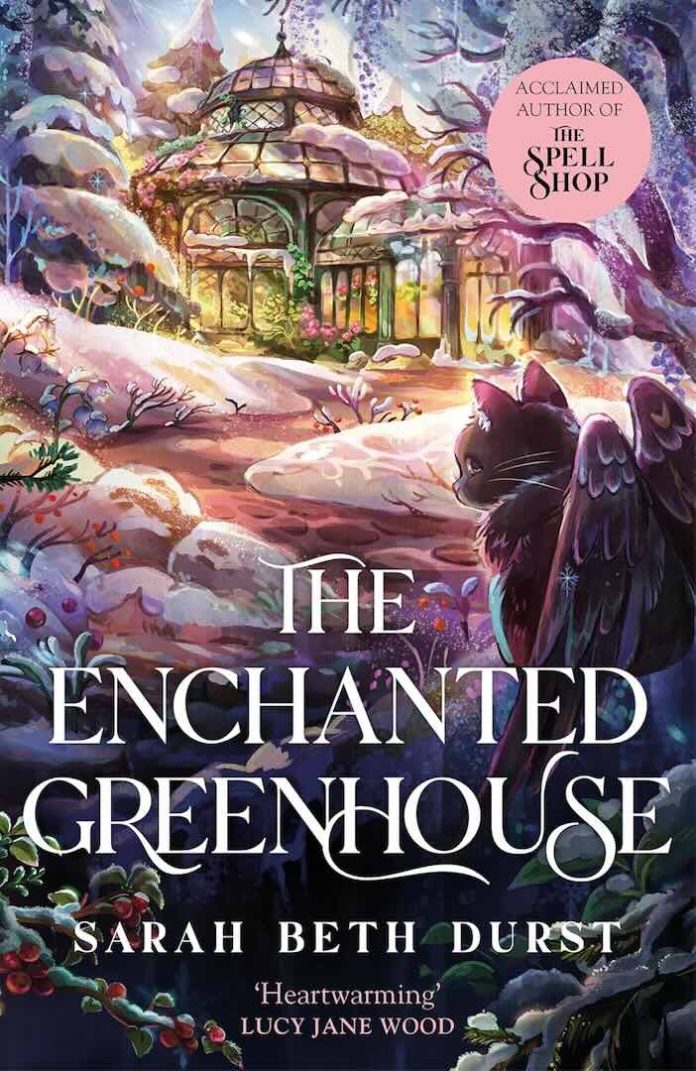
Sarah Beth Durst’s The Enchanted Greenhouse arrives like a warm embrace during winter’s harshest days, offering readers exactly the kind of hope-filled escapism that made The Spellshop such a beloved success. This standalone sequel-companion blooms with the same gentle magic that has become Durst’s signature, while deepening the emotional complexity that elevates it beyond simple comfort reading.
The novel follows Terlu Perna, the librarian from the first book who was transformed into a statue for the seemingly innocent crime of creating a magical spider plant out of loneliness. When she awakens on the frost-covered island of Belde, surrounded by hundreds of magnificent but failing greenhouses, she discovers both a new purpose and the possibility of redemption she never dared hope for.
Where Magic Meets Meaningful Character Development
A Heroine Worth Rooting For
Durst crafts Terlu as a remarkably relatable protagonist whose journey from isolation to belonging feels both magical and utterly human. Her background as a linguist and librarian becomes central to the plot—not merely convenient background decoration, but the very skill set that allows her to decode the late sorcerer Laiken’s encrypted spells and save the dying greenhouses. This integration of character expertise with plot necessity demonstrates Durst’s evolved storytelling craft.
The author’s treatment of Terlu’s past punishment avoids the trap of victimization. Rather than dwelling on injustice, the narrative focuses on how Terlu’s experiences have shaped her resilience and determination. Her loneliness, the very trait that led to her downfall, becomes the emotional foundation for understanding why the island’s magical ecosystem matters so deeply.
The Quiet Strength of Yarrow
Yarrow, the gruff gardener who becomes Terlu’s love interest, could have easily fallen into the “distant, brooding male” trope that saturates fantasy romance. Instead, Durst gives him genuine depth rooted in loss and responsibility. His relationship with his plants, his complicated family dynamics, and his gradual opening to trust feel organically developed rather than manufactured for romantic tension.
The slow-burn romance between Terlu and Yarrow succeeds because it’s built on shared purpose and mutual respect. Their conversations about plant care, magical theory, and personal history create intimacy that feels earned rather than instalove convenience.
A Magic System That Enchants and Educates
Linguistic Sorcery at Its Finest
One of the novel’s greatest strengths lies in its magic system, which treats language as the foundation of spellcasting. Durst’s background in creating fantastical worlds serves her well here, as she develops a system where ancient dialects, extinct languages, and careful linguistic analysis become the keys to magical power.
Terlu’s expertise in dead languages like Ginian creates fascinating worldbuilding opportunities while serving the plot meaningfully. The process of decoding Laiken’s encrypted spells becomes genuinely engaging detective work rather than magical hand-waving, giving readers the satisfaction of puzzle-solving alongside the protagonist.
The Greenhouses as Character
The magical greenhouses themselves function almost as characters in the story. Each specialized environment—from singing flower conservatories to desert cactus gardens to mysterious mazes—creates a sense of wonder that recalls the best of classic fantasy literature. Durst’s descriptions make these spaces feel tangible and alive, each with its own personality and purpose.
The talking plants, particularly the rose Lotti and the sentient vine Dendy, provide both comic relief and emotional weight. Their relationships with both Laiken and the protagonists add layers to the story’s themes about care, abandonment, and the responsibility we bear for those we create or nurture.
Themes That Resonate Beyond the Fantasy
Second Chances and Forgiveness
The novel’s central theme revolves around second chances—for Terlu, certainly, but also for Yarrow, his scattered family, and even the memory of the flawed sorcerer Laiken. Durst explores how people can rebuild after failure, how communities can heal from division, and how love can grow in unexpected places.
This theme never feels heavy-handed because it’s woven naturally into the plot structure. The failing greenhouses serve as both literal problem to solve and metaphor for relationships that need tending to survive.
Community vs. Isolation
The contrast between Terlu’s forced solitude and her gradual integration into the island’s community provides emotional scaffolding for the entire narrative. Durst shows how isolation—whether chosen like Yarrow’s hermitage or imposed like Terlu’s punishment—impoverishes the soul, while connection and shared purpose enrich life immeasurably.
Areas Where the Magic Slightly Fades
Pacing Concerns in the Middle Act
While the opening and conclusion of The Enchanted Greenhouse maintain excellent momentum, the middle section occasionally slows as Durst works through the more technical aspects of spell translation and greenhouse repair. Some readers may find the detailed linguistic analysis less engaging than the character development and romantic elements.
The resolution of the greenhouse crisis, while satisfying, comes together perhaps too neatly. The complexity of Laiken’s spell work and the island’s magical ecosystem suggests that solutions should be more challenging to implement.
Secondary Character Development
Though Yarrow’s extended family adds warmth and community to the story, individual family members remain somewhat underdeveloped. Characters like his sister Rowan and various cousins feel more like plot functions than fully realized people, which diminishes the impact of the community themes Durst clearly values.
The ghost of Laiken, while providing crucial backstory, never quite achieves the menacing or tragic presence his actions suggest he should possess. His motivations remain frustratingly opaque even after revelation.
The Durst Magic Formula
What Works in the Spellshop Universe
Durst has clearly found her sweet spot in this particular fantasy subgenre. Her ability to create wonder without overwhelming complexity, romance without melodrama, and magic that feels both fantastical and grounded continues to distinguish her work in the increasingly crowded cozy fantasy market.
The integration of practical concerns—food, shelter, plant care, community dynamics—with magical elements creates a lived-in world that feels both escapist and relatable. Readers can imagine themselves wanting to live in these communities, which speaks to the author’s skill in creating aspirational fiction.
Building on The Spellshop’s Foundation
While The Enchanted Greenhouse stands alone successfully, readers familiar with The Spellshop will appreciate the deeper context it provides for Terlu’s character and the magical world’s history. The novel functions as both sequel and companion piece, expanding the universe without requiring previous knowledge.
Literary Craft and Style
Prose That Blooms
Durst’s writing style has matured since her earlier works, showing increased confidence in quiet moments and emotional subtlety. Her descriptions of the greenhouses and their magical inhabitants demonstrate particular strength, creating vivid imagery without overwrought prose.
The dialogue feels natural and character-specific, particularly in conversations between Terlu and Yarrow as they navigate both magical challenges and growing attraction. The author avoids the stilted exposition that often plagues fantasy novels.
Structure and Flow
The novel’s structure mirrors the seasonal cycle that’s central to its themes, beginning in winter isolation and ending in spring renewal. This organic progression helps the plot feel inevitable rather than forced, even when convenient coincidences move events forward.
Comparisons and Recommendations
For Fans of Cozy Fantasy
Readers who enjoyed The House in the Cerulean Sea by TJ Klune or The Ten Thousand Doors of January by Alix E. Harrow will find similar comfort in Durst’s gentle approach to magical realism. The emphasis on found family, magical communities, and personal growth over external conflict creates a reading experience focused on healing rather than heroics.
Similar Magical Botanicals
Those drawn to the plant magic elements might also appreciate The Priory of the Orange Tree by Samantha Shannon for its botanical world-building, or The Nature of Witches by Rachel Griffin for its seasonal magic system, though both operate at different intensity levels than Durst’s cozy approach.
The Verdict: A Garden Worth Cultivating
The Enchanted Greenhouse succeeds as both fantasy entertainment and emotional experience. While it doesn’t break new ground in terms of plot innovation or literary technique, it executes its chosen formula with skill and genuine warmth. The novel offers exactly what readers seek from cozy fantasy: escapism with substance, magic with meaning, and hope without naivety.
Durst has created a story that works on multiple levels—as romance, as fantasy adventure, as meditation on forgiveness and community. The magical greenhouse setting provides endless possibilities for wonder, while the character-driven plot ensures emotional investment throughout.
For readers seeking refuge from harsher fictional worlds, The Enchanted Greenhouse provides a perfect sanctuary. Like the magical conservatories at its center, this novel creates a protected space where beautiful things can grow, where damaged hearts can heal, and where second chances bloom into something magnificent.
The book stands as a testament to the power of hope, the importance of community, and the magic that can flourish when we open ourselves to love and possibility. In a literary landscape often dominated by darkness and cynicism, Durst’s commitment to optimism and healing feels both radical and necessary.
Recommended Reading List
For readers who enjoyed The Enchanted Greenhouse, consider these similar titles:
- The Spellshop by Sarah Beth Durst (Book 1 in the series)
- The House in the Cerulean Sea by TJ Klune
- The Ten Thousand Doors of January by Alix E. Harrow
- A Psalm for the Wild-Built by Becky Chambers
- The Nature of Witches by Rachel Griffin
- The Invisible Life of Addie LaRue by V.E. Schwab
- The Bear and the Nightingale by Katherine Arden







