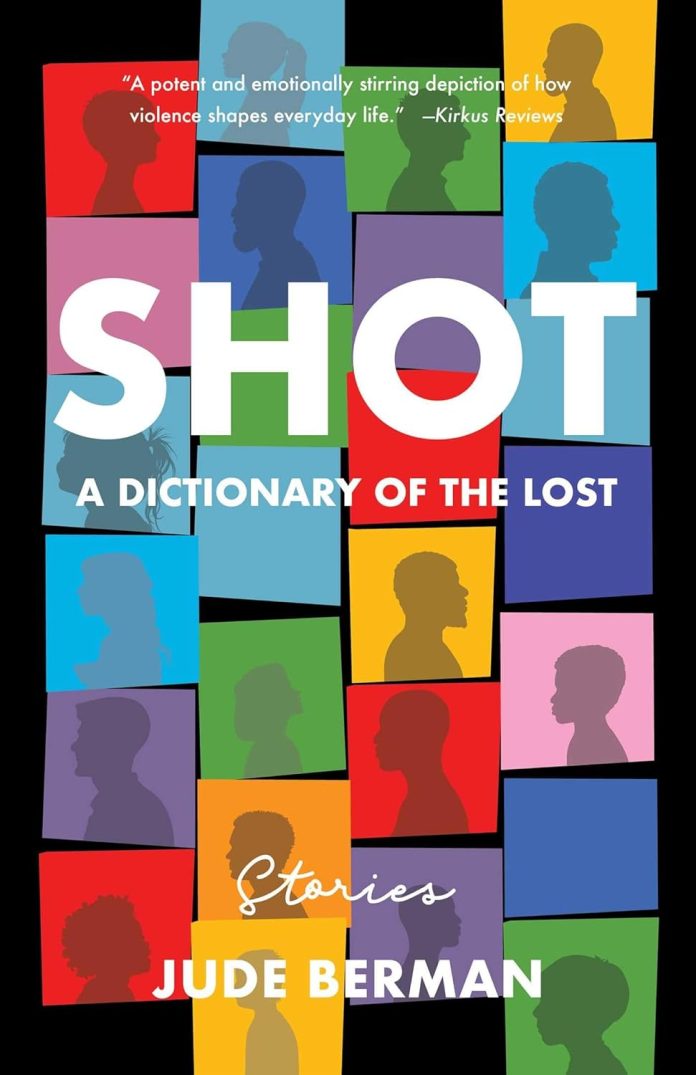
Jude Berman’s “Shot – A Dictionary of the Lost” stands as one of the most structurally audacious and emotionally devastating short story collections to emerge in contemporary American literature. By organizing twenty-six interconnected stories alphabetically—each representing a victim of gun violence—Berman transforms the traditional short story collection into something more urgent: a literary memorial that demands attention to America’s ongoing tragedy of gun violence.
The alphabetical structure serves multiple purposes beyond mere organization. It creates an encyclopedic quality that mirrors how we catalog and quantify violence in America, yet each letter represents not a statistic but a fully realized human being with dreams, fears, and relationships. This tension between systematic presentation and individual humanity becomes the collection’s driving force, making each story both standalone and part of a larger, devastating whole.
Character Development and Narrative Mastery
Intimate Portraits in Crisis
Berman demonstrates remarkable skill in creating fully developed characters within the constraints of short fiction. Anna, the twelve-year-old science prodigy who wins her school award despite bullying, emerges as a complex young person grappling with self-doubt and family expectations. Benjamin, discovering his Jewish heritage in his seventies, represents the weight of hidden family histories. Nine-year-old Zoe, terrified of active shooter drills, embodies the anxiety that now defines childhood in America.
Each character feels authentic and lived-in, avoiding the trap of becoming merely symbolic vessels for the author’s message. Berman achieves this through careful attention to internal monologue, realistic dialogue, and specific details that ground each story in recognizable reality. The reader becomes invested in these lives, making the inevitable tragic endings all the more powerful.
Diverse Perspectives and Voices
The collection spans ages, backgrounds, and circumstances, from four-year-old Wanda who tells stories to her doll Marigold, to Sage at sixty-three, to healthcare workers, students, and everyday people going about their routine lives. This diversity serves the collection’s larger purpose of illustrating how gun violence affects all segments of American society, but it also showcases Berman’s impressive range as a writer capable of inhabiting vastly different perspectives convincingly.
Thematic Depth and Social Commentary
The Normalization of Violence
Perhaps the most chilling aspect of “Shot – A Dictionary of the Lost” is how it captures the way gun violence has become normalized in American life. Characters navigate their days with an underlying awareness of potential danger—Ginger avoiding rallies, Owen staying away from movie theaters, children participating in active shooter drills. This background radiation of fear permeates the collection, creating an atmosphere where tragedy feels not shocking but inevitable.
The active shooter drill sequences, particularly in Zoe’s story, are especially powerful in illustrating how we’ve adapted to prepare children for unthinkable violence. Berman captures both the surreal nature of these exercises and their psychological impact with devastating precision.
Hope Amid Horror
Despite its tragic subject matter, the collection is not without hope. The final story featuring Zoe ends with her determination to take action, messaging her friends in the middle of the night to organize against gun violence. This suggests that awareness and action, however small, might emerge from tragedy. Benjamin’s discovery of his family history provides another form of hope—the possibility of understanding and honoring those who came before.
Literary Technique and Style
Prose and Pacing
Berman’s prose is clean and accessible without sacrificing literary quality. She employs a different voice for each character while maintaining consistency across the collection. The pacing varies effectively—some stories build slowly to their tragic conclusions, while others thrust readers immediately into crisis situations.
The author’s background in editing and publishing shows in the collection’s tight construction. No word feels wasted, and each story contributes to the larger emotional arc of the book. The transitions between stories are particularly well-handled, with each alphabetical progression feeling natural rather than forced.
Structure as Meaning
The alphabetical organization creates a unique reading experience that enhances the collection’s themes. Reading from A to Z creates a sense of systematic documentation, as if we’re working through a comprehensive record of loss. Yet this systematic approach contrasts powerfully with the randomness and senselessness of the violence depicted.
The brief biographical statements that open each story (“I am Anna and I am a statistic…”) serve as both memorial inscriptions and stark reminders of lives reduced to data points. This formatting choice reinforces the collection’s central tension between individual humanity and statistical abstraction.
Emotional Impact and Reader Experience
Cumulative Effect
While individual stories are powerful, the collection’s true impact emerges through accumulation. Reading twenty-six stories of gun violence creates an overwhelming emotional experience that mirrors the societal weight of this ongoing tragedy. By the final story, readers carry the emotional burden of all these fictional deaths, creating an understanding of loss that statistics alone cannot convey.
Accessibility Without Simplification
Berman manages to address an incredibly complex social issue without oversimplifying the political dimensions or resorting to easy answers. The stories focus on human experience rather than policy debates, making the collection accessible to readers across the political spectrum while still delivering a clear message about the need for change.
Historical and Contemporary Context
Literary Precedents
“Shot – A Dictionary of the Lost” joins a tradition of short story collections that address social issues through interconnected narratives, following in the footsteps of works like Sherwood Anderson’s “Winesburg, Ohio” and more recently, books like “The Things They Carried” by Tim O’Brien. However, Berman’s alphabetical structure and focus on gun violence make this collection uniquely contemporary and formally innovative.
Timeliness and Relevance
Published in 2025, “Shot – A Dictionary of the Lost” arrives at a moment when gun violence continues to dominate American headlines and policy discussions. The collection’s focus on everyday victims rather than mass shooting events reflects the broader scope of gun violence in America, including the daily toll that receives less media attention.
Recommended Reading
Readers who appreciate “Shot – A Dictionary of the Lost” might also find value in:
- “The Things They Carried” by Tim O’Brien – Another collection using interconnected stories to address violence and trauma
- “Her Body and Other Parties” by Carmen Maria Machado – Contemporary short stories that blend social commentary with innovative narrative techniques
- “Friday Black” by Nana Kwame Adjei-Brenyah – Sharp, satirical stories addressing American violence and social issues
- “The Collected Stories of Lydia Davis” – For readers interested in experimental approaches to short fiction
- “Citizen: An American Lyric” by Claudia Rankine – Poetry and prose addressing American violence and social justice
Final Assessment
“Shot – A Dictionary of the Lost” succeeds both as a work of literary art and as a piece of social commentary. Berman has created something rare: a book that tackles one of America’s most pressing issues without sacrificing narrative sophistication or emotional complexity. The alphabetical structure elevates what could have been a simple message-driven collection into something more architecturally ambitious and emotionally devastating.
This is essential reading for anyone seeking to understand how literature can address contemporary social crises. It’s also a powerful example of how formal innovation can enhance rather than distract from a work’s emotional and political impact. While the subject matter is undeniably heavy, the quality of the writing and the importance of the message make this a collection that demands attention.
Berman has given voice to the voiceless and created a memorial in prose that honors both individual lives and collective loss. In an era where gun violence has become numbingly routine, “Shot – A Dictionary of the Lost” restores the human dimension to tragedy and reminds us that behind every statistic is a person whose life mattered. This is fiction at its most socially engaged and formally inventive—a collection that will likely influence how writers approach difficult contemporary subjects for years to come.







