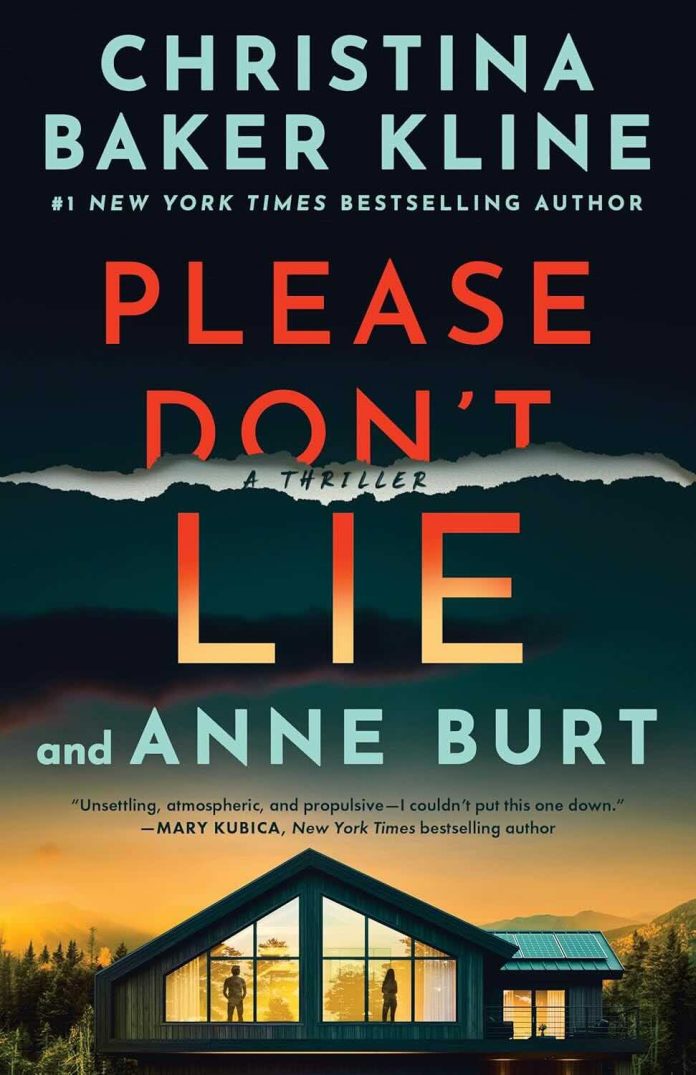
In their collaborative thriller debut, Please Don’t Lie, #1 New York Times bestselling author Christina Baker Kline and award-winning novelist Anne Burt craft a chilling exploration of how the ghosts of our past can follow us to the most remote corners of the earth. Set against the stark beauty of the Adirondack Mountains, this psychological thriller transforms the promise of sanctuary into a masterclass in mounting dread.
The story follows Hayley Stone, a thirty-year-old banking heiress whose life has been shattered by unthinkable tragedy. After losing her parents in a devastating house fire and her sister Jenna to a drug overdose, Hayley finds herself hounded by a media circus that transforms family grief into tabloid entertainment. When her new husband Brandon suggests a fresh start in Crystal River, a remote Adirondack mountain town where he inherited property, the promise of anonymity feels like salvation.
Character Development Through Trauma
Kline and Burt demonstrate remarkable psychological insight in their portrayal of Hayley’s character arc. Rather than presenting trauma as a simple backstory, they weave it into the very fabric of who Hayley is—her hypervigilance, her desperate need for security, and her willingness to overlook red flags in her marriage because she so desperately craves stability. The authors’ nuanced understanding of how grief can make someone vulnerable to manipulation adds depth to what could have been a standard thriller setup.
Brandon emerges as a complex figure whose motivations remain tantalizingly unclear for much of the novel. The authors skillfully balance our sympathies, making him simultaneously protective and suspicious, loving and potentially dangerous. This ambiguity serves the thriller elements well, keeping readers guessing about his true nature while exploring themes of trust within intimate relationships.
The introduction of Megan and Tyler Sinclair, a free-spirited couple who move into the guest cottage on Hayley’s property, provides both companionship and additional layers of uncertainty. Megan appears to be everything Hayley needs—a confident friend who understands the woods, someone to help her adapt to rural life. Yet the authors plant subtle seeds of doubt about her motivations that bloom into something far more sinister.
The Adirondacks as Character
Perhaps the most masterful element of Please Don’t Lie is how Kline and Burt transform the Adirondack setting from mere backdrop into an active participant in the story’s psychological landscape. The isolation that initially promises peace becomes a trap when danger emerges. The beauty of autumn foliage gives way to the stark terror of an early winter storm. Hawks circling overhead transform from natural wonder to ominous portent in Hayley’s increasingly paranoid perception.
The authors’ research shows in their authentic portrayal of mountain life—the specific details of wood stacking, the reality of spotty cell phone coverage, the way weather can quickly become life-threatening. These elements don’t feel like thriller conveniences but genuine aspects of rural existence that naturally heighten tension.
Masterful Pacing and Structure
The novel’s structure mirrors the changing seasons, beginning in September’s promise and building toward November’s devastating storm. This seasonal progression creates natural escalation while allowing time for character development and relationship building. The authors understand that the best psychological thrillers earn their terror through careful accumulation of unease rather than relying on sudden shocks.
- September chapters establish the promise of new beginnings while subtly introducing elements that will later prove significant
- October developments deepen relationships while gradually revealing cracks in the facade
- November’s climax brings all tensions to a head during a literal and metaphorical storm
The pacing allows for genuine character moments between thriller beats. Hayley’s attempts to adapt to rural life, her growing friendship with Megan, and the slow revelation of Brandon’s past all feel organic rather than purely plot-driven.
Secrets, Lies, and Identity
The title Please Don’t Lie proves prophetic as virtually every character harbors significant deceptions. The authors explore how lies—even well-intentioned ones—can become deadly when they prevent clear communication. Hayley lies about the extent of her trauma, Brandon conceals his past, and the Sinclairs present entirely false identities. Each deception feels motivated and understandable, making the eventual revelations both shocking and inevitable.
The theme of identity runs particularly deep. Hayley struggles with who she is beyond her tragedy and inherited wealth. Brandon grapples with escaping his family’s destructive legacy. Most chillingly, one character has constructed an entirely false persona to pursue a deadly agenda. The authors use these identity questions to explore larger themes about whether we can truly escape our pasts or whether some patterns are doomed to repeat.
Critical Observations
While Please Don’t Lie succeeds as both psychological study and thriller, it occasionally suffers from information management issues. The revelation of certain character connections can feel slightly convenient, and some plot threads receive more development than others. Hayley’s relationship with her best friend Emily, while important to the plot, sometimes feels more functional than fully realized.
The novel’s treatment of media exploitation and true crime sensationalism proves particularly relevant in our current cultural moment. However, this meta-commentary occasionally threatens to overwhelm the central narrative, especially in the latter portions of the book.
The authors handle the collaborative writing process admirably—the voice remains consistent throughout, and different perspectives blend seamlessly. However, there are moments where the dual authorship seems to pull the narrative in slightly different directions, particularly in balancing psychological realism with thriller expectations.
Literary Craftsmanship
Kline, known for historical fiction masterpieces like Orphan Train and The Exiles, brings her skill for emotional depth and careful research. Burt, whose debut The Dig received critical acclaim, contributes her talent for contemporary psychological complexity. Together, they create prose that serves both literary and commercial sensibilities—accessible enough for beach reading but sophisticated enough to reward careful attention.
Their handling of violence deserves particular praise. Rather than exploiting trauma for cheap thrills, they treat both current and past violence with appropriate gravity. The psychological aftermath of violence receives as much attention as the acts themselves, creating a more mature and responsible thriller.
Comparison to Contemporary Works
Please Don’t Lie fits comfortably alongside recent domestic thrillers like Tana French’s The Witch Elm and Lisa Jewell’s The Family Upstairs, sharing their focus on how family secrets and past trauma influence present danger. However, Kline and Burt’s novel distinguishes itself through its rural setting and explicit engagement with media culture’s exploitation of real tragedy.
The book also shares DNA with classic works of rural psychological horror—the isolation and creeping dread recall Shirley Jackson’s We Have Always Lived in the Castle, while the theme of dangerous strangers echoes Cape Fear and similar narratives about threats infiltrating supposed sanctuaries.
Final Verdict
Please Don’t Lie represents a successful genre expansion for both authors, combining Kline’s emotional intelligence with Burt’s psychological acuity to create a genuinely unsettling thriller. While not without minor flaws in plotting and pacing, the novel succeeds in its primary goals: creating believable characters worth caring about, building genuine suspense through psychological rather than purely physical threats, and exploring meaningful themes about trauma, trust, and the impossibility of completely escaping one’s past.
The book works on multiple levels—as a straightforward thriller for genre fans, as a character study for literary readers, and as a commentary on how society consumes and exploits real tragedy. Most importantly, it respects its readers’ intelligence while delivering the emotional satisfaction that the best thrillers provide.
For readers who enjoyed the atmospheric dread of The Silent Patient by Alex Michaelides or the domestic psychological complexity of Big Little Lies by Liane Moriarty, Please Don’t Lie offers similar pleasures with its own distinctive voice and setting.
Recommendations for Similar Reads
If Please Don’t Lie captivated you, consider these complementary titles:
- The Turn of the Key by Ruth Ware – Isolated setting, unreliable narrator, Gothic atmosphere
- The Thursday Murder Club by Richard Osman – Multiple perspectives, past secrets affecting present
- She’s Not Sorry by Mary Kubica – Complex timeline, multiple character perspectives
- The Guest List by Lucy Foley – Secrets revealed through shifting viewpoints
- In the Woods by Tana French – Atmospheric mystery, psychological depth
- The Hunting Party by Lucy Foley – Isolated setting, friendship dynamics, winter storm
Please Don’t Lie confirms both authors’ abilities to craft compelling psychological fiction while successfully launching what promises to be an engaging series. The Crystal River setting and Hayley’s journey toward self-reclamation provide solid foundations for future installments, making this both a satisfying standalone and an intriguing series opener.







