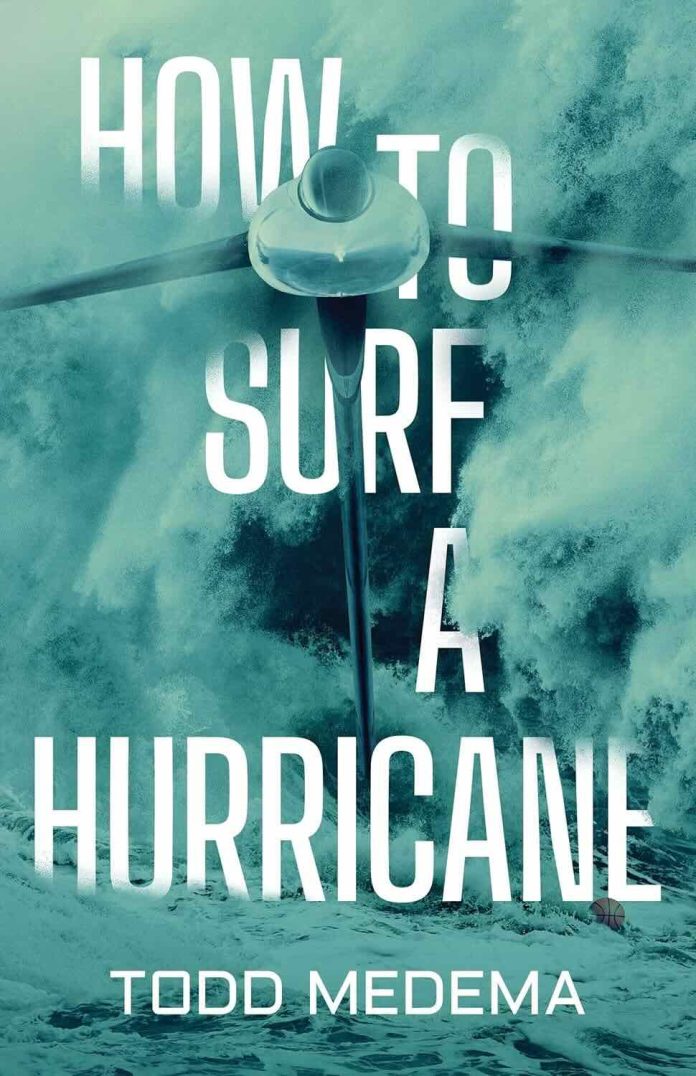
Todd Medema’s debut novel “How to Surf a Hurricane” crashes onto the literary scene like the massive storm at its center, delivering a pulse-pounding heist thriller wrapped in urgent climate fiction themes. This isn’t your typical eco-warrior narrative—it’s a sophisticated caper that weaves together corporate espionage, extreme sports, and environmental activism into a story that feels both timely and timeless. Medema, making his mark as a novelist, demonstrates remarkable skill in balancing high-octane action with deeper questions about corporate responsibility, environmental stewardship, and the lengths one person will go to protect the future.
The novel follows Moro Petroff, a young engineer whose revolutionary lithium-sulfur battery project becomes the victim of corporate politics when his uncle Dmitri, CEO of Petroff Power, shuts down the potentially world-changing technology. Rather than accepting defeat, Moro orchestrates an audacious heist to steal back his own invention, assembling an unlikely crew that includes Victoria, a hurricane-surfing world record chaser; Miki, a tough Alaskan construction worker with claustrophobia; and Anne, a French salt farmer with smuggling experience.
Character Development That Anchors the Storm
What elevates “How to Surf a Hurricane” above typical thriller fare is Medema’s commitment to character development. Moro begins as a privileged, somewhat naive engineer driven by noble intentions but lacking real-world experience in the consequences of his actions. His evolution throughout the novel—from idealistic inventor to reluctant criminal to someone who understands the true cost of change—forms the emotional backbone of the story.
Victoria emerges as perhaps the most compelling character, a single mother pushing the boundaries of extreme sports while wrestling with her responsibility to her daughter Azure. Her relationship with hurricane surfing serves as both literal and metaphorical representation of humanity’s relationship with nature—the fine line between working with natural forces and being destroyed by them. The scenes depicting her record-breaking surfing attempts are breathtakingly rendered, with Medema capturing both the technical aspects of the sport and its almost spiritual connection to the ocean’s power.
The supporting cast brings depth and authenticity to the narrative. Miki’s struggle with claustrophobia while trapped in the shipping container creates genuine tension and vulnerability. Anne’s backstory as a salt farmer fighting for her marshland provides historical context for environmental struggles, while her smuggling expertise adds practical credibility to the heist elements. Even secondary characters like Patty, the engineer-turned-entrepreneur, feel fully realized rather than merely functional.
A Multi-Layered Plot Structure
Medema constructs his narrative with the precision of an engineer, which feels appropriate given his protagonist’s background. The novel operates on multiple timeline threads that converge during the central heist sequence, but the structure never feels gimmicky or overly complex. The pacing builds steadily from corporate boardroom tensions to the life-or-death struggles aboard ships in hurricane-force winds.
The heist itself unfolds with satisfying complexity, involving corporate sabotage, weather manipulation through geoengineering, and the dangerous intersection of cutting-edge technology with extreme weather. Medema demonstrates impressive research across diverse fields—from battery technology and corporate law to hurricane meteorology and extreme sports. The technical details enhance rather than bog down the narrative, giving readers confidence in the story’s plausibility.
Environmental Themes Woven Seamlessly
Rather than lecturing readers about climate change, Medema integrates environmental concerns organically into his thriller framework. The lithium-sulfur batteries represent hope for clean energy storage, while the corporate resistance to their development reflects real-world tensions between profit motives and environmental necessity. The hurricane that serves as both obstacle and cover for the heist becomes a character in its own right, representing the increasingly violent weather patterns of a changing climate.
The novel’s treatment of geoengineering—Moro’s manipulation of weather patterns to create the hurricane—raises fascinating ethical questions about humanity’s relationship with natural systems. Is it acceptable to fight fire with fire, to use technology to combat the effects of other technologies? These questions permeate the narrative without overwhelming the adventure elements.
Action Sequences That Pulse With Energy
The action sequences in “How to Surf a Hurricane” achieve that rare balance between technical accuracy and emotional resonance. The hurricane surfing scenes, in particular, capture both the physics of extreme water sports and the psychological state of athletes pushing beyond normal human limits. Victoria’s final record-breaking run, where she stops fighting the storm and learns to work with it, serves as both thrilling climax and powerful metaphor.
The ship-to-ship transfer during the hurricane creates genuine tension through careful attention to maritime details and the very real dangers of operating in extreme weather. Moro’s inexperience with criminal activities adds both humor and authenticity to sequences that could have felt overly slick in the hands of a less thoughtful author.
Writing Style and Narrative Voice
Medema’s prose style remains accessible while tackling complex technical and emotional territory. His background appears to include significant research into the various specialized fields his characters inhabit, from renewable energy technology to extreme sports culture. The dialogue feels natural and character-specific, with each person maintaining a distinct voice throughout the narrative.
The author handles multiple perspectives skillfully, shifting between characters without losing narrative momentum or confusing readers about timeline or motivation. The technical exposition integrates smoothly into character interactions and plot development, avoiding the common pitfall of turning into textbook passages.
Contemporary Relevance and Broader Impact
Published in 2025, “How to Surf a Hurricane” arrives at a moment when climate fiction has gained significant literary recognition and popular appeal. The novel’s exploration of corporate resistance to environmental solutions feels particularly resonant in an era of ongoing debates about renewable energy adoption and corporate responsibility. The character of Dmitri, representing established energy interests, avoids caricature while embodying real institutional resistance to change.
The book’s treatment of activism—both its necessity and its costs—offers a nuanced perspective on environmental action. Moro’s journey through legal consequences and personal sacrifice reflects the real-world challenges faced by those who challenge established systems, even for noble purposes.
Similar Reading Recommendations
Readers who enjoy “How to Surf a Hurricane” will likely appreciate other climate fiction thrillers that blend environmental themes with adventure elements:
- “The Ministry for the Future” by Kim Stanley Robinson – A more literary exploration of climate change solutions
- “New York 2140” by Kim Stanley Robinson – Near-future climate adaptation with compelling characters
- “The Water Knife” by Paolo Bacigalupi – Water rights thriller in climate-changed America
- “Gold Fame Citrus” by Claire Vaye Watkins – Drought-ravaged California adventure
- “The Windup Girl” by Paolo Bacigalupi – Biotechnology thriller in climate-changed world
- “Odds Against Tomorrow” by Nathaniel Rich – Hurricane-focused climate fiction
- “Solar” by Ian McEwan – Climate science meets personal drama
Final Assessment
“How to Surf a Hurricane” succeeds both as an entertaining thriller and as a thoughtful exploration of environmental activism in the modern world. Medema has crafted a debut that respects readers’ intelligence while delivering genuine excitement and emotional engagement. The novel’s combination of technical authenticity, character depth, and timely themes creates a reading experience that lingers beyond the final page.
For readers seeking adventure fiction that grapples with contemporary issues without sacrificing entertainment value, “How to Surf a Hurricane” delivers on all fronts. It’s a promising debut from an author who demonstrates both storytelling skill and deep understanding of the complex challenges facing our changing world. As climate fiction continues to gain recognition as a vital literary genre, Medema’s contribution stands out for its successful integration of thriller elements with environmental consciousness.
This is adventure fiction with purpose, proving that entertainment and meaning need not be mutually exclusive. “How to Surf a Hurricane” rides its perfect storm to a satisfying conclusion that will leave readers both thrilled and thoughtful about the world we’re all navigating together.







