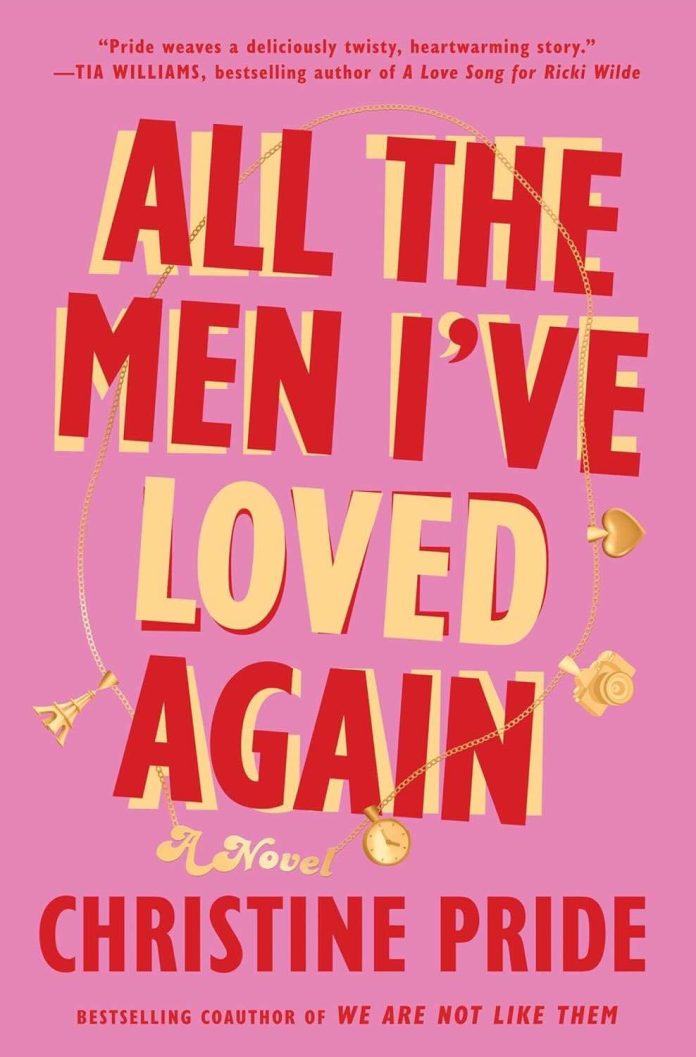
Christine Pride’s solo debut novel, “All the Men I’ve Loved Again,” presents readers with a deeply personal and emotionally complex narrative that explores the profound question: what happens when you’re given a second chance at love with not one, but two significant relationships from your past? Set against the backdrop of late ’90s college life and contemporary adulthood, this novel follows Cora Belle’s journey through the labyrinth of first love, heartbreak, and the courage required to choose authenticity over safety.
The Architecture of Memory and Choice
Pride constructs her narrative with remarkable structural sophistication, weaving between 1999 and 2021 to create a tapestry that examines how our past selves inform our present choices. The story begins with nineteen-year-old Cora arriving at Hamlin College, determined to shed her identity as the shy, sheltered girl from an all-white prep school. Her transformation becomes intertwined with two pivotal relationships: Lincoln Ames, the charming southern gentleman who becomes her first love, and Aaron Wright, the introspective photographer who captures not just images but the essence of who Cora truly is.
The novel’s strength lies in its unflinching examination of how young love shapes us, often in ways we don’t fully understand until decades later. Pride masterfully portrays the intoxicating rush of first love through Cora’s relationship with Lincoln—complete with its glorious highs and devastating lows. The author’s background as an editor shines through in her precise, evocative prose that captures the particular vulnerability of college relationships.
Characters That Breathe with Authenticity
Cora Belle: A Portrait of Self-Discovery
Cora emerges as a richly complex protagonist whose journey from timid teenager to self-aware woman forms the emotional core of the narrative. Pride avoids the trap of creating a passive female character; instead, Cora’s choices—both wise and misguided—drive the story forward. Her struggles with identity, particularly as a Black woman navigating predominantly white spaces, add layers of authenticity to her character development.
The author’s portrayal of Cora’s internal conflicts feels genuine and unforced. Her tendency toward self-sabotage, her difficulty in recognizing her own worth, and her journey toward self-acceptance resonate with universal themes while remaining deeply personal. Pride’s decision to show Cora at different life stages allows readers to witness genuine character growth rather than mere plot progression.
The Two Loves: Lincoln and Aaron
Lincoln Ames represents the seductive pull of first love—passionate, consuming, and ultimately complicated by secrets and miscommunication. Pride crafts him as more than a mere romantic interest; he’s a fully realized character with his own flaws and motivations. His persistence in pursuing Cora, while romantic on the surface, reveals deeper issues about control and possession that the author explores with nuanced sensitivity.
Aaron Wright, the photographer, serves as both contrast and complement to Lincoln. Where Lincoln is assured and direct, Aaron is contemplative and patient. His profession as a photographer becomes a metaphor for his ability to see Cora’s true self—something she struggles to recognize in herself. The letters between Cora and Aaron, which span decades, provide some of the novel’s most intimate and revealing moments.
Thematic Depth and Social Commentary
Pride doesn’t shy away from addressing complex social issues within her romantic narrative. The novel explores themes of racial identity, class differences, and the particular challenges faced by Black women in predominantly white environments. Cora’s experience at Prescott Academy and later at Hamlin College provides a lens through which to examine code-switching, belonging, and the exhausting nature of being “the only one” in various spaces.
The author’s treatment of mental health issues, particularly anxiety and depression, feels authentic and necessary. Cora’s struggles with self-worth, her tendency toward isolation, and her difficulty in making decisions are portrayed with empathy rather than judgment. The novel suggests that healing comes not from finding the “right” person but from learning to value oneself.
Strengths That Elevate the Narrative
Prose and Pacing
Pride’s prose strikes an effective balance between literary sophistication and emotional accessibility. Her sentences have a musical quality that mirrors the emotional rhythms of the story. The dual timeline structure, while challenging to execute, serves the story well, allowing readers to understand how past trauma and joy inform present choices.
The pacing builds tension effectively, particularly in the climactic scenes where Cora must finally confront her past and make definitive choices about her future. The author’s ability to maintain suspense while developing character relationships demonstrates sophisticated storytelling craft.
Cultural Authenticity
The late ’90s setting feels authentic without becoming overly nostalgic. References to TLC, Y2K fears, and college culture of the era ground the story in its time period while highlighting how certain emotional truths remain timeless. Pride’s attention to cultural details—from music to fashion to social dynamics—creates an immersive reading experience.
Areas Where the Novel Stumbles
Pacing Issues in the Middle Section
While the novel’s beginning and conclusion demonstrate strong momentum, the middle section occasionally feels bogged down by excessive internal monologue. Cora’s tendency toward overthinking, while character-appropriate, sometimes slows the narrative pace to a frustrating degree. Some scenes would benefit from more external action to balance the internal reflection.
Supporting Character Development
While Cora’s best friends, Neisha and Kim, provide important emotional support and cultural context, they sometimes feel more like plot devices than fully realized characters. Their individual struggles and personalities could be more deeply explored to create a richer supporting cast.
Resolution Timing
The novel’s conclusion, while emotionally satisfying, feels somewhat rushed compared to the careful build-up of the earlier sections. The final choice between Lincoln and Aaron, while inevitable given the story’s trajectory, could benefit from more extensive exploration of the decision-making process.
The Emotional Landscape
Pride excels at capturing the particular ache of unfulfilled love and the courage required to pursue authentic happiness. The novel’s exploration of how we carry our past relationships into new ones feels especially relevant in an era of social media connections and the ability to easily reconnect with former loves.
The author’s treatment of grief—both for lost relationships and lost versions of ourselves—adds emotional weight to the narrative. Cora’s journey isn’t just about choosing between two men; it’s about choosing between two versions of herself and having the courage to embrace the more authentic one.
Literary Merit and Genre Considerations
“All the Men I’ve Loved Again” succeeds both as a romance novel and as a work of literary fiction. Pride’s exploration of identity, belonging, and self-acceptance elevates the material beyond simple romantic wish-fulfillment. The novel engages with serious themes while maintaining the emotional satisfaction that romance readers expect.
The book’s treatment of interracial relationships and the specific challenges faced by Black women in predominantly white spaces adds important social commentary to the romance genre. Pride’s willingness to address these issues head-on while maintaining the story’s romantic core demonstrates skillful genre navigation.
Comparisons and Context
Readers familiar with Pride’s collaborative work with Jo Piazza (“We Are Not Like Them” and “You Were Always Mine”) will recognize her talent for creating complex female characters navigating difficult emotional terrain. This solo effort demonstrates her ability to sustain narrative tension and character development across a full-length novel.
“All the Men I’ve Loved Again” shares thematic similarities with works like “The Seven Husbands of Evelyn Hugo” by Taylor Jenkins Reid and “Such a Fun Age” by Kiley Reid, though Pride’s focus on the specific challenges of Black women in predominantly white spaces gives her work a distinct voice within contemporary women’s fiction.
Final Verdict
“All the Men I’ve Loved Again” is a thoughtful, emotionally resonant novel that explores the complexities of love, identity, and self-acceptance with rare honesty. While it occasionally suffers from pacing issues and could benefit from stronger supporting character development, the novel’s emotional truth and sophisticated exploration of its themes make it a worthwhile read.
Pride demonstrates considerable skill in balancing romance with serious social commentary, creating a novel that satisfies on multiple levels. The book’s exploration of how we carry our past into our present, and the courage required to choose authenticity over safety, will resonate with readers long after the final page.
For readers seeking romance with substance, complex characters, and meaningful social commentary, “All the Men I’ve Loved Again” offers a rewarding reading experience that examines the heart’s capacity for growth, forgiveness, and second chances.
Recommended for Readers Who Enjoyed:
- “The Seven Husbands of Evelyn Hugo“ by Taylor Jenkins Reid – for its complex exploration of love across decades
- “Such a Fun Age“ by Kiley Reid – for its nuanced portrayal of racial dynamics in contemporary settings
- “Get a Life, Chloe Brown“ by Talia Hibbert – for its thoughtful treatment of mental health within romantic fiction
- “The Proposal” by Jasmine Guillory – for its authentic portrayal of modern Black women’s romantic experiences
- “Beach Read“ by Emily Henry – for its dual timeline structure and emotional depth
All the Men I’ve Loved Again is a thoughtful, emotionally complex novel that successfully balances romance with serious social commentary, though it occasionally suffers from pacing issues and underdeveloped supporting characters.