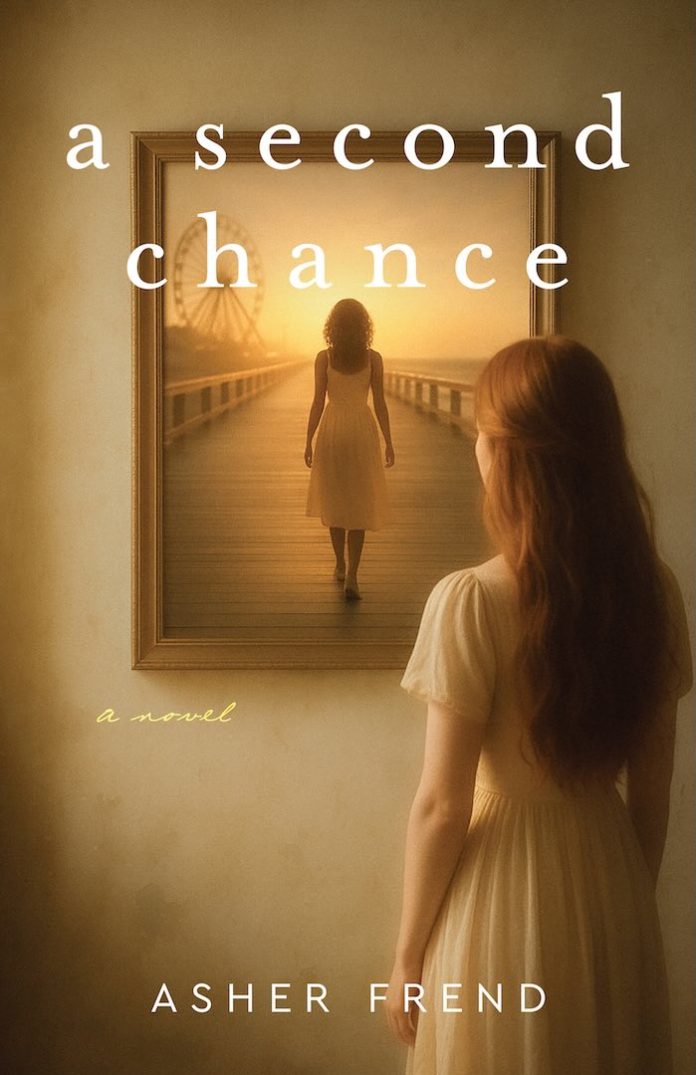
When faith collides with fear, when friendship becomes both anchor and battleground, and when the quiet evil of manipulation wraps itself in charm, what emerges is a story that refuses to let go long after the final page turns. A Second Chance by Asher Frend is precisely that kind of novel—one that settles into your bones and lingers there, asking difficult questions about trust, sacrifice, and the nature of protection.
Set against the seemingly tranquil backdrop of Oak Haven and the suburban sprawl of Chestnut Hill, Connecticut, this debut novel follows three teenage girls whose lives intertwine through bonds forged in childhood, tested by circumstance, and ultimately transformed by both tragedy and grace. Mikaila, Chara, and Kaitlyn navigate the turbulent waters of adolescence while carrying burdens far heavier than any teenager should bear: a mother’s mental illness, parents caught between love and dysfunction, and friendships strained by secrets that refuse to stay buried.
What makes this coming-of-age narrative distinctive is not merely its Christian foundation—though the spiritual elements are handled with remarkable authenticity—but rather its unflinching honesty about the messiness of belief when life stops making sense.
The Heart of the Story: A Bargain Born of Love
The premise of A Second Chance by Asher Frend hinges on something both miraculous and terrifying: a vision in which Mikaila witnesses what appears to be her best friend Chara’s future demise. Armed with this prophetic glimpse and a desperate plea, she strikes an impossible bargain—twenty-two months to guide Chara toward faith, to pull her from whatever darkness threatens to consume her. The weight of this covenant drives the narrative forward with mounting tension, even as the reader watches Mikaila grapple with what fulfilling it might cost her.
This spiritual framework never feels preachy or heavy-handed. Instead, Frend weaves Scripture and prayer into the fabric of daily life the way many believing families actually experience them: imperfectly, sometimes inconveniently, often as the only lifeline available when everything else crumbles. The novel treats faith not as a magical solution but as a complex relationship that requires maintenance, doubt, and ultimately, surrender.
The friendship between Mikaila and Chara forms the emotional spine of the entire narrative. Theirs is not a sanitized, idealized bond but one marked by:
- Years of shared history stretching back to early childhood
- The comfortable intimacy of knowing someone’s morning chaos and family dysfunction
- Fractures that emerge when outside forces apply pressure
- The painful truth that loving someone does not always mean understanding them
Navigating Darkness: The Novel’s Difficult Subject Matter
Perhaps the most courageous choice Frend makes is addressing grooming and manipulation head-on. The novel carries a trigger warning for good reason, as it depicts with painful clarity how predatory behavior operates in plain sight, how it isolates victims, and how it poisons relationships between those who should be allies.
Without revealing specific plot developments, the antagonistic force in this story operates through isolation and charm, exploiting vulnerabilities while maintaining a facade of helpfulness. The author demonstrates a sophisticated understanding of how manipulation functions: not through obvious villainy but through gradual boundary erosion, selective truth-telling, and the weaponization of secrets.
What proves particularly effective is how the novel shows different characters responding to the same threat with varying degrees of awareness. Some recognize danger intuitively but lack the language to name it. Others rationalize warning signs because acknowledging them would require uncomfortable action. Still others become entangled before they realize the web exists at all.
This multifaceted portrayal serves an important purpose beyond narrative tension—it validates the confusion many real victims experience while simultaneously illustrating how communities can fail to protect their most vulnerable members.
Characters Who Breathe: Beyond the Page
A Second Chance by Asher Frend succeeds largely because its characters resist simple categorization. Mikaila carries the reader’s perspective for much of the narrative, and her voice rings true—earnest about her faith yet capable of judgment she later regrets, devoted to those she loves yet sometimes blind to their actual needs. Her struggle to save Chara while maintaining her own relationships, managing her grandmother’s death and grandfather’s declining health, and processing her parents’ dysfunction creates a protagonist who earns genuine investment.
Chara herself emerges as more than a rescue project. Her prophetic dreams, inherited through the maternal line, grant her glimpses of the future that prove both gift and curse. Her skepticism toward organized religion stems not from ignorance but from watching how it has been wielded against her mother. And her eventual spiritual journey feels earned precisely because it does not come easily or quickly.
The supporting cast contributes essential texture. Kaitlyn, Mikaila’s sister, provides perspective on their shared family trauma while carving out her own identity. Kristin offers the steady friendship that anchors the social group. Elliott represents first love in all its awkward sincerity, including its capacity for disappointment.
The antagonist—and without spoilers, readers will recognize who embodies this role—operates through chilling patience. The portrayal avoids caricature, which makes the character’s actions more disturbing, not less.
Writing Style: Intimate and Immediate
Frend writes in a style that prioritizes accessibility without sacrificing emotional depth. The prose moves quickly, carrying readers through years of the characters’ lives while maintaining specific detail that prevents the narrative from becoming a blur. Dialogue feels authentic to teenage speech patterns, and the alternating perspectives allow readers to understand motivations and misunderstandings from multiple angles.
Moments of genuine beauty punctuate the narrative—descriptions of ocean waves as metaphors for divine constancy, the bittersweet details of grandmother’s snickerdoodle cookies that linger in memory longer than the woman herself. These touches elevate the writing beyond mere plot delivery.
Themes That Resonate
Several thematic threads weave through A Second Chance by Asher Frend, giving the story substance beyond its plot. The novel examines faith under pressure—what happens to belief when prayers seem unanswered and when trusting God requires accepting outcomes that feel deeply unfair. It explores the complexity of protection, suggesting that even love-motivated attempts to shield others can cause harm when they deny agency. Questions of justice and accountability receive thoughtful treatment, and the inheritance of both trauma and gifts through generations creates compelling family dynamics.
Who Should Read This Novel
This book speaks most directly to young adult readers navigating their own questions about faith, friendship, and identity. However, adult readers will find substantial engagement here, particularly those who appreciate character-driven narratives with emotional authenticity. Those seeking Christian fiction that acknowledges doubt rather than offering easy answers, readers interested in stories addressing manipulation with sensitivity, fans of coming-of-age narratives spanning multiple years, and anyone drawn to female friendship narratives will find much to appreciate. The novel does contain mature themes requiring the trigger warning noted at the book’s opening.
Final Thoughts: A Debut Worth Celebrating
A Second Chance by Asher Frend announces a new voice in Christian fiction worth following. Frend demonstrates the ability to balance entertainment value with substantive themes, to create characters who invite investment while making choices readers might question, and to address painful realities without exploiting them.
The novel’s conclusion offers resolution without tidy simplification. Some wounds heal; others leave permanent scars. Some characters find redemption; others face consequences they cannot escape. The epilogue, set decades after the main events, suggests that legacy ripples forward in ways we cannot fully anticipate—a fitting note for a story so concerned with the connections between past, present, and future.
For readers hungry for faith-based fiction that respects their intelligence and emotions alike, this debut delivers. The questions it raises about sacrifice, the warnings it sounds about hidden dangers, and the hope it maintains even through darkness combine into an experience that justifies its title completely.
Everyone deserves a second chance. Not everyone gets one. A Second Chance by Asher Frend explores what we do with the chances we receive—and what it costs to fight for those we love.
Similar Books Readers Might Enjoy
If A Second Chance by Asher Frend resonates with you, consider exploring these comparable titles:
- Redeeming Love by Francine Rivers – A classic Christian romance exploring redemption and unconditional love through a retelling of the biblical book of Hosea
- The Shack by William P. Young – A spiritually challenging novel dealing with grief, faith, and encountering the divine in unexpected ways
- Speak by Laurie Halse Anderson – A powerful YA novel addressing trauma and finding voice, though from a secular perspective
- A Voice in the Wind by Francine Rivers – Historical Christian fiction exploring faith under persecution with complex character relationships
- Where the Crawdads Sing by Delia Owens – Coming-of-age meets mystery in a story of isolation, survival, and community judgment
- Bridge to Terabithia by Katherine Paterson – A classic exploration of childhood friendship, imagination, and devastating loss
- The Lovely Bones by Alice Sebold – Another narrative dealing with aftermath of tragedy from an otherworldly perspective