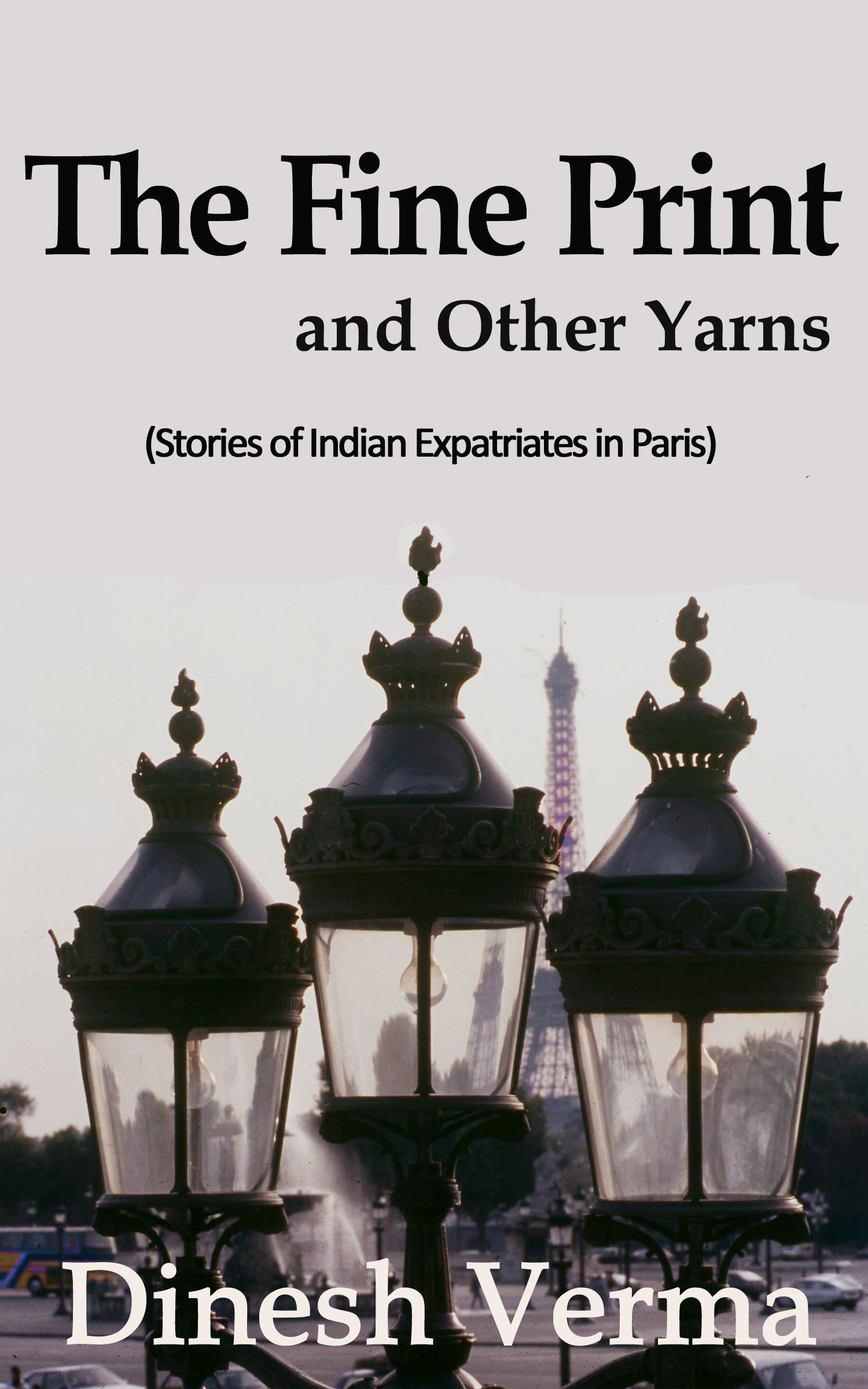
Book Summary: The Fine Print and other Yarns by Dinesh Verma
The Fine Print and other Yarns is a collection of nine stories some of which may well be classified as novella as they run into thirty to fifty pages. The first four stories are set in Paris of 1980s and the next three in Paris of 1990s. The last two are set in India around the turn of the last century.
These stories provide a rare insight into the psyche of an average Indian and his resilience and adaptability, which are the hallmark of the Indian Diaspora. Each of the stories portrays a memorable character.
Book Review: The Fine Print and other Yarns by Dinesh Verma
All of us who love to read know that sometimes words produce a kind of magic without us realizing the trick behind it, without being able to pinpoint the particular ingredient that makes that text, which at the time seemed unremarkable, transform us in an instant. Perhaps this inability is just the answer to the enigma — discovering the trick dispels the magic — or, simply, that this way of combining words contains a hocus-pocus capable of provoking it. Either way, it’s magic, no doubt about it.
In Dinesh Verma’s “The Fine Print and Other Yarns”, the magic is very similar, complex human relationships told in a simple, direct and suggestive way, without excessive melodramas. Author is subtle, contained and very skillful in choosing those details that make up the right atmosphere.
There are total nine short stories in this collection and are independent of each other, a few of them are a little long that make up something like a novella, but they could all be chapters of the same novel. Four of the stories are set in the 1980s Paris, while the next three take place in the Paris of 1990s and in the last two stories, we are in India during the turn of this century.
All of them reflect a cultural and inter-generational clash in people of Indian descent. Although this is only the context, the unusual land in which vital conflicts unfold that go beyond uprooting or the search for a lost identity that, nevertheless, it also affects some of the characters. At the center of these stories are the complex ties that are established between characters, a universal theme that does not know about ethnic barriers.
With understated elegance, Dinesh Verma has drawn in the reader to become immersed in these tales. In each of the nine stories in this collection, the characters are displaced. Whether physically, moving from one country to another—mostly looking at the Indian immigrant’s experiences in Paris—or figuratively, in a relationship torn asunder or strained by life’s difficulties. And in each of them Dinesh Verma expertly captures the emotions these characters go through, from outrage to sorrow and desperation. In all of them he conveys so pointedly the irony of life: that even in painful moments, there’s a sort of joy in knowing you at least feel something. It’s this human experience, a sort of self-inflicted suffering, that Dinesh Verma has encapsulated in words.
The characters are predominantly Indians that have moved or visiting Paris. The themes may focus on the struggle to assimilate, the conflicts between the values and the desires, or effects of country’s economic changes. These and other themes feel far-reaching, however, and the reader may recognize and understand many of the feelings, battles and tensions quite personally. Overwhelmingly, however, I recognized a sense of melancholy and loneliness in some of these characters as they sought to belong and to pursue their dreams.
Vivid characters live among these pages – characters you will recognize and characters you may even empathize with. They aren’t extraordinary in their lives by any means, but it’s the author’s projection of them that make them seem extraordinary. Author’s prose is fluid and simple, but it more than meets the challenge of building a bridge between two different worlds with amazing precision, delineating a tight-knitted atmosphere that serves as common ground for all the stories. I highly recommend this book if you enjoy short stories that have a wealth of depth despite their length, characters that are superbly drawn, and wonderful writing.