
Title: The Forest Of Enchantments
Author: Chitra Banerjee Divakaruni
Publisher: HarperCollins
Genre: Mythology Fiction
First Publication: 2019
Language: English
Major Characters: Sita, Ram, Lakshman, Bharat, Urmila, Ravan, Kaikeyi, Surpanakha, Mandodari
Setting Place: Ancient India
Narration: First Person (Sita’s Point of view)
Book Summary: The Forest Of Enchantments
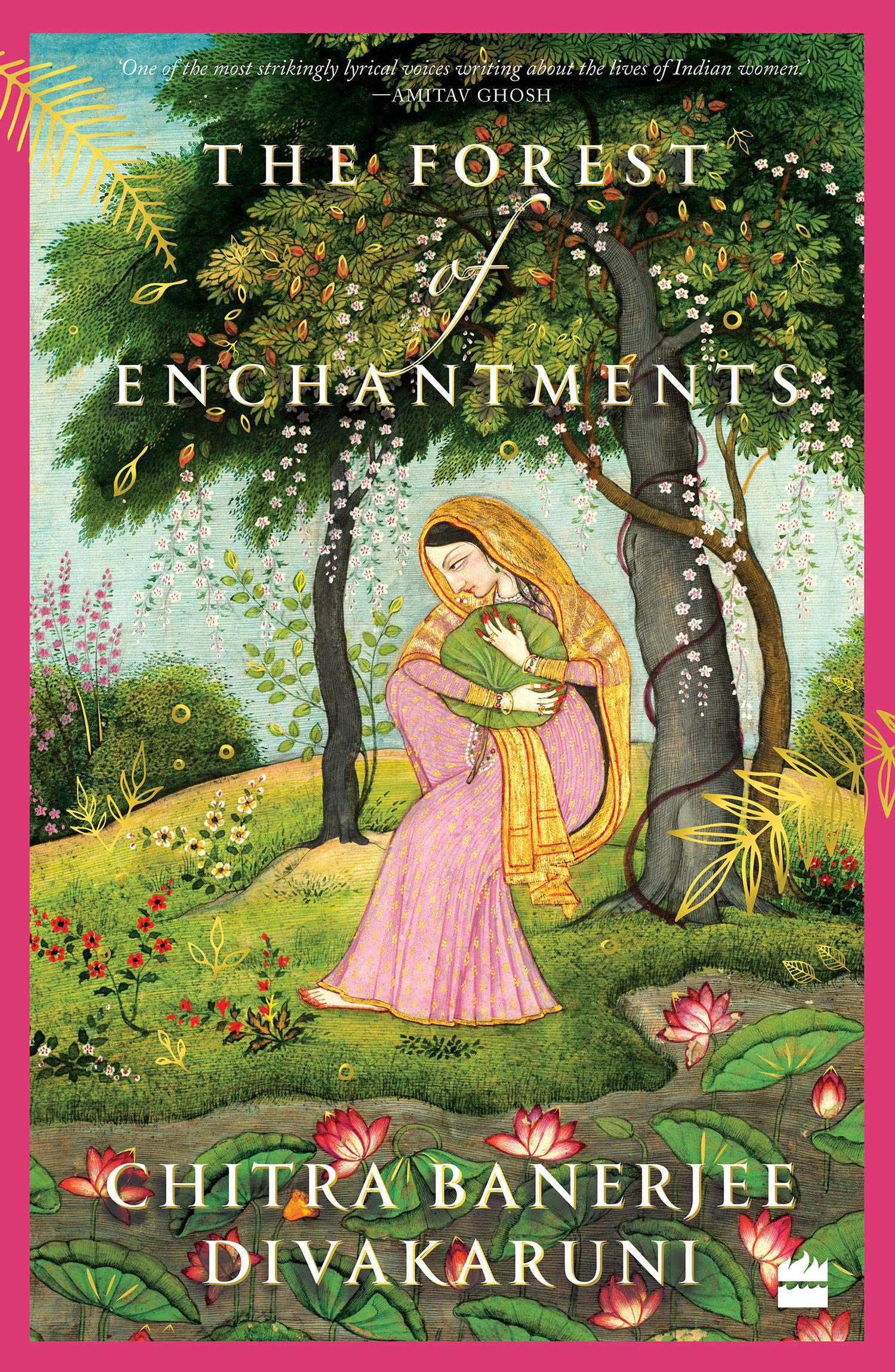
The Ramayana, one of the world’s greatest epics, is also a tragic love story. In this brilliant retelling, Chitra Banerjee Divakaruni places Sita at the centre of the novel: this is Sita’s version.
The Forest of Enchantments is also a very human story of some of the other women in the epic, often misunderstood and relegated to the margins: Kaikeyi, Surpanakha, Mandodari. A powerful comment on duty, betrayal, infidelity and honour, it is also about women’s struggle to retain autonomy in a world that privileges men, as Chitra transforms an ancient story into a gripping, contemporary battle of wills.
While the Ramayana resonates even today, she makes it more relevant than ever, in the underlying questions in the novel: How should women be treated by their loved ones? What are their rights in a relationship? When does a woman need to stand up and say, ‘Enough!’
Book Review: The Forest Of Enchantments
After finishing The Palace of Illusion by Chitra Banerjee a few months back, I’ve decided to read this book but couldn’t get my hands on the book for a while because of my tight schedule. The Forest of Enchantments by Chitra Banerjee Divakaruni is a creative, alternative interpretation from Sita’s point of view–a point of view which had been sorely lacking in any version of the Ramayana, in which Sita appeared as little more than a hollow, tragic puppet.
Besides an adventurous retelling of the Ramayana, this is a feminist tale which evokes feelings of abandonment, ideas about duty vs. love, and more importantly, the duty to love and trust.
The Ramayana is an epic tale that’s difficult to condense down into a less than 400 page novel. At times, I felt the pace picking up too rapidly, skipping over a decade as I flipped a single page. At other times, the text dragged a bit. It’s difficult to add new stories to the mix while honoring the revered source material. I could feel Divakaruni stretching to meet this challenge.
She can’t change the major story beats and can only expand upon Sita’s role in them and her inner thoughts and feelings. Why didn’t Sita speak up at a certain moment or handle a situation differently? Because even if Divakaruni sees the other potential paths (and lets Sita walk through them in her mind before discarding them), following these alternate routes would change the epic.
“I couldn’t control what was done to me. But my response to it was in my control.”
She does an admirable job of fleshing Sita out with human foibles while keeping her longsuffering trust in and devotion to her husband intact. Sita didn’t feel perfect and untouchable, and I was grateful to see her anger at pivotal moments, when her unshakeable trust was not mirrored by her husband.
Divakaruni said in her introduction that she found it hard to make Sita the heroine of the story without readers hating Ram. Again, I think she did the best she could; I find his actions understandable but unforgivable; and liked that Sita had the opportunity to speak up for herself, to tell her husband that honoring the people of his kingdom should have included honoring his wife, who had never given him any reason to doubt her.
“It’s hard to tell them apart, what we bring upon ourselves and what destiny determines. They’re as difficult to disentangle as love and sorrow.”
I also very much appreciated the emphasis on bringing a spotlight to the plight of wronged women. Ram banishes Sita because there are rumors that she was unfaithful during her year of imprisonment – even though she went through a literal trial by fire to prove her innocence.
Divakaruni gently but firmly points to the impossible tasks assigned to women: to manage an entire household with no praise or acclaim for doing the “women’s work” that is expected of them; to be pure and unblemished, untouched by any hint of rumor, lest it taint the reputation of the men in their lives. To endure immense suffering (emotional, physical) without complaint.







