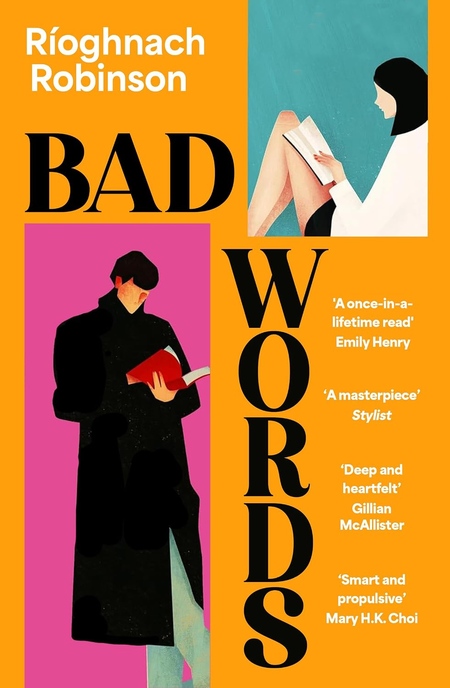
The first time Parker Navarro meets the critic who ended his career, he has had two old-fashioneds and has followed her through a locked side corridor at Cipriani into a small walnut-panelled library above the ballroom. Three years earlier, Selina Chan’s review in City Magazine turned his $1.2 million debut into the flop of the century. That morning she has panned his second novel as well. She tells him to walk away. He doesn’t. So she explains, coldly and precisely, that his books have a hole where the conviction should be, that he will say anything to get a reaction, and that her job is to serve readers, not to make authors feel good. Then she slams the door. A stranger has filmed nearly all of it. By breakfast, Bad Words by Rioghnach Robinson has its engine: a novelist and a critic who loathe each other, pushed by their employers into a public feud that becomes the most honest conversation either of them has ever had.
The Man Who Needed to Be Liked
Robinson alternates first-person chapters between the two, and she threads the narration with the paperwork of a modern literary quarrel: Selina’s published reviews, social posts with their like counts, a newspaper interview, emails and text threads. It’s a smart choice for a novel about the distance between what people say in public and what they mean in private, because the format lets you see both versions side by side.
Parker is the more surprising creation. He is the middle of five siblings, and he is good in the exhausting way of family peacekeepers. He spent his advance paying off both of his divorced parents’ homes and his younger sister’s student loans, sends his mother money for car repairs from a subway carriage, and referees a sibling group chat that is one of the funniest running bits in the book. And he is also, according to Selina, a writer who sabotages every promising scene before it can mean anything. What gives Bad Words by Rioghnach Robinson its spine is that she is right, and somewhere underneath, he knows it. The book’s sharpest idea is that the terror of being disliked can ruin a paragraph as thoroughly as it can ruin a life.
The feud plays out as a comedy of escalation. Parker publishes a spiteful short story in The Paris Review about a critic who rides her own elevator to the fifty-third floor, eats lobster alone, and dies decades later in a hospital room with nobody beside her. Selina answers with a brief letter to the editor that compliments him, infuriatingly, for finally writing with some purpose. When her magazine adds a tipping feature, he leaves five dollars and a note about tiding her over until the place folds. Every jab lands, and every jab gives away something its author never meant to reveal.
Robinson is especially good on the odd intimacy of being understood by an enemy. The critics who rave about Parker’s second novel seem to have read a whimsical fairy tale he never wrote, while the woman who hated it described his ambitions exactly. A festival panel, quietly packed with both feuding parties by the organisers, turns ugly when a bitter older novelist goes after Selina, and Parker finds himself, absurdly, wanting to defend her. By the time the pair write their names together on the wall of a basement book bar in Greenpoint, the rivalry has become something else, and the novel has earned the change.
What Bad Words Knows About Magazines
The counterweight to the romance is City itself, and it gives Bad Words by Rioghnach Robinson a seriousness most rivals-to-lovers novels never reach for. The century-old magazine has been bought by a venture fund, and its handler, Hayden, sits in on editorial meetings scrolling an enormous phone, floating AI-generated content and celebrity reading lists. The staff around the scarred, claw-footed oak table has shrunk from twenty-six to fourteen. Selina’s defence of slow, rigorous criticism keeps running into one awkward fact: the feud is the best thing to happen to subscriptions in years.
This is where Robinson’s own reading shows. One of Selina’s pans accuses Parker of hysterical realism, the footnoted, maximalist mode she thinks belongs to the early 2000s, and the novel treats that charge as a real argument rather than a punchline. Selina believes criticism exists to help readers spend their one life on books that matter. Parker counters that every review is also a conversation about money. Neither wins outright. The real thesis is that both have built careers on hiding, she behind impersonal prose and he behind relentless niceness.
Arthur, Parker’s roommate, is the book’s conscience: a Macmillan publicist who volunteers with teenage poets, burns every grilled cheese he attempts, and goes on hating Selina on principle long after Parker has stopped. He is also the friend who remembers how bad Parker’s last year of college became, and Robinson lets that history sit quietly in the background for most of Bad Words by Rioghnach Robinson, so that when it finally comes forward it carries real weight. It is one of the few places where the novel trusts restraint over banter, and it is all the better for it.
Where Bad Words Gives Ground
- The internet is drawn in one shade. The rival authors who form a support group against Selina, the bitter novelist on the panel and the influencer who stokes outrage exist mainly to be wrong. A satire this alert to pile-ons should let at least one of them have a point.
- The late crisis leans on contrivance. The third-act rupture depends on a character being startlingly careless with a journalist, and on old messages resurfacing at the worst possible moment. The fallout is written with real feeling; the setup is convenient.
- The middle idles. The long winter stretch of banter is charming, but it repeats its rhythm several times before the plot moves again.
- The rebound date is a placeholder. The kind bookseller Parker briefly sees is given nothing to do except be pleasant and in the way.
Content Notes
What Bad Words by Rioghnach Robinson carries, plainly. A character’s past suicidal ideation and planning, discussed frankly. Depression and antidepressant use. Online harassment, misogynist slurs and racist abuse. Racist remarks from strangers on the street. Estrangement between a daughter and her parents. Heavy social drinking. Frequent swearing. Heat level: open door, with one long explicit scene and several shorter ones.
Read These Next
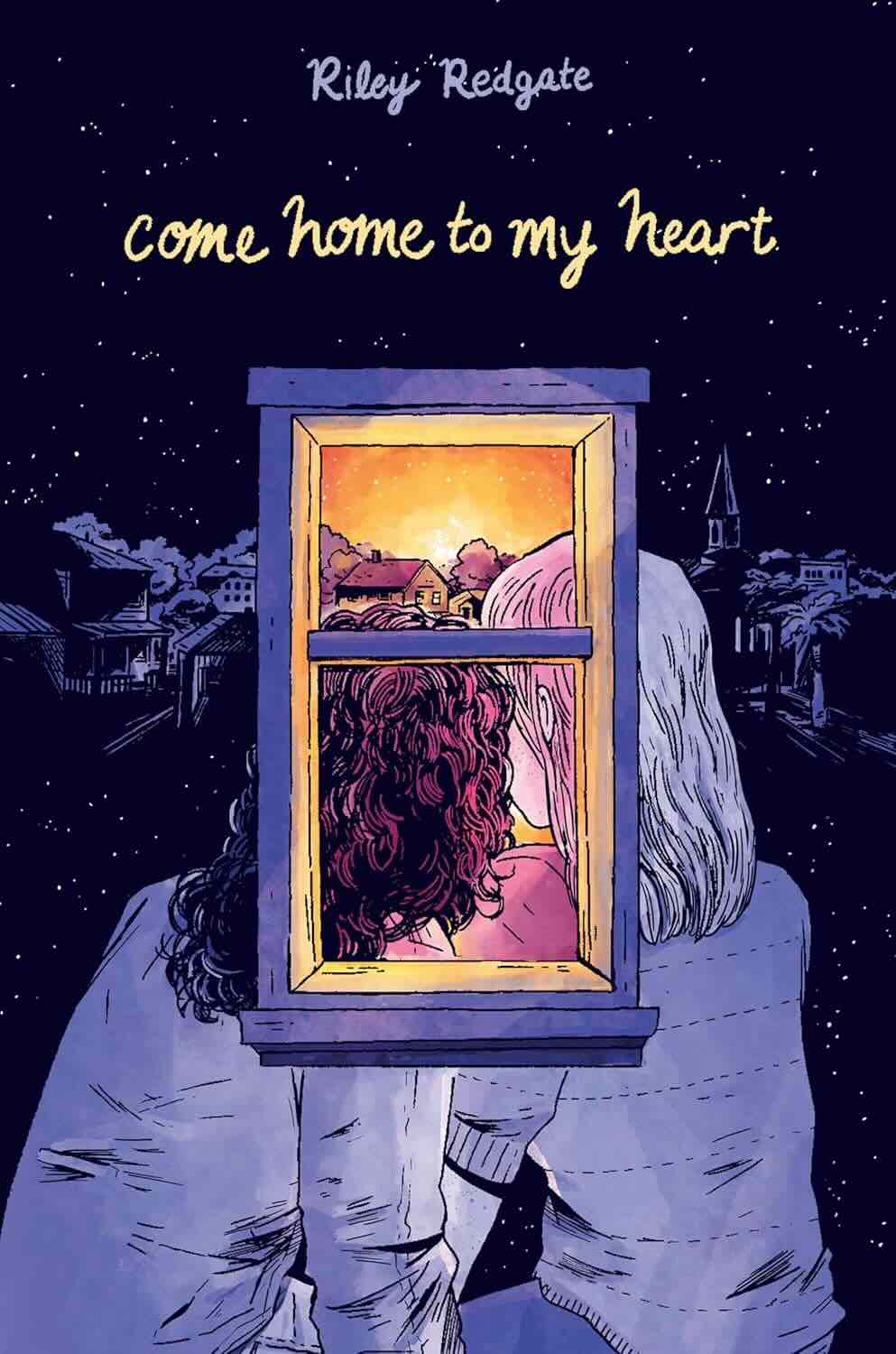
Rioghnach Robinson has published six young adult novels as Riley Redgate, most recently the Lambda Award winner Come Home to My Heart, and has written for WEBTOON and The Onion. Bad Words by Rioghnach Robinson is her first adult novel under her own name. If it worked for you:
- Come Home to My Heart by Riley Redgate, the same author writing for younger readers, with the same ear for anxious, funny narrators.
- Yellowface by R.F. Kuang for a darker, nastier look at publishing, online outrage and who is allowed to tell which story.
- Beach Read by Emily Henry for two novelists with opposite ideas about what fiction is for.
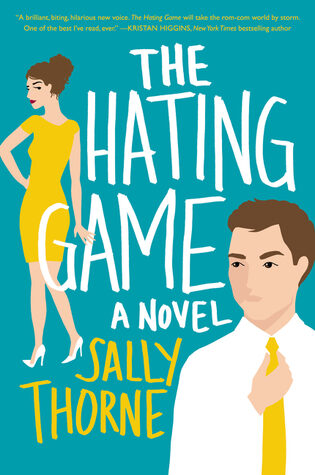
- The Hating Game by Sally Thorne for the purest version of loathing that curdles into longing.
The Verdict
Robinson set herself a hard brief: a love story whose hero is told in print that his life’s work is a failure, by a heroine who refuses to take a word of it back. She makes it work because the book believes in both of them, and because its questions about what criticism owes anyone are genuinely open. The ending ties its bows tighter than the rest of the novel prepares you for, yet Bad Words by Rioghnach Robinson is often very funny and quietly moving about what it costs to be seen clearly.
Read it, then go and find the critic you most disagree with. You might be surprised by what they noticed.