 ·
· 1
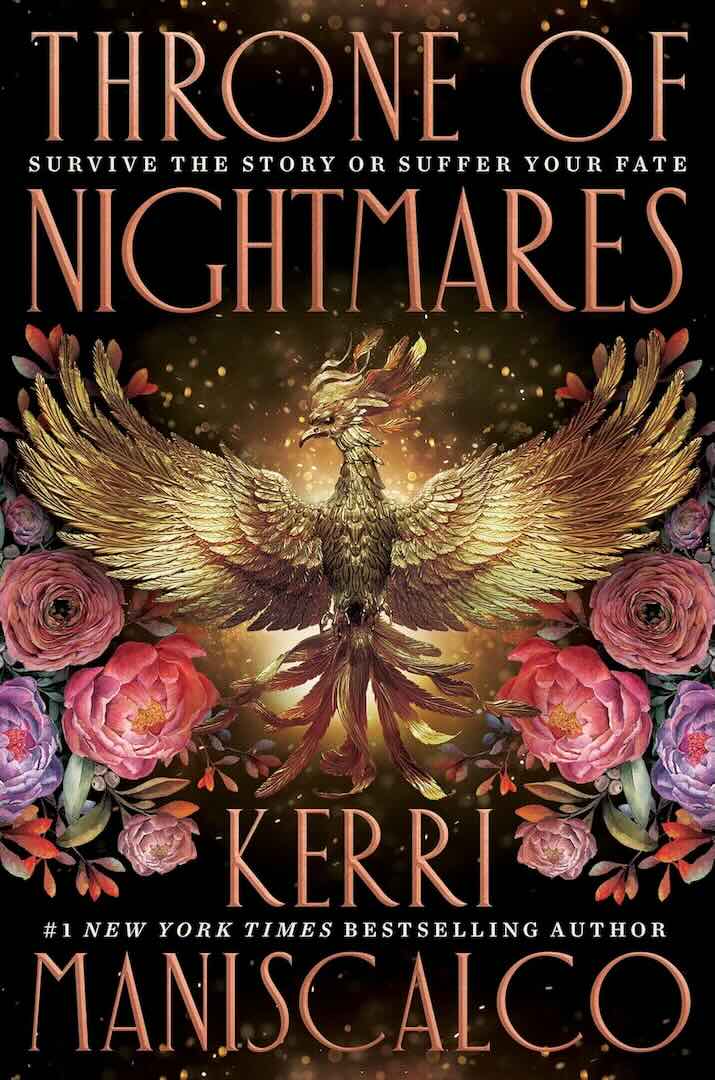
1There’s something profoundly meta about reading a fantasy romance where the heroine’s superpower is loving books—and Throne of Nightmares by Kerri Maniscalco understands this delicious irony better than most. As the third installment in the Prince of Sin series (following Throne of the Fallen and Throne of Secrets), this standalone novel transforms the simple act of reading into something dangerous, seductive, and utterly magical. Maniscalco crafts a story that reads like fan fiction of the best kind—not in quality, but in heart—a narrative that celebrates the transformative power of storytelling while weaving its own compelling tale.
A Heroine Who Lives in Her Head (Until Reality Becomes Fiction)
Lore Brimstone embodies every book lover’s secret fantasy and fear: what if you could literally fall into your favorite stories? As a small-town librarian from Bellington, she’s built her life around recommending perfect reads and escaping into fictional worlds. Her character arc represents a beautiful meditation on what happens when imagination meets reality, when the comfortable safety of reading about adventures collides with experiencing them firsthand. Maniscalco deftly balances Lore’s initial insecurity with gradual confidence, creating a protagonist whose growth feels earned rather than convenient.
What makes Lore compelling isn’t just her bookish nature—though her internal monologues about romance tropes and plot structures are delightfully self-aware—but her fundamental kindness tempered with snark. She’s sunshine personified, yet not naïve. Her tendency to name-check fictional crushes like Logan Blaze while navigating actual life-threatening situations adds humor without diminishing the stakes. The revelation of her true identity as the reincarnated Goddess of Night creates fascinating tension between who she’s been and who she’s becoming, raising questions about identity, redemption, and whether our past defines us.
The Prince Who Weaponizes Knowledge
Prince Sloth subverts every expectation his name suggests. Far from lazy, Cassiel (as Lore eventually learns to call him) represents the danger of an endlessly curious mind paired with immortal existence. Throne of Nightmares by Kerri Maniscalco presents him as the perfect foil to Lore’s emotional spontaneity—his court thrives on academic pursuit, his power fueled by knowledge itself. The prince’s enchanted library isn’t just a setting; it’s an extension of his character, a physical manifestation of his belief that books hold the power to break and remake worlds.
The slow-burn chemistry between Lore and Sloth crackles with intellectual and physical tension. Their banter feels authentic, with Lore’s playful teasing gradually chipping away at his stoic exterior. The “Blondie” nickname becomes shorthand for their evolving dynamic—irritation transforming into affection. Maniscalco excels at showing Sloth’s vulnerability beneath calculated composure, particularly in scenes where his tattoo glows in response to emotions he’d rather keep hidden. The fated mate bond adds inevitability without removing choice, a delicate balance that makes their romance feel both destined and earned.
Living Inside Your Favorite Books (With a Sinister Twist)
The Trials of Unbinding provide the narrative framework for Throne of Nightmares by Kerri Maniscalco, transforming Lore’s reading history into a gauntlet of survival. Each trial drops her into scenarios reminiscent of books she’s read—dragon shifter romances, pirate adventures, vampire encounters, dystopian survival tales—but with dark magic corrupting familiar tropes. This structure allows Maniscalco to play with genre conventions while interrogating them. What happens when the meet-cute becomes a genuine threat? When the brooding alpha’s possessiveness isn’t sexy but dangerous?
The Book of Nightmares (Liber Noctem) functions as both antagonist and narrative device, a malevolent entity that understands storytelling well enough to weaponize it. Its ability to twist beloved fictional scenarios into psychological torture creates genuine unease. Lore must navigate worlds she thought she knew intimately, only to discover that living through romance novel plots requires different skills than reading them. The trials test loyalty, courage, hope, and ultimately, whether she’ll succumb to darkness when faced with impossible choices.
Maniscalco’s magic system centered on “dreamweaving”—the ability to manifest stories into reality—offers rich thematic territory. It suggests that imagination isn’t escape but power, that the stories we tell ourselves shape our world more than we realize. The phoenix tear portal stone serves as both MacGuffin and symbol, representing the transformative potential of stories to transport us between worlds.
Where the Narrative Stumbles
While Throne of Nightmares by Kerri Maniscalco succeeds on many levels, it occasionally buckles under the weight of its ambitions. The pacing suffers from repetitive trial structures—by the third or fourth test, the pattern becomes predictable despite variations in setting. Some readers may find themselves anticipating the reveal that “this isn’t real” before Lore does, diminishing narrative surprise. The middle section drags as similar beats recur: enter new story, something feels off, Lore questions reality, truth revealed, repeat.
The revelation of Lore’s identity as Nyantha arrives with insufficient groundwork. While retrospectively logical, the twist feels more convenient than earned, resolving complex plot threads perhaps too neatly. Readers seeking more gradual foreshadowing may find this development jarring. Additionally, the conclusion wraps up major conflicts swiftly—defeating an ancient evil book and reconciling goddess powers happens in a condensed timeframe that might feel rushed.
Secondary characters, particularly Lore’s family and friends from Bellington, remain underdeveloped. Their importance to Lore’s character is told more than shown, making emotional stakes in certain trial scenarios less impactful. When the Book of Nightmares weaponizes her love for family, we’ve spent so little time with these relationships that the manipulation loses some power.
The meta-commentary, while charming, occasionally overshadows story immersion. Frequent references to romance tropes and fictional tropes can pull readers out of the narrative, reminding them they’re reading a story about stories rather than simply experiencing one. This self-awareness works brilliantly in doses but sometimes tips into excess, particularly during action sequences where Lore’s internal monologue about plot structure interrupts tension.
Prose That Celebrates the Written Word
Maniscalco’s writing in Throne of Nightmares by Kerri Maniscalco demonstrates clear affection for language itself. Descriptions of Sloth’s library achieve tactile beauty—you can feel the weight of ancient tomes, smell the paper and leather, sense the magic thrumming through shelves. Her atmospheric worldbuilding shines brightest in these bookish spaces, suggesting that for both author and characters, libraries represent safety, possibility, and power.
The dialogue sparkles with wit, particularly between Lore and Sloth. Their verbal sparring evolves from antagonistic to flirtatious to genuinely intimate without losing sharpness. Maniscalco captures distinct voices for each character—Lore’s enthusiasm and tendency toward pop culture references contrast with Sloth’s precise, measured speech patterns. Even supporting characters from across the Prince of Sin series (Envy, Lust, and their partners make appearances) maintain consistent personalities that reward series readers without alienating newcomers.
Spice levels escalate appropriately throughout the narrative. Early tension-building scenes with charged glances and almost-kisses give way to explicitly steamy encounters that integrate emotional vulnerability with physical intimacy. The fated mate bond adds mythological weight to their connection without making it feel predestined in a way that removes character agency.
A Series of Sinful Princes, Each With Their Own Story
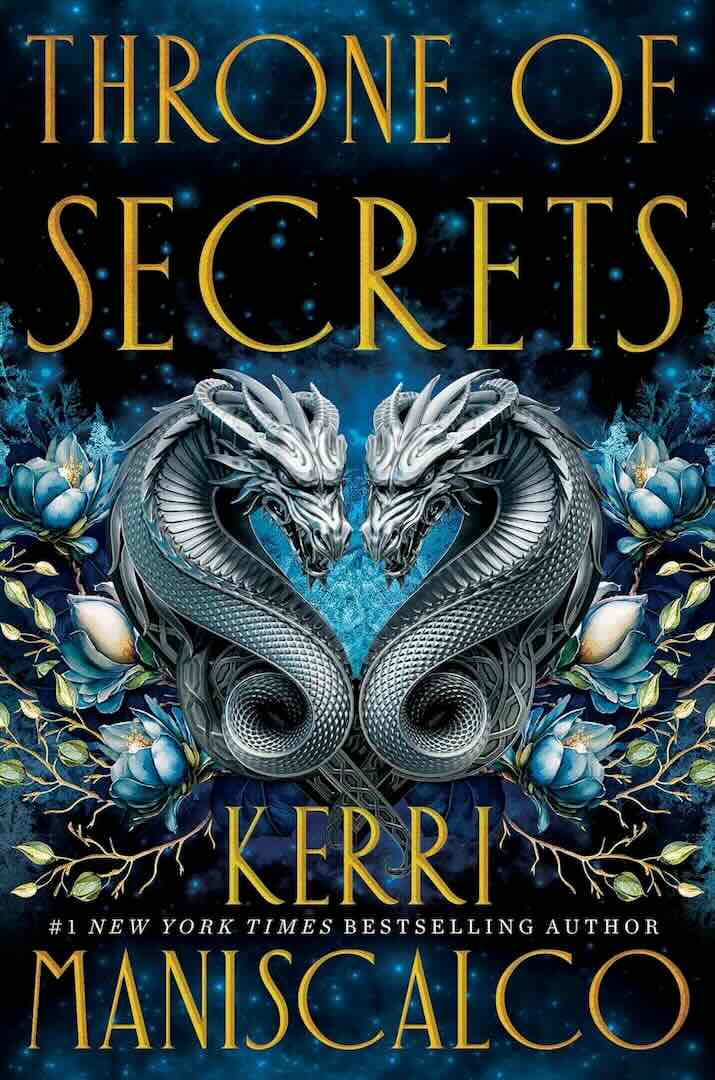
As part of the Prince of Sin series, Throne of Nightmares by Kerri Maniscalco can be read independently but rewards familiarity with earlier books. Throne of the Fallen introduced Prince Envy and his elaborate game with artist Camilla, while Throne of Secrets explored Prince Lust’s relationship with witch Emilia. Each book focuses on a different prince while gradually revealing more about their world, the Seven Circles, and the nature of sin-based power.
Sloth’s story distinguishes itself through intellectual rather than physical or emotional sin. Where Envy manipulates through games and Lust through pleasure, Sloth’s power derives from knowledge accumulation—making him perhaps the most dangerous because his sin seems benign. This thematic focus on information as power, books as weapons, and stories as reality-shaping forces sets Throne of Nightmares by Kerri Maniscalco apart from its series siblings.
For Readers Who Love Their Books About Books
Throne of Nightmares by Kerri Maniscalco will resonate most powerfully with readers who experience books as portals, who’ve ever wished to step into fictional worlds, who understand that “it’s just a story” minimizes the genuine impact narratives have on our lives. It’s love letter to reading itself, to the transformative power of getting lost in pages, to the communities that form around shared fictional obsessions.
The novel works best when embracing its meta-awareness rather than fighting it. Readers who appreciate fourth-wall-adjacent commentary on romance conventions, who enjoy protagonists who reference their favorite fictional characters, who delight in seeing beloved tropes simultaneously celebrated and interrogated—these readers will find much to love. It’s essentially fan fiction of the reading experience itself, examining what makes us fall into stories and how those stories shape who we become.
Those seeking straightforward fantasy romance without self-referential elements may find the constant nods to genre conventions distracting. Similarly, readers preferring tightly plotted political intrigue or complex worldbuilding might wish for more depth in those areas. Throne of Nightmares by Kerri Maniscalco prioritizes character dynamics and thematic exploration of storytelling over elaborate magic systems or court machinations.
Similar Escapes for the Bookishly Inclined
Readers captivated by Throne of Nightmares by Kerri Maniscalco might enjoy:
- The Ex Hex by Erin Sterling – witty supernatural romance with bookish heroine
- A River Enchanted by Rebecca Ross – atmospheric fantasy romance with folklore elements
- The Shadows Between Us by Tricia Levenseller – villain romance with shadow magic
- House of Earth and Blood by Sarah J. Maas – urban fantasy with fated mate bonds
- The Scorpio Races by Maggie Stiefvater – atmospheric fantasy with mythological creatures
- Radiance by Grace Draven – political fantasy romance between unlikely partners
Final Verdict: A Celebration Worth Reading
Throne of Nightmares by Kerri Maniscalco understands something essential about why we read—stories offer more than escape; they provide language for understanding ourselves, frameworks for imagining different possibilities, communities of people who see the world through similar lenses. By literalizing the fantasy of falling into favorite books, Maniscalco creates space to examine both the pleasure and danger of that desire.
The romance between Lore and Sloth works because they complement each other—her emotional spontaneity balances his calculated reserve, her optimism tempers his pragmatism, her love of stories meets his respect for their power. Their relationship develops through genuine connection rather than merely physical attraction or magical compulsion, even with the fated mate element.
While not without flaws—pacing issues, a somewhat convenient resolution, perhaps too much meta-commentary—Throne of Nightmares by Kerri Maniscalco succeeds as a love letter to readers who’ve built their lives around books. It’s a reminder that stories matter, that the fictional worlds we inhabit aren’t frivolous distractions but fundamental to who we are. For anyone who’s ever felt that pull to step through the page, to become the hero of their own adventure, Lore’s journey offers both wish fulfillment and cautionary tale about being careful what you wish for.
Pick this up when you want romance with substance, fantasy with self-awareness, and a story that celebrates the very act of storytelling itself. Just maybe don’t read it while holding any mysterious portal stones.