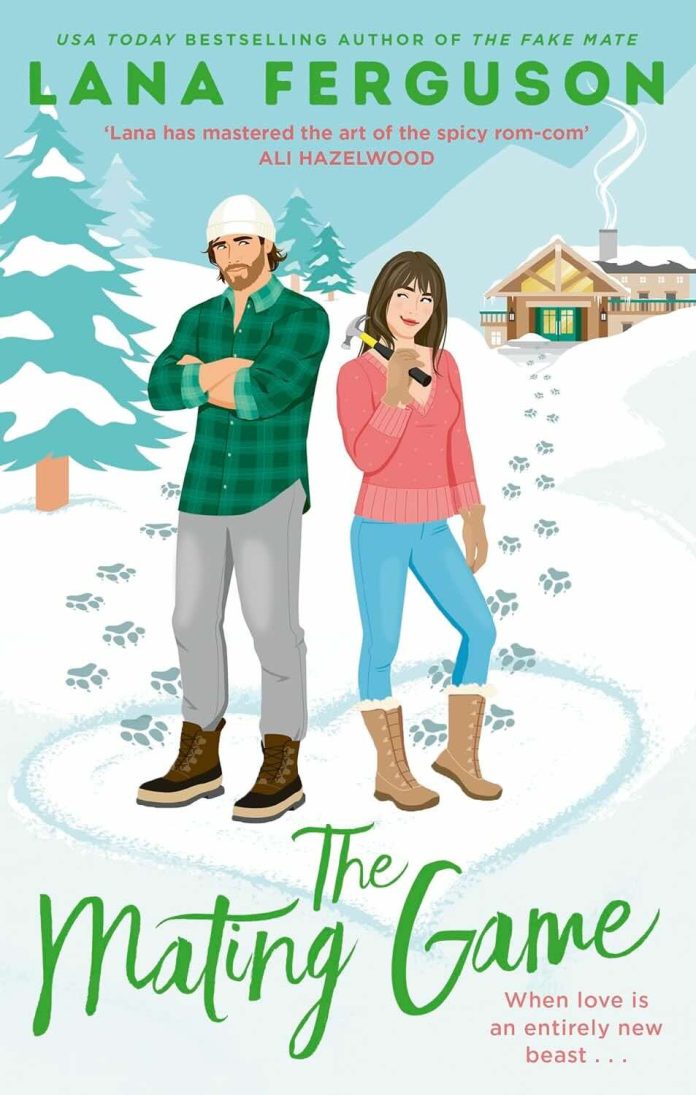
When life throws you a curveball, most people expect a diagnosis of the flu. For Tess Covington, that curveball comes in the form of discovering she’s a late-presenting omega wolf shifter at twenty-eight years old. Lana Ferguson’s latest paranormal romance, The Mating Game, takes readers on a journey through snowy Colorado mountains where renovation projects meet supernatural revelations, and where a grumpy lumberjack of a man might just be the perfect person to guide our heroine through her unexpected transformation.
When Your Life Goes From HGTV to SyFy Channel
Ferguson excels at crafting relatable protagonists thrown into extraordinary circumstances, and Tess embodies this perfectly. As a contractor with her own TikTok following and potential HGTV deal on the horizon, Tess represents modern ambition wrapped in genuine vulnerability. Her life revolves around helping her family’s business thrive while secretly shouldering the weight of her father’s medical bills. The revelation that she’s not actually a beta but rather an omega shifter—a designation known for going into heat cycles—couldn’t come at a worse time. She’s contracted to renovate the Bear Essentials Lodge in the remote town of Pleasant Hill, Colorado, and professional obligations wait for no one’s supernatural awakening.
What makes Tess compelling isn’t just her competence with power tools or her social media savvy. Ferguson gives her character depth through the quiet ways she sacrifices for others while maintaining fierce independence. She’s the daughter who changed college majors to save the family business, the sister who never wants to be a burden, and the contractor who genuinely cares about the legacy of the places she renovates. This complexity prevents her from becoming a one-dimensional romance heroine, even when her newly emerged biology threatens to overwhelm her carefully constructed life.
The Appeal of a Surly Man in Plaid
Enter Hunter Barrett, the lodge owner who makes grumpy seem like an art form. Ferguson crafts him as the quintessential brooding alpha—literally—but avoids many of the toxic possessive behaviors that can plague paranormal romance alphas. Hunter carries the weight of his parents’ deaths like a physical burden, having inherited the lodge and isolated himself in the mountains for nearly a decade. His reluctance to renovate the property stems not from stubbornness but from grief and guilt, making his initial coldness toward Tess understandable rather than simply off-putting.
The author excels at showing rather than telling when it comes to Hunter’s character development. Through small gestures—lending Tess his coat despite the cold, helping her through her unexpected heat symptoms with surprising gentleness, gradually opening up about his past—Ferguson reveals a man who’s been protecting himself from vulnerability rather than from actual connection. His journey parallels Tess’s in meaningful ways: both are stuck in patterns of self-sacrifice and isolation, both carry family expectations they never asked for, and both need to learn that accepting help isn’t the same as admitting weakness.
The Heat is On (Literally)
Ferguson approaches the omegaverse elements with refreshing frankness that never veers into gratuitous territory. The heat cycles, scent compatibility, and knotting aspects serve the emotional arc rather than existing purely for titillation. When Tess experiences her first mini-heats in Hunter’s presence, the scenes balance physical intensity with genuine emotional vulnerability. The author manages to make biological imperatives feel like amplifications of existing chemistry rather than magical consent bypass mechanisms—an important distinction in paranormal romance.
However, this aspect of The Mating Game may prove divisive for readers. Those unfamiliar with omegaverse conventions might find the biological aspects overwhelming or too animalistic. Ferguson does her best to ground these elements in emotional connection, but the sheer frequency and intensity of the intimate scenes could feel repetitive to some readers. The balance between plot progression and physical encounters occasionally tips too far toward the latter, particularly in the middle section when Tess and Hunter become trapped together during a snowstorm.
Supporting Cast That Actually Supports
One of Ferguson’s strengths across her body of work—evident in previous titles like The Fake Mate and The Nanny—is creating vibrant supporting characters who enhance rather than distract from the central romance. Tess’s three brothers (Thomas, Chase, and Kyle) provide comic relief without becoming caricatures, each with distinct personalities that emerge through their banter and interactions. Jeannie, the lodge’s motherly employee, offers sage advice and occasional meddling in equal measure. Even secondary characters like Cat, the local shop owner, and Mackenzie, the doctor who first diagnoses Tess, feel fully realized in their brief appearances.
The family dynamics deserve particular praise. Tess’s relationship with her father—her motivation for landing the HGTV deal to pay for his pacemaker surgery—adds emotional stakes beyond the romance. Ferguson resists the temptation to create artificial drama through misunderstandings or family disapproval, instead showing how Tess’s tendency to shoulder burdens alone stems from love rather than dysfunction. This maturity in handling family relationships elevates the story beyond standard romance fare.
The Lodge Itself as Character
Ferguson demonstrates her research prowess in the renovation details that pepper the narrative. Tess’s expertise feels authentic, from her discussions of wood stain colors to her systematic approach to updating the lodge’s dated infrastructure. The author clearly understands that good renovation work balances preservation with modernization, and this philosophy mirrors the emotional work both protagonists must do. Just as the lodge needs updating without losing its essential character, both Tess and Hunter must evolve without abandoning their core values.
The Pleasant Hill setting provides atmospheric charm—a small mountain town bypassed by modern highways, filled with quirky locals and winter beauty. Ferguson captures the isolation without making it feel oppressive, the cold without making it unwelcoming. The lodge itself, with its dated elk head sporting dusty Santa hats and its cantankerous cat named Reginald, becomes a character readers root for almost as much as the central couple.
Where the Foundation Cracks
Despite its many strengths, The Mating Game isn’t without structural issues. The pacing stumbles in the final quarter when the HGTV deal and lodge renovation conflicts should create maximum tension. Instead, resolutions come almost too easily, robbing the climax of some dramatic punch. Ferguson sets up genuine obstacles—Tess’s sudden call to fly to Knoxville for contract negotiations, Hunter’s crucial magazine interview, the lodge’s financial precariousness—but then doesn’t fully explore the emotional or practical complications these situations would realistically create.
The romance, while satisfying overall, occasionally relies too heavily on physical attraction and biological compatibility at the expense of deeper intellectual or philosophical connection. Readers learn what Tess and Hunter want from life, but less about what they think about the world, what makes them laugh, or how they challenge each other beyond the bedroom. Their conversations during the forced-proximity snowstorm section begin to address this, but more scenes of them simply enjoying each other’s company—not during heat cycles or renovation projects—would have strengthened their bond.
Additionally, the omegaverse worldbuilding, while functional, lacks the depth of Ferguson’s contemporary romance settings. Questions about shifter society, the prevalence of different designations, and how shifters integrate with human society receive only surface-level attention. Readers seeking rich paranormal worldbuilding may find this aspect underdeveloped, though others might appreciate the author’s focus on character over complex magical systems.
The Verdict on This Pack
The Mating Game succeeds as steamy paranormal romance that prioritizes emotional authenticity alongside physical passion. Ferguson writes with warmth and humor, creating protagonists worth rooting for and a love story that feels earned despite some pacing issues. The renovation framing device provides unique texture that sets this apart from other wolf shifter romances, and the author’s willingness to engage honestly with omegaverse elements without shame or excessive justification gives the book confident energy.
This is Ferguson at her most playful, blending her trademark banter with paranormal tropes in ways that feel fresh rather than derivative. Fans of her previous work will recognize her skill at writing grumpy-sunshine dynamics and her talent for making fantastical elements feel grounded in genuine emotion. While not quite reaching the heights of her breakout hit The Fake Mate, which established her as a distinctive voice in paranormal romance, The Mating Game delivers exactly what readers come to Ferguson for: heat, heart, and happily ever afters that feel genuinely earned.
If You Loved This, Try These
Readers hungry for similar vibes should explore:
- The Fake Mate by Lana Ferguson – Ferguson’s earlier omegaverse romance featuring a fake marriage between coworkers that delivers similar heat with workplace comedy elements
- Pack Darling by Lola Rock – Another omegaverse romance with forced proximity and protective alphas
- Luna and the Lie by Mariana Zapata – For the slow-burn workplace romance angle with a grumpy-sunshine dynamic
- Den of Vipers by K.A. Knight – Paranormal reverse harem with wolf shifters for readers wanting darker, more complex pack dynamics
- Wolfsong by TJ Klune – For those seeking wolf shifter romance with deeper emotional exploration and found family themes
Ferguson continues to carve out her niche in paranormal romance with books that never sacrifice character for fantasy elements. The Mating Game proves she understands what makes shifter romance work: the delicious tension between civilization and wildness, independence and pack bonds, isolation and belonging. While it may not convert skeptics of the omegaverse subgenre, fans will find plenty to sink their teeth into.
For another werewolf romance, try Big Bad Wolf by Laurie Gilmore: a woodworker with an Etsy shop, a bar with no name, and a small town that has been covering for its wolf for half a century.