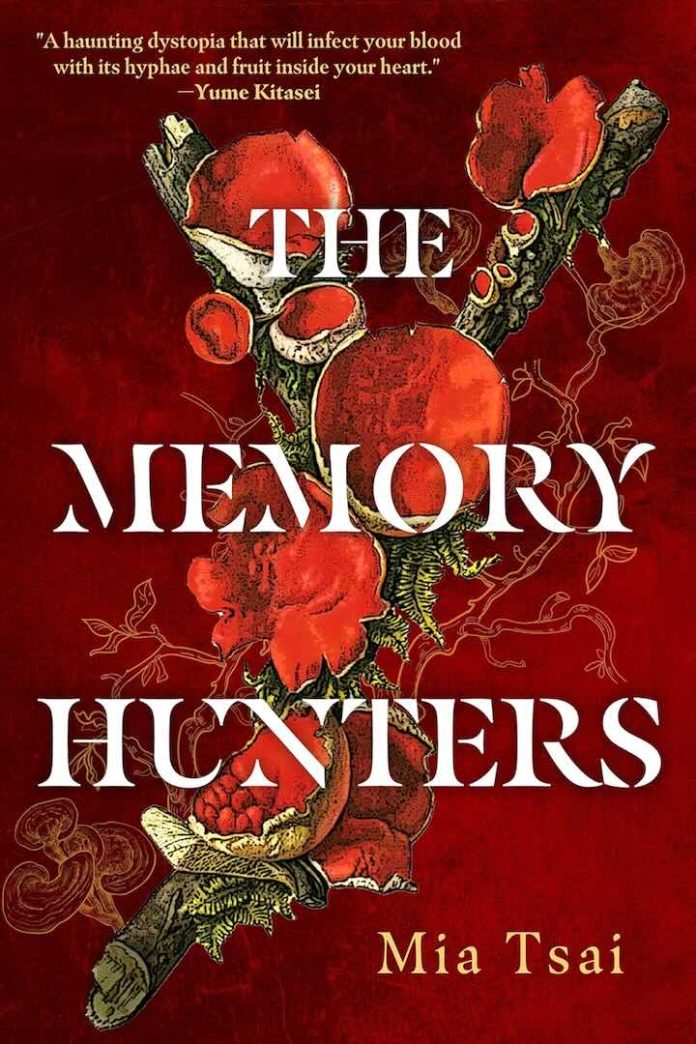
Mia Tsai’s debut into the science fantasy genre, The Memory Hunters, presents a world where memories can be extracted from fungal blood chalices and experienced by specialized divers called “memory hunters.” Following Kiana “Key” Strade, a gifted memory diver, and her bodyguard Valerian “Vale” IV as they uncover a conspiracy that threatens the foundations of their society, this novel attempts to blend botanical science fiction with LGBTQ+ romance and academic thriller elements.
The premise immediately captivates: in a post-apocalyptic world recovering from the “Decade of Storms,” civilization has rebuilt itself around the cultivation and harvesting of blood chalice mushrooms that store human memories. Key, blessed with exceptional diving abilities, works for the prestigious Museum of Human Memory while struggling with her calling to serve at the temple her powerful mother leads. When she discovers a memory that contradicts official history, the ensuing investigation leads her down a dangerous path that will force her to question everything she believes about her world.
World-Building: Rich Concepts, Inconsistent Execution
Tsai demonstrates impressive imagination in crafting her fungal-based memory system. The concept of blood chalices growing from the earth, storing human experiences that can be accessed through specialized consumption, creates fascinating possibilities for exploring themes of inherited trauma, cultural preservation, and the malleability of truth. The author clearly draws inspiration from real mycological science, creating a believable foundation for her fantastical premise.
The post-storm world feels lived-in, with coastal communities devastated by climate change and inland cities like Asheburg serving as centers of power and learning. The temple system, the Museum of Human Memory, and the various academic institutions create a complex web of competing interests that drives much of the political intrigue.
However, the world-building suffers from inconsistencies and under-explanation of crucial elements. The relationship between the various institutions—temple, museum, institute, and academy—remains murky throughout much of the narrative. The mechanics of memory diving, while atmospherically described, lack the scientific grounding that would make the system feel truly integrated into the world rather than simply magical.
Character Development: Compelling Leads, Underdeveloped Supporting Cast
Kiana Strade emerges as a complex protagonist whose journey from privileged academic to truth-seeking rebel forms the novel’s emotional core. Tsai effectively portrays Key’s internal struggle between duty to family expectations and her calling to uncover difficult truths. Her growing obsession with a mysterious memory and the physical toll it takes create genuine tension and sympathy.
Valerian IV (Vale/Maris) serves as more than just a bodyguard, bringing her own compelling backstory as someone from the storm-ravaged south working to support her family. Her relationship with Key develops naturally, though the romantic elements sometimes feel rushed given the broader stakes of their situation.
The supporting characters, unfortunately, remain largely one-dimensional. Dr. Genevieve Wilcroft, positioned as Key’s mentor and eventual antagonist, never transcends the “corrupt authority figure” archetype. Her motivations for maintaining historical falsehoods feel thin and unconvincing. Similarly, Lanelle Strade, Key’s mother, exists primarily to deliver exposition about temple mysteries rather than functioning as a fully realized character.
Jing and Cal, Key’s colleagues, show promise but their betrayal lacks proper setup, making their actions feel plot-driven rather than character-driven. Burdock, Vale’s former mentor, presents an interesting moral complexity but appears too late in the narrative to have proper impact.
Plot Structure: Ambitious Scope, Pacing Problems
The novel attempts to juggle multiple plot threads: Key’s investigation into the mysterious memory, her deteriorating mental state, the romantic subplot with Vale, family dynamics with her mother, and the larger conspiracy involving the museum and temple. While this ambition is admirable, the execution suffers from uneven pacing and unclear priorities.
The first half of the book excels at building mystery and establishing the central relationships, but the second half becomes increasingly rushed. Major revelations about the temple’s practices and Genevieve’s true agenda feel underdeveloped, as if Tsai ran out of space to properly explore the implications of her own plot devices.
The climactic sequence, while emotionally satisfying in terms of Key and Vale’s relationship, fails to provide adequate resolution to the larger institutional conflicts that drive much of the story. The ending feels more like a pause than a conclusion, suggesting this may have been planned as the first book in a series, The Consecrated, despite being marketed as a standalone.
Themes: Memory, Truth, and Power
Tsai tackles weighty themes about the malleability of historical truth and the ways institutions shape collective memory. The novel’s exploration of how those in power can literally rewrite history by controlling access to memories provides sharp commentary on real-world issues of information control and cultural preservation.
The theme of inherited trauma, particularly as Key struggles with memories that may not be her own, adds psychological depth to the fantastical premise. The physical manifestation of memory contamination—with characters literally growing fungal infections from overexposure to blood chalices—creates a visceral metaphor for how the past can consume the present.
However, these themes sometimes feel underdeveloped, sacrificed for action sequences or romantic moments that, while well-written, don’t advance the larger thematic concerns.
Romance: Authentic Emotions, Rushed Development
The LGBTQ+ relationship between Key and Vale provides genuine emotional weight to the story. Tsai writes their attraction and growing intimacy with authenticity, particularly in scenes where they support each other through professional and personal crises.
Vale’s identity as both protector and romantic interest creates interesting dynamics, though the power imbalance in their professional relationship receives insufficient examination. Their physical intimacy scenes feel organic rather than gratuitous, contributing to character development rather than existing purely for reader appeal.
The romance subplot, however, sometimes overshadows the larger stakes of the story. Key moments of political revelation get interrupted by romantic tension in ways that undermine the narrative’s momentum.
Writing Style: Atmospheric Prose, Structural Issues
Tsai demonstrates considerable skill in atmospheric writing, particularly in her descriptions of memory diving sequences. The sensory details of Key’s experiences within extracted memories create vivid, dreamlike passages that effectively convey the disorienting nature of living through another person’s experiences.
The author’s background in speculative fiction shows in her careful attention to the physical and emotional toll of the magical system on her characters. Unlike many fantasy novels where magic comes without cost, memory diving in Tsai’s world carries real risks that create genuine stakes.
However, the novel suffers from structural problems that impede reader engagement. The frequent time jumps and shifting perspectives, while clearly intended to mirror the fragmented nature of memory, often confuse rather than enlighten. Chapter transitions sometimes feel abrupt, leaving readers disoriented in ways that don’t serve the story.
Strengths and Weaknesses
What Works:
- Innovative magical system grounded in real scientific concepts
- Complex protagonist whose journey feels authentic and earned
- Atmospheric world-building that creates a lived-in post-apocalyptic setting
- Thoughtful exploration of institutional power and historical truth
- Authentic LGBTQ+ representation that serves character development
What Doesn’t:
- Underdeveloped antagonists who lack compelling motivations
- Rushed plotting in the second half that shortchanges major revelations
- Inconsistent world-building that leaves crucial systems unexplained
- Structural issues with pacing and perspective shifts
- Unsatisfying resolution that feels more like setup for future books
Final Verdict: Promising Debut with Room for Growth
The Memory Hunters showcases Mia Tsai’s considerable imagination and skill with atmospheric prose, but suffers from the common debut novel problem of ambitious scope exceeding execution capabilities. The novel’s central premise is compelling enough to carry readers through its structural flaws, and the relationship between Key and Vale provides genuine emotional investment.
Readers who enjoyed the scientific fantasy elements of Martha Wells’ Murderbot Diaries or the institutional intrigue of Ann Leckie’s Imperial Radch series may find much to appreciate here, particularly if they’re willing to overlook pacing issues in favor of innovative world-building and character development.
For fans of LGBTQ+ science fantasy, the authentic representation and central romance make this worth reading despite its flaws. However, those seeking tightly plotted thrillers or fully resolved standalone narratives may find themselves frustrated by the novel’s structural issues and inconclusive ending.
The Memory Hunters establishes Tsai as a voice to watch in speculative fiction, even if this particular effort doesn’t fully realize its considerable potential. With stronger editorial support and more focused plotting, future works from this author could deliver on the promise shown here.
Similar Books to Consider
If you enjoyed aspects of The Memory Hunters, consider these similar titles:
For innovative magical systems:
- The Goblin Emperor by Katherine Addison
- The Hundred Thousand Kingdoms by N.K. Jemisin
- Station Eleven by Emily St. John Mandel
For LGBTQ+ science fantasy:
- The Left Hand of Darkness by Ursula K. Le Guin
- Gideon the Ninth by Tamsyn Muir
- The Priory of the Orange Tree by Samantha Shannon
And for botanical/fungal fantasy:
- Mexican Gothic by Silvia Moreno-Garcia
- Annihilation by Jeff VanderMeer
- The Luminous Dead by Caitlin Starling
For academic/museum mysteries:
- The Seventh Sun by Lani Forbes
- The Archive Undying by Emma Mieko Candon
- Bitter Medicine by Mia Tsai (the author’s previous work)
The Memory Hunters represents an ambitious debut that, despite its flaws, offers enough innovation and emotional depth to warrant attention from speculative fiction readers willing to embrace imperfect but imaginative storytelling.







