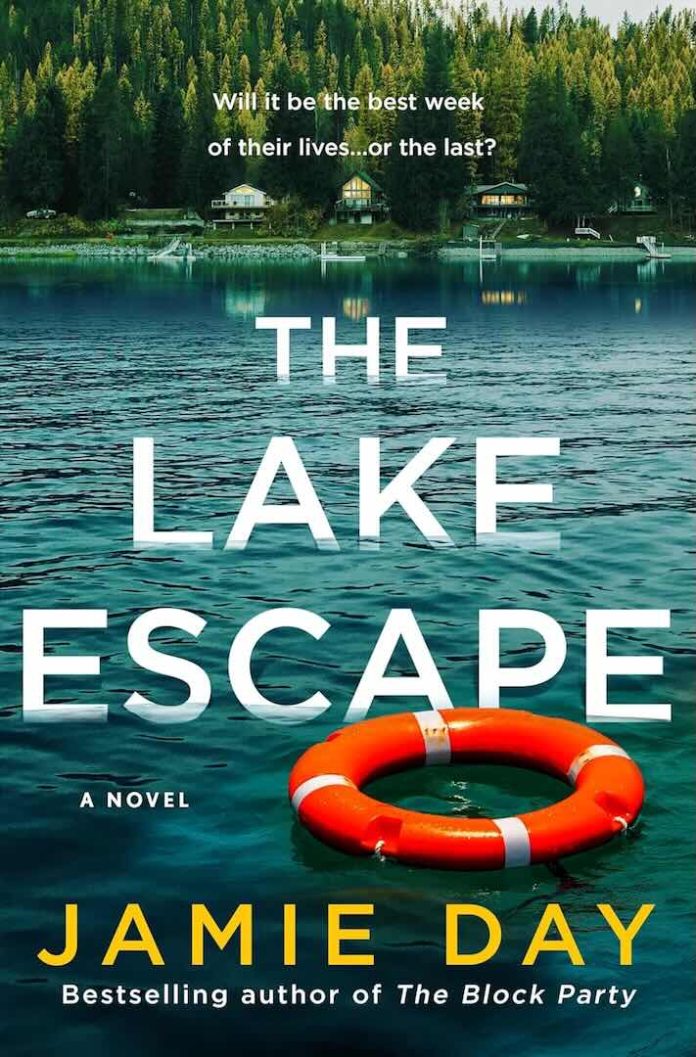
Jamie Day’s third psychological thriller, The Lake Escape, plunges readers into the murky depths of long-buried secrets and generational trauma, where childhood havens become adult nightmares. Following the success of The Block Party and One Big Happy Family, Day delivers another suspenseful exploration of suburban darkness, this time set against the deceptively tranquil backdrop of Vermont’s Lake Timmeny.
A Perfect Storm of Past and Present
The novel centers on Julia, David, and Erika—three lifelong friends whose annual summer retreat at their respective lake houses becomes a powder keg of explosive revelations. David’s gleaming new glass mansion, which cruelly blocks his friends’ cherished lake views, serves as both literal and metaphorical barrier between past innocence and present deceptions. When David’s much-younger girlfriend Fiona mysteriously vanishes after a violent argument, the lake’s dark history resurfaces with chilling persistence.
Day masterfully weaves together two timelines of disappearances: Anna Olsen in 1965 and Susie Welch thirty years later, both young women who seemingly evaporated without a trace. The discovery of human remains during construction work sets the stage for a intricate mystery that spans generations, connecting these cold cases to the present crisis in ways that are both shocking and inevitable.
Character Depth and Moral Complexity
What elevates The Lake Escape beyond typical domestic thrillers is Day’s nuanced character development. Julia emerges as a particularly compelling protagonist—a woman grappling with financial stress, marital doubts, and the slow realization that her oldest friends may harbor deadly secrets. Her voice carries the weight of middle-aged disillusionment while maintaining the reader’s empathy through her genuine concern for her pregnant daughter Taylor and her complex feelings toward her problematic friend David.
David himself is crafted as a masterpiece of ambiguity. Day skillfully walks the tightrope between making him sympathetic and repugnant, revealing his capacity for both charm and manipulation. His relationship with the enigmatic nanny Izzy—who harbors her own hidden agenda as the niece of victim Susie Welch—creates delicious tension that propels the narrative forward.
Erika, the defense attorney with a meditation practice and a murderous past, represents Day’s most complex creation. Her journey from seemingly zen-like composure to desperate confession reveals layers of guilt and self-preservation that feel authentically human rather than plot-driven.
Technical Mastery and Atmospheric Prose
Day demonstrates considerable skill in pacing and atmosphere creation. The lake itself becomes a character—simultaneously beautiful and menacing, holding secrets beneath its placid surface. The author’s prose style mirrors the deceptive calm of the setting, with seemingly casual conversations that hide undercurrents of danger and betrayal.
The author employs multiple perspectives effectively, particularly through Izzy’s investigative chapters that provide crucial backstory while maintaining present-tense urgency. Day’s background research into true crime elements shows through authentic procedural details and believable police investigation sequences.
Where the Waters Muddy
Despite its strengths, The Lake Escape occasionally suffers from overly convenient coincidences that strain credibility. The revelation that Izzy is Susie Welch’s niece, combined with her connection to both the Gallagher crime family and Fiona’s identity, feels somewhat contrived. Additionally, some dialogue ventures into exposition-heavy territory, particularly during the climactic reveals where characters explain rather than show their motivations.
The novel’s treatment of class dynamics and financial desperation—while relevant to the plot—sometimes feels underdeveloped compared to the psychological complexity of the murder mystery. Julia and Christian’s business struggles provide necessary context but could have been woven more seamlessly into the narrative fabric.
Themes That Resonate
Day explores compelling themes of how past actions echo through generations, the corrosive nature of secrets, and the way traumatic events bind people together in unexpected ways. The concept of the lake as both nurturer and destroyer serves as powerful metaphor for memory itself—beautiful on the surface but potentially deadly beneath.
The author also examines the moral complexity of justice versus vengeance, particularly through Izzy’s ultimate decision to reveal the truth despite the personal cost. Her choice to honor integrity over revenge provides the novel’s most emotionally satisfying moment.
Literary Context and Comparison
The Lake Escape fits comfortably within the domestic thriller genre alongside works by authors like Lisa Jewell and Ruth Ware. Day’s particular strength lies in her ability to ground supernatural-seeming mysteries in human psychology and realistic family dynamics. The novel shares DNA with classics like The Secret History in its exploration of how group loyalty can enable terrible acts.
Readers who enjoyed Day’s previous works will find familiar territory in the complex friend dynamics and suburban setting, while newcomers will discover an accessible entry point into her particular brand of psychological suspense.
The Verdict
The Lake Escape succeeds as an engaging summer thriller that offers more substance than its beach-read packaging might suggest. While not groundbreaking, Day’s craftsmanship in character development and atmosphere creation makes for a compelling read that lingers after the final page. The novel’s exploration of truth, consequences, and the price of silence provides emotional depth that elevates it above standard genre fare.
The book particularly excels in its final act, where revelations cascade with satisfying inevitability while still managing to surprise. Day’s decision to let truth triumph over expedience provides a morally complex but ultimately hopeful conclusion that feels earned rather than imposed.
Similar Reads You’ll Enjoy
If The Lake Escape captured your imagination, consider these compelling alternatives:
- The Silent Patient by Alex Michaelides – For psychological complexity and unreliable narration
- In the Woods by Tana French – For atmospheric mystery with childhood trauma elements
- Big Little Lies by Liane Moriarty – For complex female friendships hiding dark secrets
- The Guest List by Lucy Foley – For multiple perspectives revealing shocking truths
- Gone Girl by Gillian Flynn – For domestic psychological manipulation and media scrutiny
Final Thoughts
Jamie Day has crafted a thriller that respects both its characters and readers’ intelligence. While The Lake Escape may not revolutionize the domestic suspense genre, it delivers exactly what fans expect while adding enough psychological depth to satisfy more demanding readers. The novel’s meditation on truth, loyalty, and justice provides substance beneath its entertaining surface, making it a worthy addition to any thriller enthusiast’s summer reading list.
For readers seeking escapist entertainment with emotional resonance, The Lake Escape offers the perfect blend of page-turning suspense and meaningful character development. Day continues to establish herself as a reliable voice in contemporary domestic thriller fiction, promising future works that will undoubtedly plumb even deeper psychological waters.